
Last updated November 22, 2026
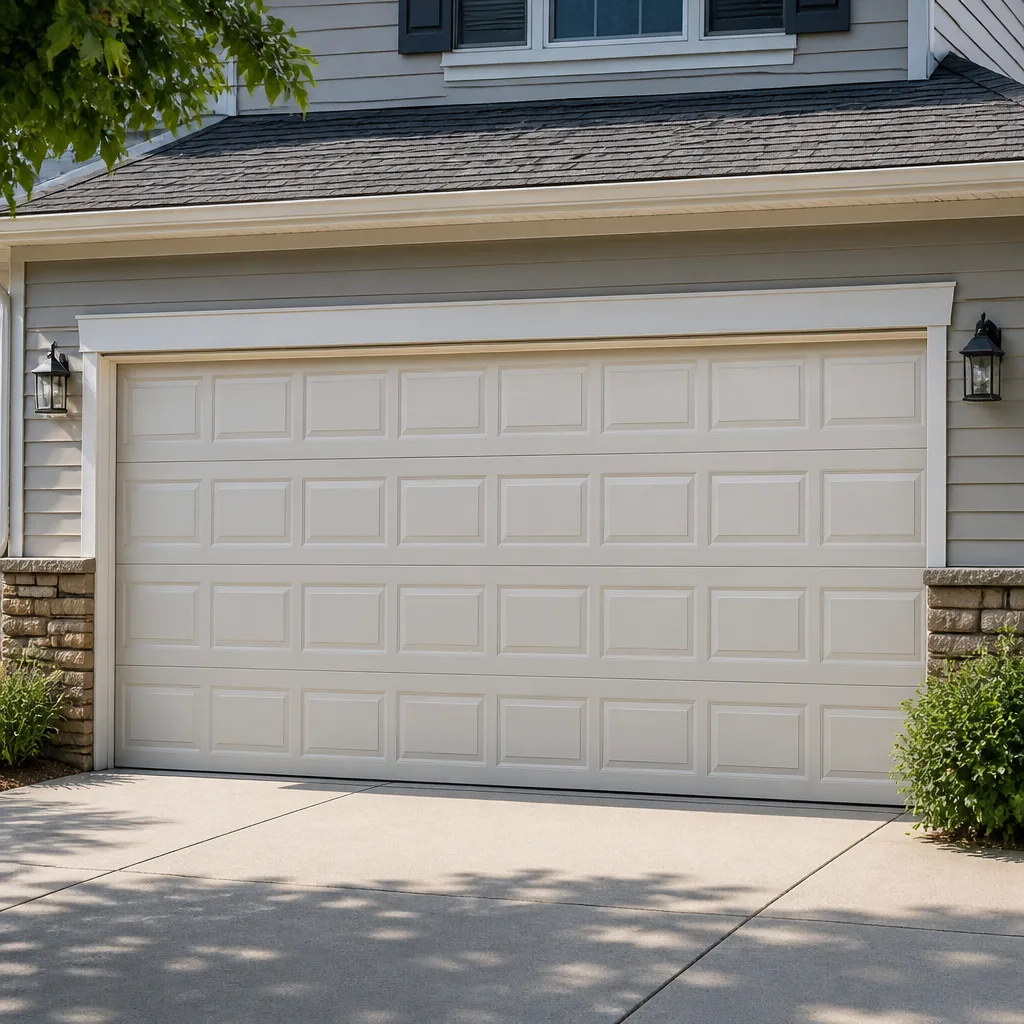 Raised-panel steel
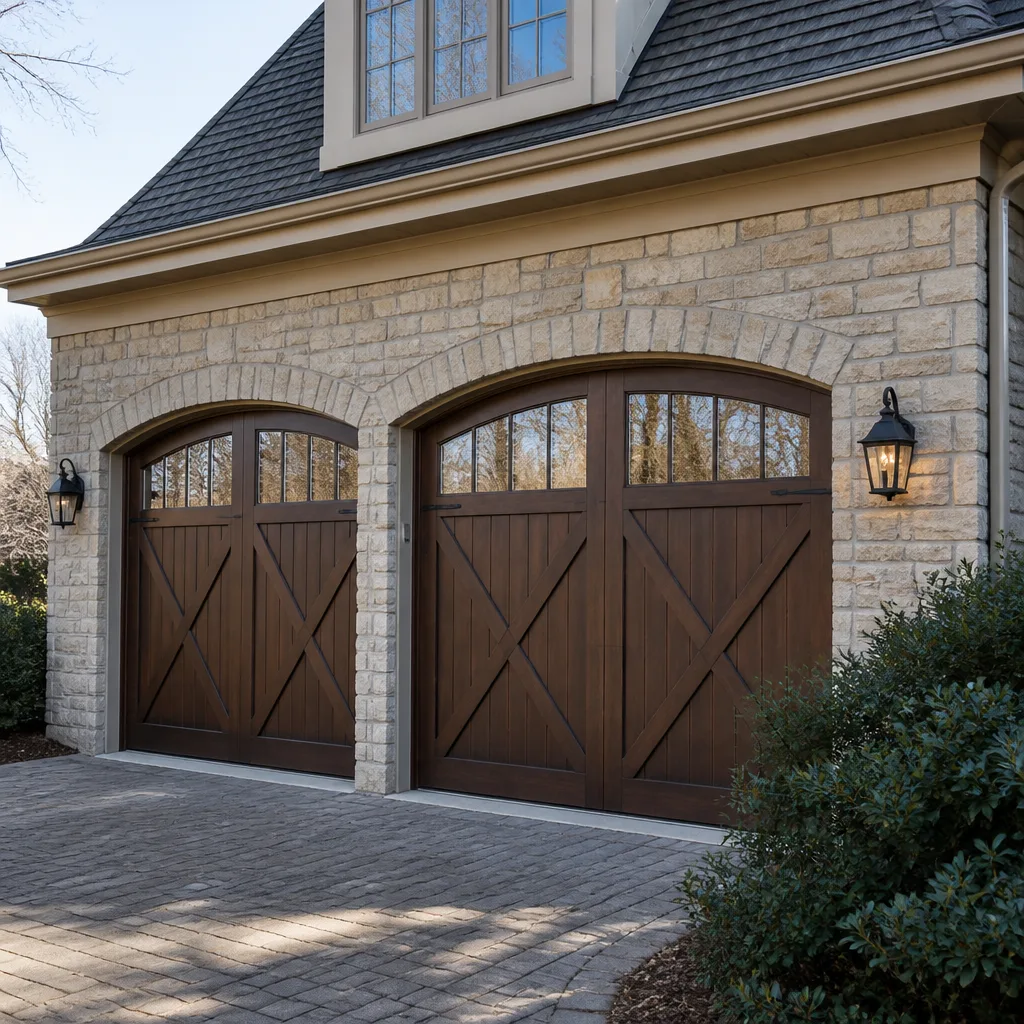 Carriage house
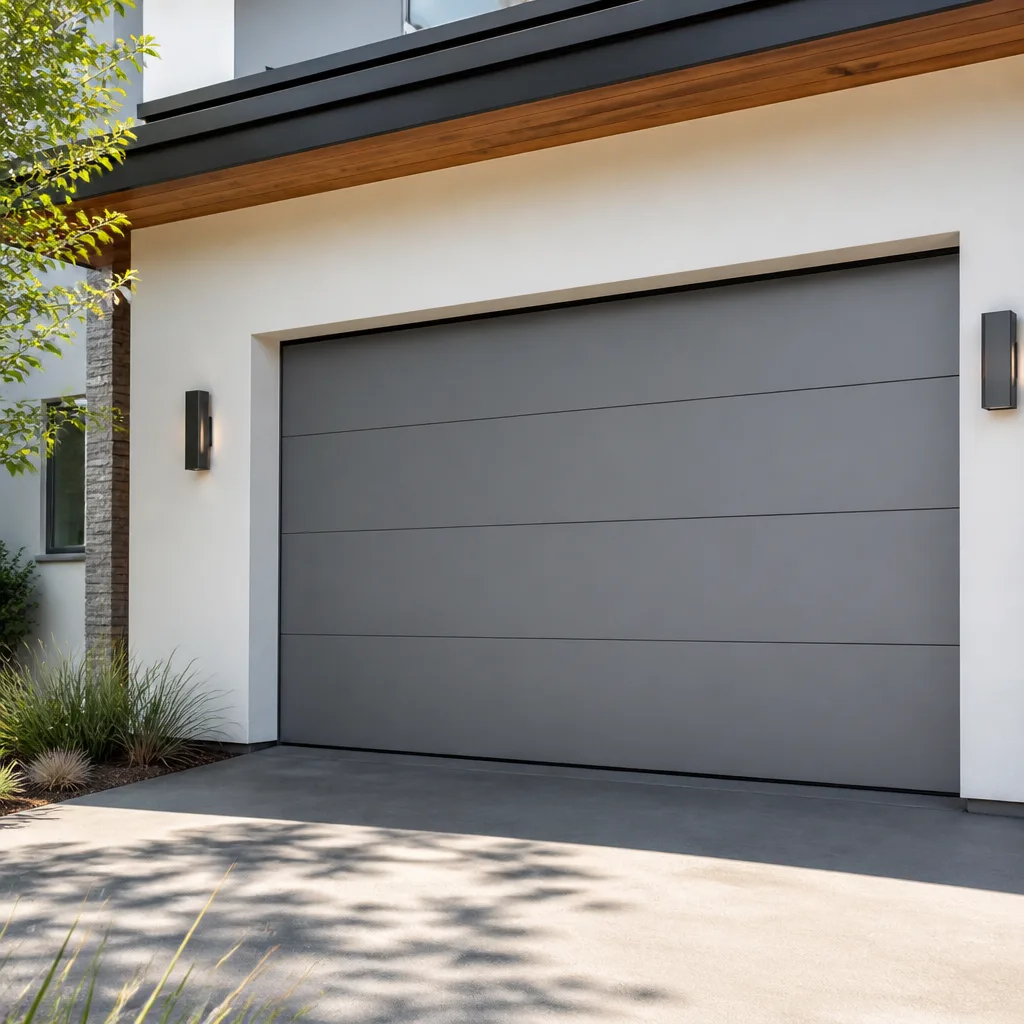 Modern flush
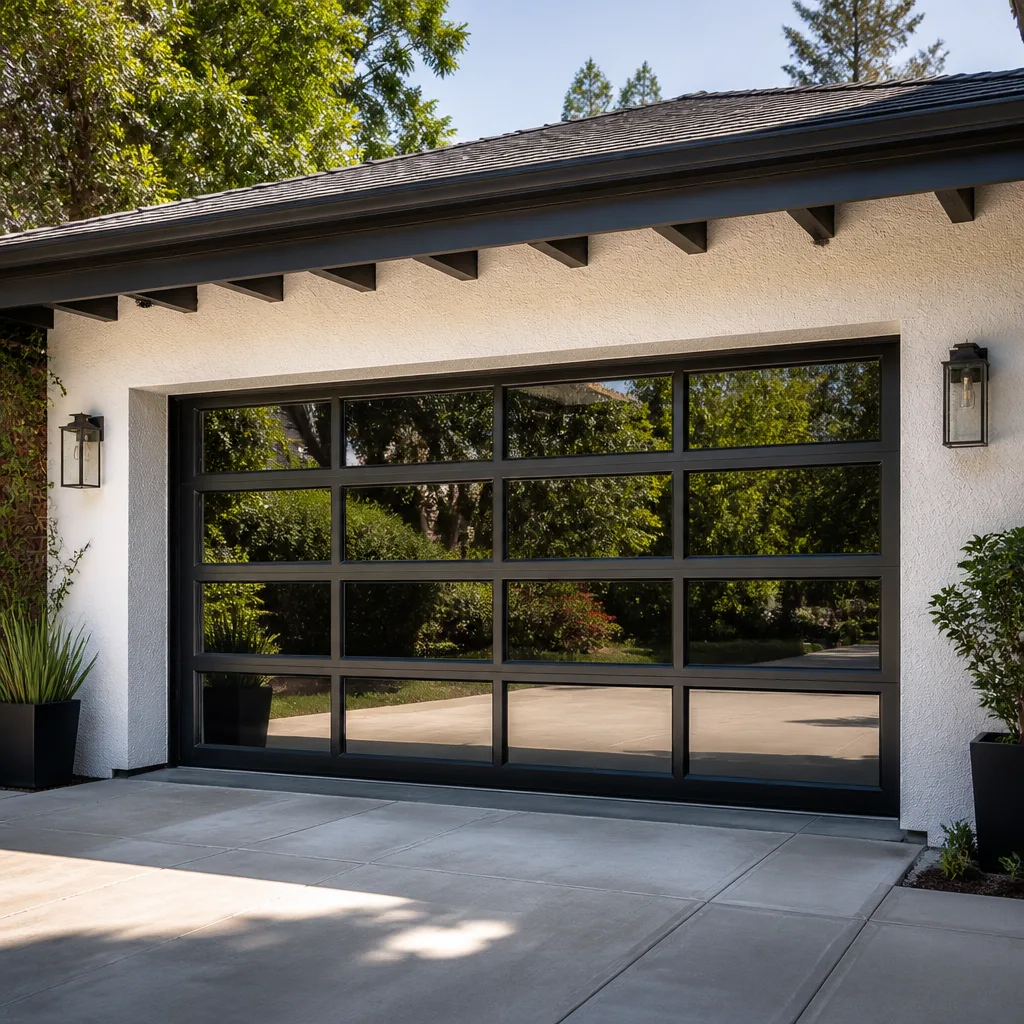 Full-view glass
 LiftMaster openers
 Chamberlain openers
Full 25-point door and opener safety check with every visit - springs, cables, rollers, tracks, and your LiftMaster or Chamberlain opener included
You get a price before we start. It does not change when the pro arrives.
Get your free estimateGarage Door Repair Maintenance Schedule: What to Do and When
Most homeowners treat the garage door like a light switch. You press the button, it goes up, you drive away. But a garage door is the largest moving object in your house, and in Framingham it cycles more than 1,500 times a year through heat, humidity, and a winter that swings between wet snow and hard freeze. Mechanical systems that do that kind of work need a maintenance schedule. This guide gives you one built around Framingham’s actual climate, with the specific tools, lubricants, and checks for each season, plus the two 60-second tests that tell you whether your door is safe to keep using.
Quick Answer
A garage door needs three things: monthly inspection of hardware and a visual check of springs and cables, seasonal lubrication and balance testing (spring and fall are the natural checkpoints), and a yearly full tune-up including track alignment, weatherstripping, and opener force and sensitivity adjustment. In Framingham, the fall prep matters most because the first hard freeze exposes every seal and every sticky hinge.
Styles & brands we work with
- Raised-panel steel
- Carriage house
- Modern flush
- Full-view glass
- LiftMaster openers
- Chamberlain openers
Table of Contents
- Why your garage door needs a schedule at all
- The monthly 10-minute inspection
- The right lubricant for the right part
- The balance test and the force test
- Fall prep for Framingham’s first hard freeze
- Winter and spring: what changes
- Brand-specific intervals that differ from generic advice
- Maintenance that can void a warranty if done wrong
Why Your Garage Door Needs a Schedule at All
Think about what’s actually inside that panel. A torsion spring, cables, drums, hinges, rollers, track sections, a bottom bracket, a lift arm, and the opener’s motor and safety sensors. It’s more moving hardware than anything else in a house except the HVAC system, and almost nobody schedules service on it. The car engine starts more often, but the garage door is the entry point the whole family uses.
In Framingham the load on this system is not just frequency, it’s the weather. Summer humidity swells door panels just enough to change how they ride in the track. Road sand and grit from a Massachusetts winter work into rollers and hinges. Then the temperature drops and any moisture sitting in a hinge finds its way into a crack. Most of the emergency calls we take are the result of hardware that has not been touched since installation.
A maintenance schedule doesn’t mean becoming a garage door mechanic. It means knowing the ten or fifteen minutes of attention per month that keeps the moving parts moving, spotting the failures that need a trained technician before they strand your car or leave your house unsecured. Our technicians have up to 14 years of experience on cars and door brands, and they’ve all seen the same thing on repeat: a door that was fine six months ago and then one day won’t close.
What a maintenance schedule actually includes
- Monthly: visual inspection of springs, cables, rollers, hinges, and track; listening for new noises; testing the safety reverse.
- Seasonal: lubrication of the moving parts; balance and force checks; weatherstripping and threshold seal inspection.
- Annually: full tune-up from a trained professional, plus opener force and travel limit adjustment.
- As needed: a door that won’t balance, a broken spring, a snapping cable, or a bent track.
The Monthly 10-Minute Inspection
This one is the part most homeowners skip, and it’s the one that catches the expensive failures early. You don’t need tools for most of it. You need ten minutes, a flashlight, and the willingness to look at the door while it moves.
Run the door up and down from about five feet away and watch it. Here’s what you’re checking:
- Look at the springs. A torsion spring sits on the shaft above the door or across the header. You’re looking for rust staining, gaps in the coil, or visible separation. A damaged spring is a dangerous component and should never be touched by a homeowner; call a technician.
- Look at the cables. Check both sides. Look for fraying, kinks, or a cable that has come off a drum. A cable under tension can cause serious injury if it snaps while you’re near it.
- Look at the hinges. Every hinge should sit flat against the door, not bent out or rust-welded open. If a hinge has started to separate from the panel, don’t simply force it back.
- Look at the rollers. They should move freely and sit inside the track, not on top of it. Steel rollers that have developed flat spots are a constant source of noise and drag.
- Look at the track. Track should be straight, parallel, and tight against the wall. Small dents near the bottom of the vertical sections are common after anything bumps the door. Bent track is a repair, not a lubricant job.
- Look at the bottom seal. The rubber weatherstrip on the bottom edge should be continuous and unbroken. Gaps mean water, cold air, and insects.
- Test the safety reverse. Put a small object (a brick or a rolled-up towel) on the ground in the door’s path and close it. The door should reverse immediately on contact. If it doesn’t, stop using the door and get the opener serviced.
Framingham homeowners who do this once a month almost always catch the trouble before it becomes a repair call. Two minutes looking closely after a heavy rain or a cold snap beats an emergency service call at 8am on a school morning.
The Right Lubricant for the Right Part (And Why WD-40 Is the Wrong Call)
This is where a lot of well-meaning advice goes wrong. The phrase “lubricate the door” hides a problem: the parts on a garage door want different products. The wrong one can cause its own failure. Sort out the components before you grab anything.
What to use on each part
- Hinges and rollers (steel): a light lithium grease or a purpose-made garage door lubricant. Apply a thin bead to the hinge pivot and a small amount to the axle of each metal roller.
- Rollers (nylon): dry silicone spray, not grease. Nylon rollers can attract grit and gum up under grease; silicone keeps them quiet without grabbing dirt.
- Track: nothing. The track should be cleaned, not greased. Grease on a track collects sand and debris and drags the rollers. Clean the track with a damp cloth and a little mild detergent, wipe it dry, and leave it.
- Torsion springs: nothing. Coil springs are designed to run dry, or with a very small amount of the manufacturer’s specified spring lubricant. Spraying a general grease on them attracts dust and does more harm than good.
- Lock or bearing plates: a few drops of lightweight machine oil where the shaft passes through the plate.
- Roller axle caps and hinge pins: a light coat of lubricant, not a puddle.
Why not WD-40’s standard spray? It’s a solvent and light oil designed as a water displacer, not a long-term bearing lubricant. On a garage door, it thins or washes away the grease already on the part, gives you a week of quiet, and then the noise comes back worse. Use it to free a rusted bolt if you like. Use actual garage door lubricant or silicone on the moving parts.
Tools to keep on hand
- Purpose-made garage door lubricant or white lithium grease
- Dry silicone spray (for nylon rollers and weatherstripping)
- A stiff brush and a cloth
- A small level or straightedge for track checks
The Balance Test and the Force Test
These are two 60-second checks that tell you more about your door’s health than anything else you can do in five minutes. Do them once a season, or anytime the door starts behaving differently.
The balance test
- Close the door, then pull the manual release cord on the opener. That disengages the opener so the door moves only on its springs and track.
- Lift the door by hand to about waist height and let go.
- It should sit where you left it, or drift very slowly. A door that sinks on its own is running with weak springs; a door that rises on its own is over-sprung. Either way, the balance is off.
An unbalanced door travels on springs that are working too hard. That wears the opener, wears the cables, and eventually means a spring failure. This is one of the most useful pieces of information you can give us on a phone call: “it won’t hold itself open.”
The force test
The opener’s force setting is what tells it how hard to push before reversing. Too high and the door can crush something in its path; too low and the door reverses on a stray leaf. Run the door and lightly push against the bottom edge as it closes. If it takes more than a light, firm hand to reverse it, the force is set too high. If it reverses on the lightest touch, it’s set too low. Modern LiftMaster and Chamberlain openers let you set this on the motor head or through the app; older Genie units usually have a turn-limit adjustment on the back of the motor housing. Take the time to read your model’s instructions; the setting is not the same on every opener.
Anyone who services your door should do the balance and force tests every visit. If they don’t, ask them to.
Fall Prep for Framingham’s First Hard Freeze
New England fall is the season that separates a healthy garage door from a door that’s about to fail. The problem is not the cold itself; it’s the moisture the cold catches. A seal that held all summer doesn’t get any better when the temperature drops below freezing and the door sets into a layer of ice.
Here’s the fall checklist, in order:
- Inspect the bottom seal and the threshold. The bottom rubber seal should touch the floor along its full length, with no daylight visible. The concrete threshold should slope away from the door, not toward it, so meltwater drains out rather than pooling under the seal. If the threshold is cracked or settled, water can freeze to the bottom of the door and you’ll force it.
- Check the side and top weatherstripping. Run your hand along the frame, looking for a seal that no longer presses against the door. Dried, cracked, or failing stops let cold air and snow in from the sides.
- Clear the threshold of sand and grit. Every bit of silt that lands on the threshold in fall becomes an ice bump when the temperature drops. Sweep the threshold and the first foot of the driveway.
- Lower the opener sensitivity. Cold air makes rubber stiffer and metal denser. A door that closed perfectly in July may not close in January. Then the opener’s force setting needs to be re-tuned for the season. Don’t over-tune it: the correct adjustment makes the door reverse on a light, firm press, not push through an obstruction.
- Lubricate for cold weather. Cold is unforgiving on grease that has picked up summer grit. Clean the rollers and hinges and reapply lubricant so nothing is gummed up on the first hard freeze. A garage door manufactured by Clopay or Amarr, by the way, doesn’t have a service interval different from its peers; the door brand doesn’t change the lubrication rules, the climate does.
- Check the track and floor clearance. A track that has shifted a little in the warmer months is usually fine in summer and suddenly catches in the cold when the door panels contract. Run the door and watch the top and bottom corners for drag.
- Test the safety reverse after every adjustment. It’s the only check that matters for the safety of anything or anyone under the door.
Do this in late September or early October, before the first real freeze, and you’ll avoid the classic November service call: a garage door that won’t close because the seal is frozen to the concrete.
Winter and Spring: What Changes
The winter months call for a shorter, more frequent routine. The freeze-thaw cycle in a Massachusetts winter is hard on hardware; a one-week warm spell with snowmelt followed by another drop can seize a hinge that was moving freely. Inspect monthly and keep the threshold clear. If the door is stiff, don’t slam it; that’s the point when a small adjustment is safest.
Run the door through its full travel and back once a week if it doesn’t get used daily. Moving the hardware keeps moisture from sitting on any one part. If you hear a new creak or a snapping sound, stop and look. A single crack in a hinge, bracket, or a fatigued roller leads to a repair that’s cheaper than replacing what it drags with it.
Spring is the season for the full reset. It’s the right time for a yearly tune-up covering track alignment, hardware inspection, spring and cable assessment, and a full opener check. It’s also the right time to clean the track completely and re-lubricate. If you’ve waited out the winter on a door with a chipped bottom seal or a bent hinge, fix it now before the humidity of summer changes the door’s fit in the track.
Wayne Dalton and Genie setups are not exceptions to any of this. The brand determines how the door and opener are built, not how they wear. The moving parts wear at the same rate regardless of the name on the door.
Brand-Specific Service Intervals That Differ From Generic Advice
Most online garage door maintenance advice is written as if every door and every opener are the same. They aren’t, and getting this wrong on your own door is the fastest way into a repair call. Here’s where the brands actually differ:
- LiftMaster and Chamberlain openers: Many models have a diagnostic indicator light on the motor head (or in the myQ app on smart-connected models) that will tell you when the safety sensors are misaligned or the door travel needs adjustment, before the door stops working. On theirs, pay attention to that light once a month and handle the adjustment early. The force and travel settings are set through the control panel or the app.
- Genie openers: Older units tend to use a manual force adjustment on the motor housing rather than a digital menu. That adjustment needs to be reset after a change of season more than on a digital system. It also has a less forgiving safety reverse; keep the sensors clear of cobwebs and dust.
- Clopay and Amarr doors: Their weatherstripping and bottom-seal products vary by model line and are not universal. If you replace a seal, match the profile to the door’s model rather than the closest size on the shelf. A wrong-profile seal is the most common reason a door leaks cold air after a seal change.
- Craftsman and Raynor: Replacement parts and opener accessories are model-specific, especially on older Craftman openers whose remotes and safety sensors don’t swap between generations. Have the model and serial number from the motor head before you call about a part.
If you don’t know the brand and model already on your door, the model plate on the opener’s motor head and the brand name stamped on the sections tell you. We work on the eight biggest installed brands in the industry – LiftMaster, Chamberlain, Genie, Clopay, Amarr, Wayne Dalton, Craftsman, and Raynor – so there’s a good chance the brand on your door is a brand we know well.
Maintenance That Can Void a Warranty If Done Wrong
Most garage door and opener warranties have maintenance clauses, and the language varies from brand to brand. The safe rule is to check your own manual, but there are a handful of common traps:
- Greasing the track. Many manufacturers require the track to be kept clean and dry, and some door hardware warranties exclude damage from grease on the track. Clean it, don’t grease it.
- Using generic oil or spray lubricant on bearings and springs. When a manufacturer specifies a lubricant, the exclusion clause is written around it. Use a product labeled for garage doors, or your opener or door brand’s specified lubricant.
- Tightening track bolts without the door’s weight supported. Overtightening can distort the track and cause the door to bind. It’s a small job that’s easy to make worse.
- Adjusting the opener’s force setting without testing the safety reverse. Force and reverse are a matched pair. If you change one without testing the other, you can create a door that will close on a human hand. This is a genuine safety failure, not just a warranty question.
- DIY spring and cable work. Torsion and extension springs and the cables that run with them are under high tension and can cause serious injury. This work is not a maintenance item for a homeowner, and in many cases, DIY work on these parts directly voids the warranty on the spring and related hardware.
- Replacing a bottom seal with the wrong profile. A wrong-fit seal voids the seal’s own warranty and can leave the door with a gap that lets water in.
The theme under all of this: the checks and lubrication are yours to do. The spring, cable, and force-setting adjustments are professional work. Spring repair in particular is a trained-technician job; our team handles torsion and extension spring work as its own specialty, specifically because a mis-stepped spring repair is the most dangerous thing you can do on a garage door.
Common Mistakes to Avoid
- Spraying WD-40 on the door and calling it “lubricated.” Standard WD-40 is a solvent and light oil, not a long-term lubricant. It quiets the door for a week and then leaves the parts drier than before. Buy a garage door lubricant and use it on the parts that need it.
- Greasing the track. Grease on a track turns into paste that traps grit and road sand. The track should be wiped clean, never greased.
- Ignoring a small door imbalance. A door that drifts shut on its own is a spring that’s failing. Waiting for it to break entirely means a bigger repair and can put the opener’s gear and rail at risk.
- Adjusting the opener’s force setting all the way up to “fix” a sticking door. That hides the real problem in the track or the spring and creates a safety failure at the same time.
- Putting off fall seal work because the door “still closes.” In Framingham, the first freeze makes the decision for you. A bottom seal that’s lost its contact becomes an ice problem overnight.
- Tackling spring or cable work yourself. The warning is not a sales tactic. Torsion springs are stored energy, and a mistake can cause serious injury. Leave them to a technician.
- Forgetting the safety reverse test. Test it monthly. It takes 30 seconds and it’s the single most important safety feature in the system.
See the difference
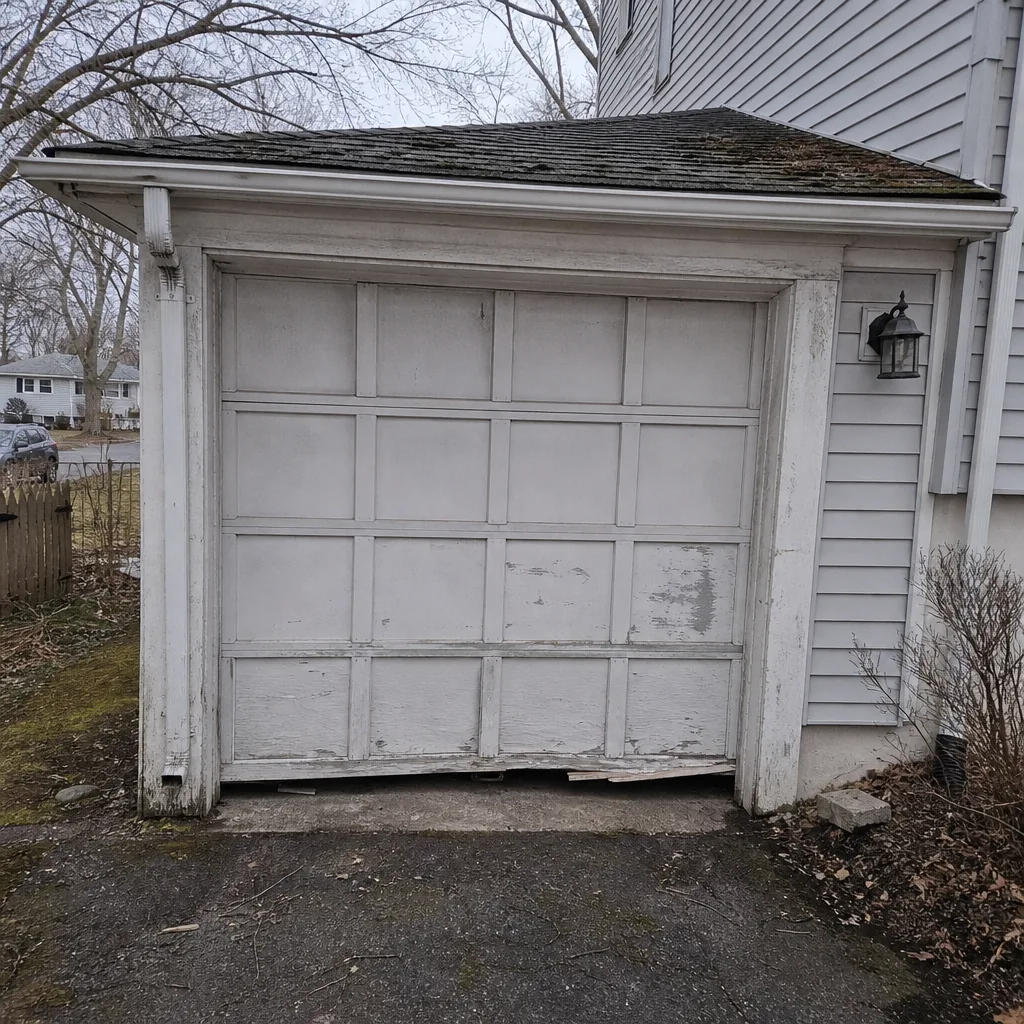 Before
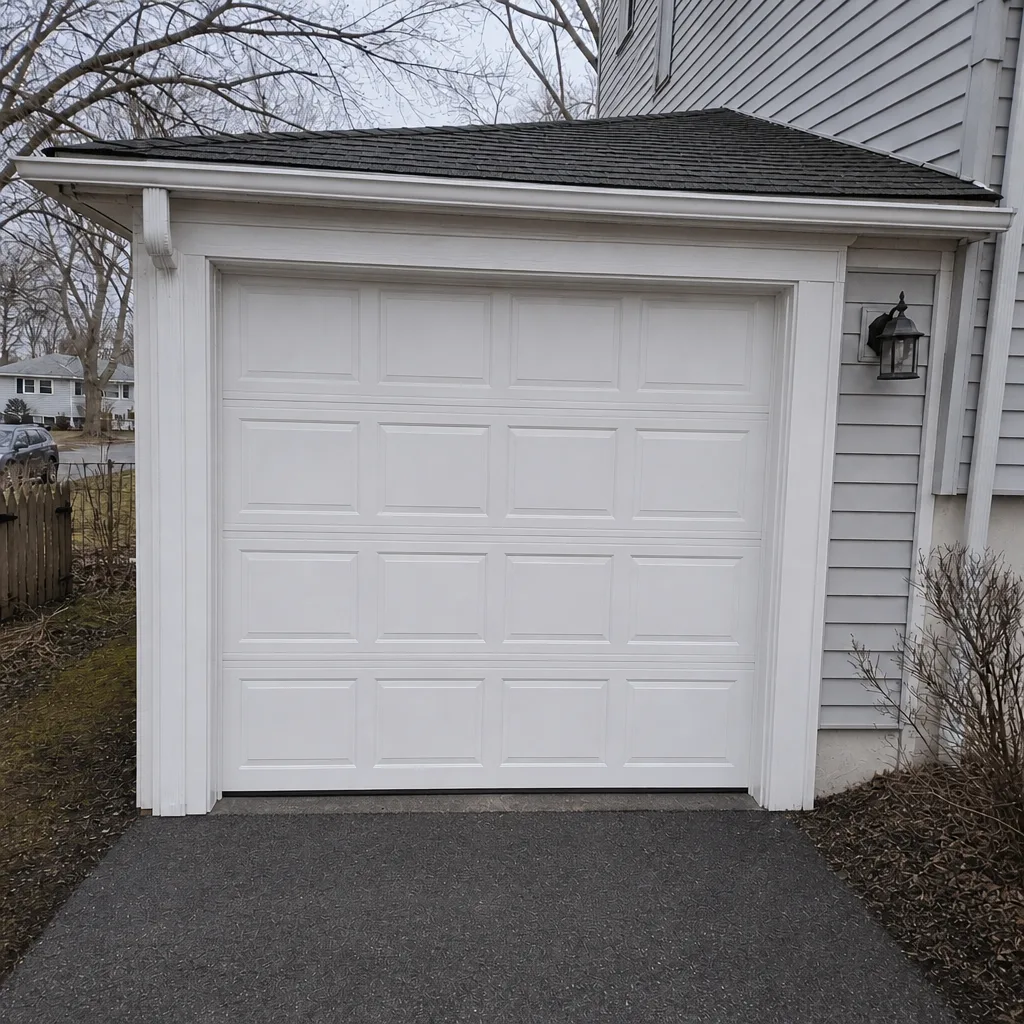 After
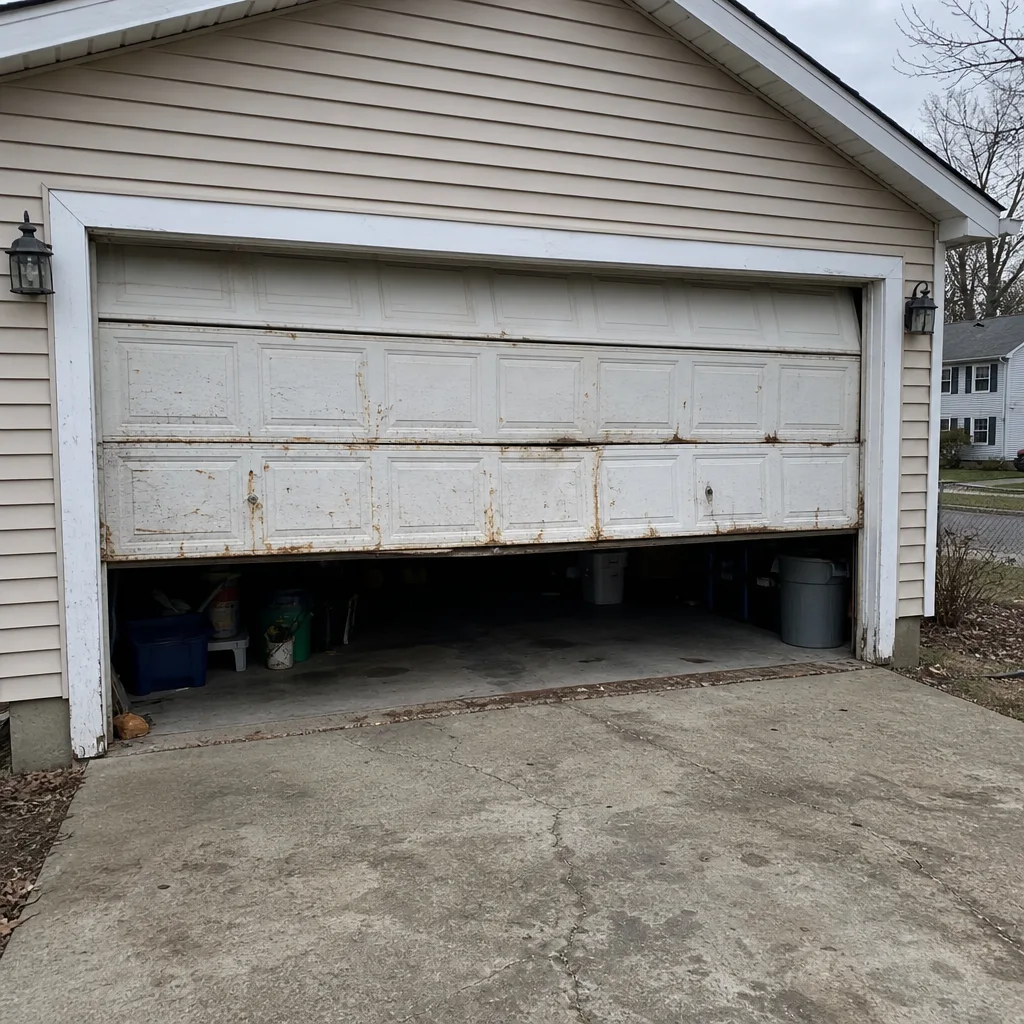 Before
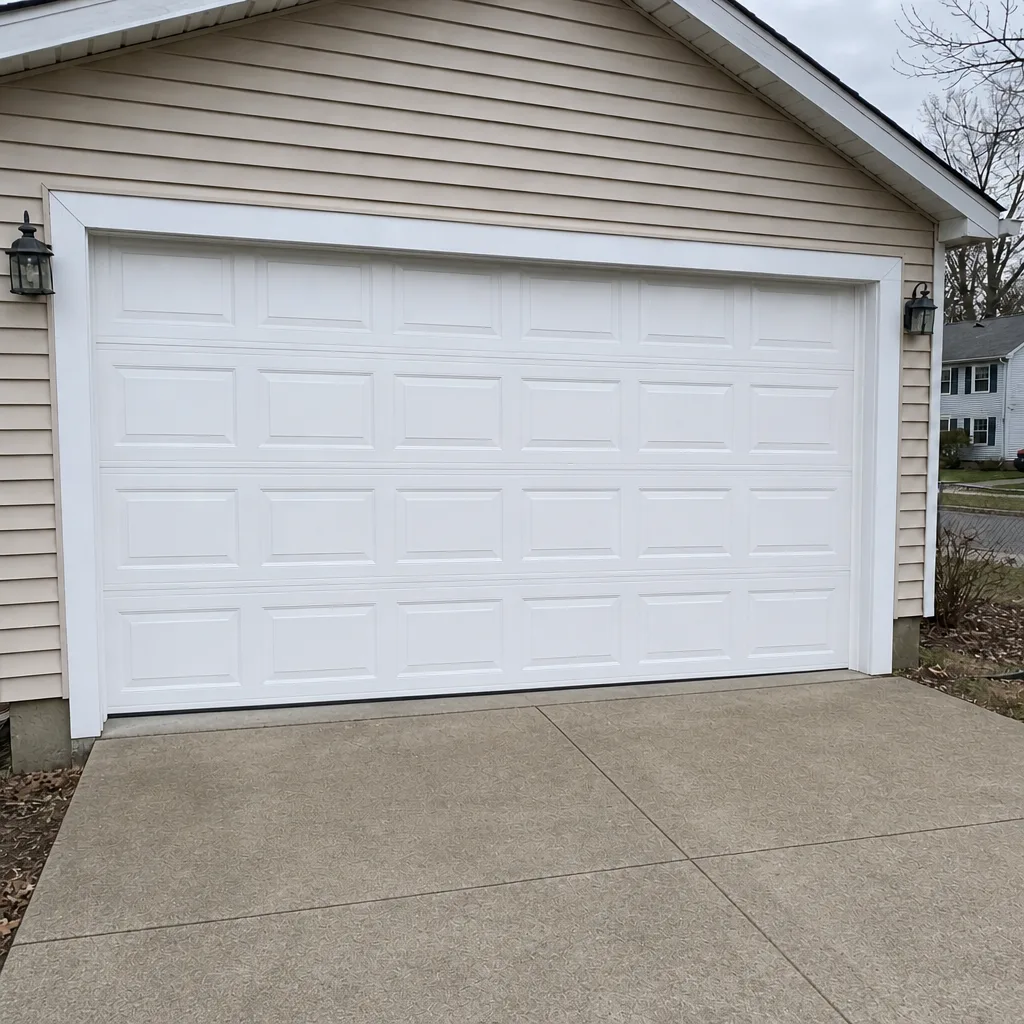 After
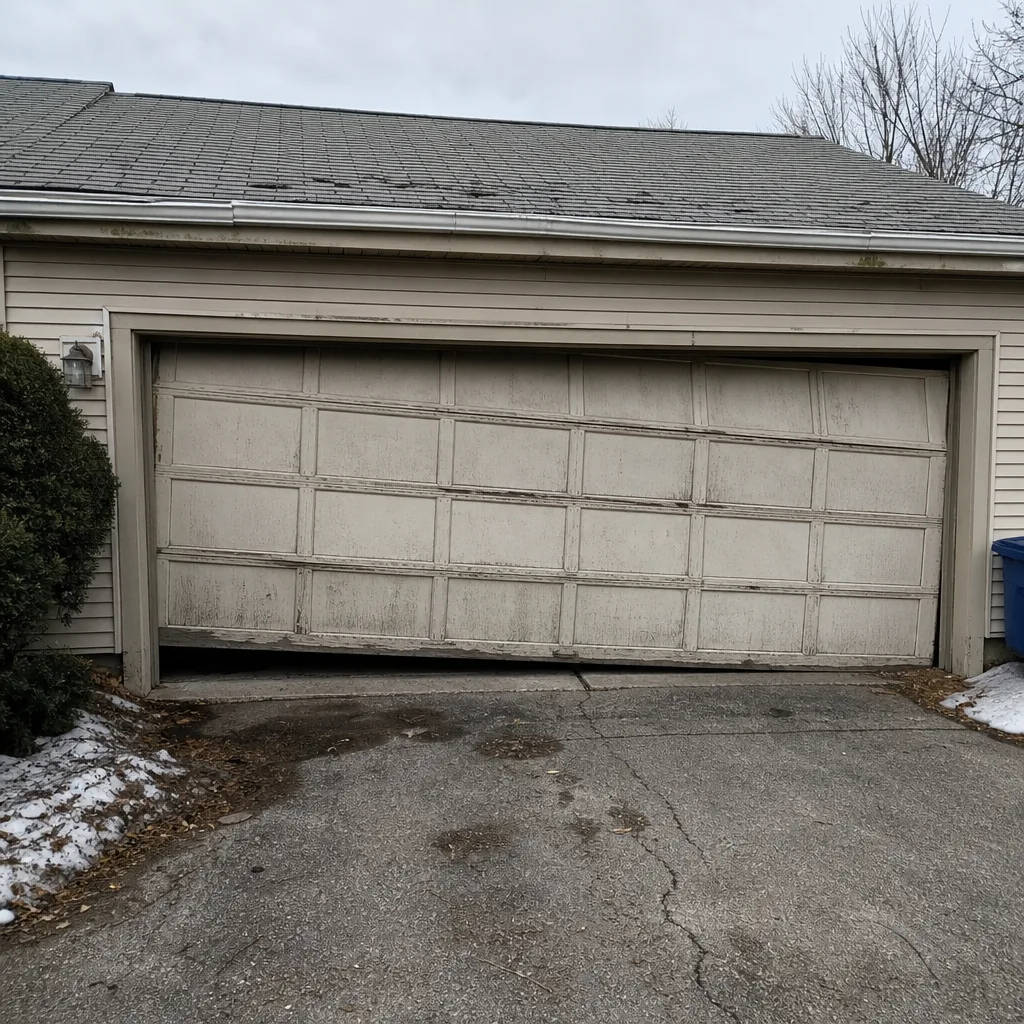 Before
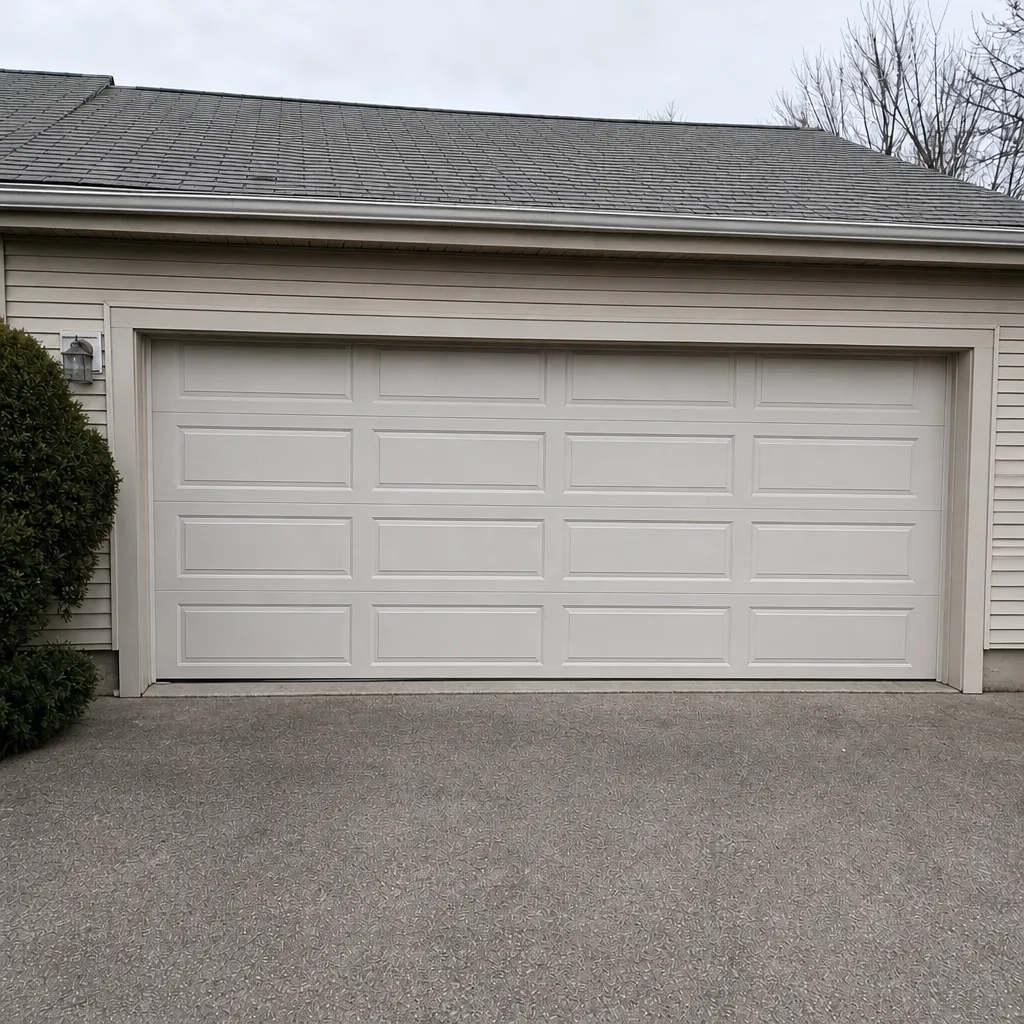 After
When to Call a Professional
Some jobs belong in the garage on a Saturday morning. Others should never leave the house. Call a trained professional if any of these are true: you see or suspect a broken spring (a visible gap in the coil, a rust stain), a frayed or snapped cable, a track that’s bent or separating from the wall, a door that won’t balance or won’t stay open, a door that’s visibly out of square, or a safety reverse feature that has stopped working. If the door is off its track or has been damaged by a vehicle strike, don’t try to bring it back by hand.
Our garage door repair in Framingham starts with a free estimate, and the price is agreed before any work starts. We work on the eight most-installed brands, and when the situation can’t wait, we also run a dedicated emergency garage door service for when the door won’t secure the house or your car is trapped. Call (844) 443-3741 for a free estimate.
Frequently Asked Questions
Once a year for a professional tune-up, plus monthly inspection of the hardware and a seasonal lubrication and balance check. That’s the minimum schedule that catches problems before they become emergency calls. If your door cycles heavily or you live with a hard New England winter, the monthly checks matter more, not less.
The hinges, rollers, and bearing plates are fair game for a homeowner, with a garage door lubricant or silicone spray. Do not lubricate the track, and do not touch torsion springs or cables. Those are trained-technician work because they’re under high tension. If you’re not sure which parts are which, have us show you on a tune-up.
Standard WD-40 is a solvent and light oil intended to displace water, not to lubricate bearings for the long term. It thins out the grease on your hinges and rollers and leaves them noisier within weeks. Use a purpose-made garage door lubricant, white lithium grease, or dry silicone instead, depending on the part.
Signs include a visible gap in the spring coil, a rusty mark where the spring has been, a door that’s very heavy to lift, and a door that won’t hold itself open anymore. A broken spring usually makes the door feel immovable. Don’t try to open it by force, especially in Framingham where emergency service is available for this exact reason. Call a technician and don’t operate the door.
Yes. The freeze-thaw cycle in a Massachusetts winter is hard on seals, hinges, and thresholds. Water that pools under a worn bottom seal freezes overnight and bonds the door to the floor. Fall prep (seal inspection, threshold check, opener sensitivity) is the single most important seasonal task in this climate.
The estimate is free, and the price is set per job by the written estimate. Same-day service is available, and for a door that won’t close or open we offer emergency service as a separate, real service line. Call (844) 443-3741. We answer 24/7. Fast dispatch from 7am to 7pm, Sunday through Friday.
Yes, because a tune-up is called for when the door is working, not just when it’s broken. It’s the point in the cycle when spring and cable condition can be assessed, track can be aligned, and the opener’s force setting can be tested. Doing that once a year is far less expensive than the emergency repair that comes from ignoring it.
The Bottom Line
A garage door is a mechanical system with springs, cables, rollers, and hinges that all wear, and the wear doesn’t announce itself until something fails. The schedule that keeps it reliable has three layers: monthly inspection of the hardware and safety reverse test, seasonal lubrication and balance checks, and an annual professional tune-up. In Framingham, the fall prep is the layer that matters most, because the first hard freeze exposes every seal and every sticky hinge. Do the checks that are safe to do yourself. Call a specialist for the spring, cable, and opener force work. For garage door opener repair, a full tune-up, or help choosing between a repair and a replacement door, call (844) 443-3741 for a free estimate.
If your door has stopped working, or you’d like a professional to look it over before the next season arrives, Framingham Garage Door Repair offers free estimates and the price is agreed before any work starts. Our technicians have up to 14 years of experience and work on the brands already on the door. When it’s time for a new door, our garage door installation service covers design, measure, and fit. If the motor or safety sensors are the problem, our garage door opener repair team handles both older and current smart-home-compatible systems. Call (844) 443-3741. We answer 24/7. Fast dispatch from 7am to 7pm, Sunday through Friday.
Written by the team at Framingham Garage Door Repair.