
Last updated November 22, 2026
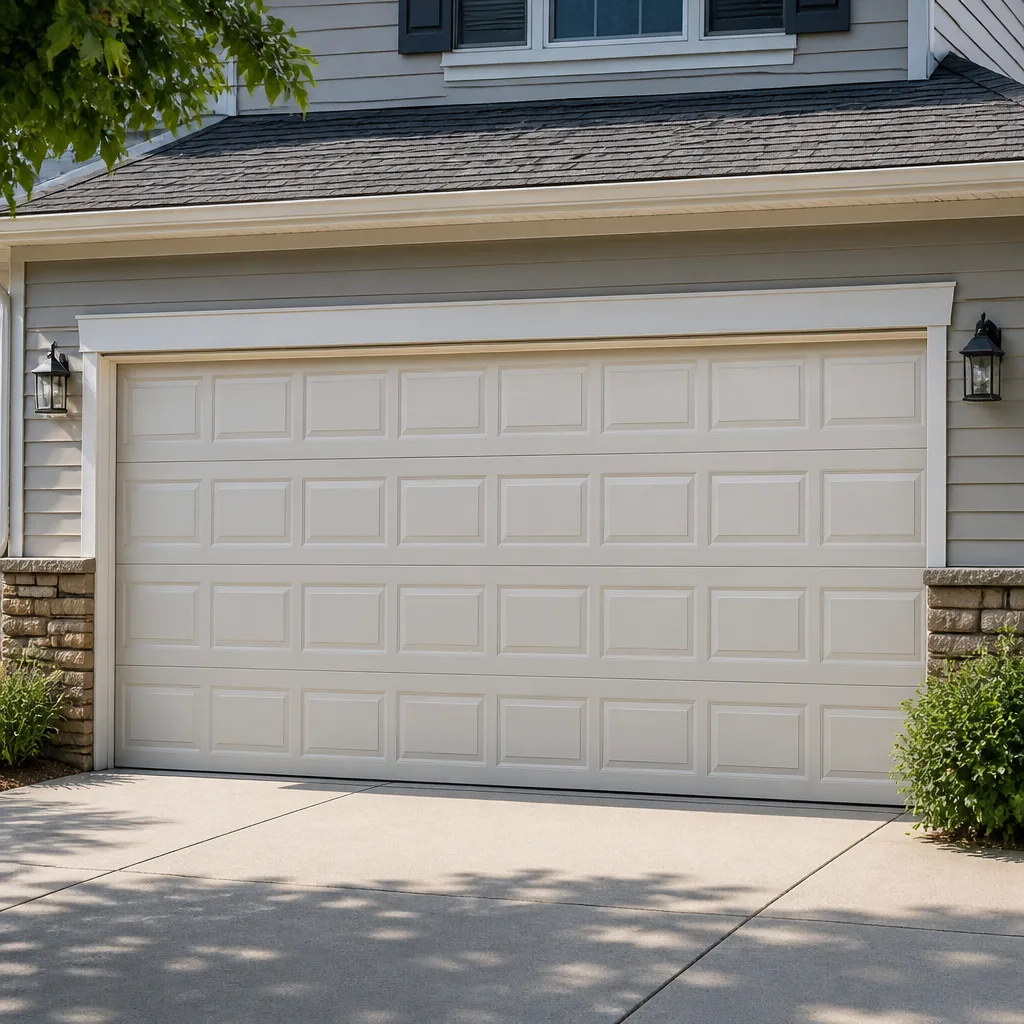 Raised-panel steel
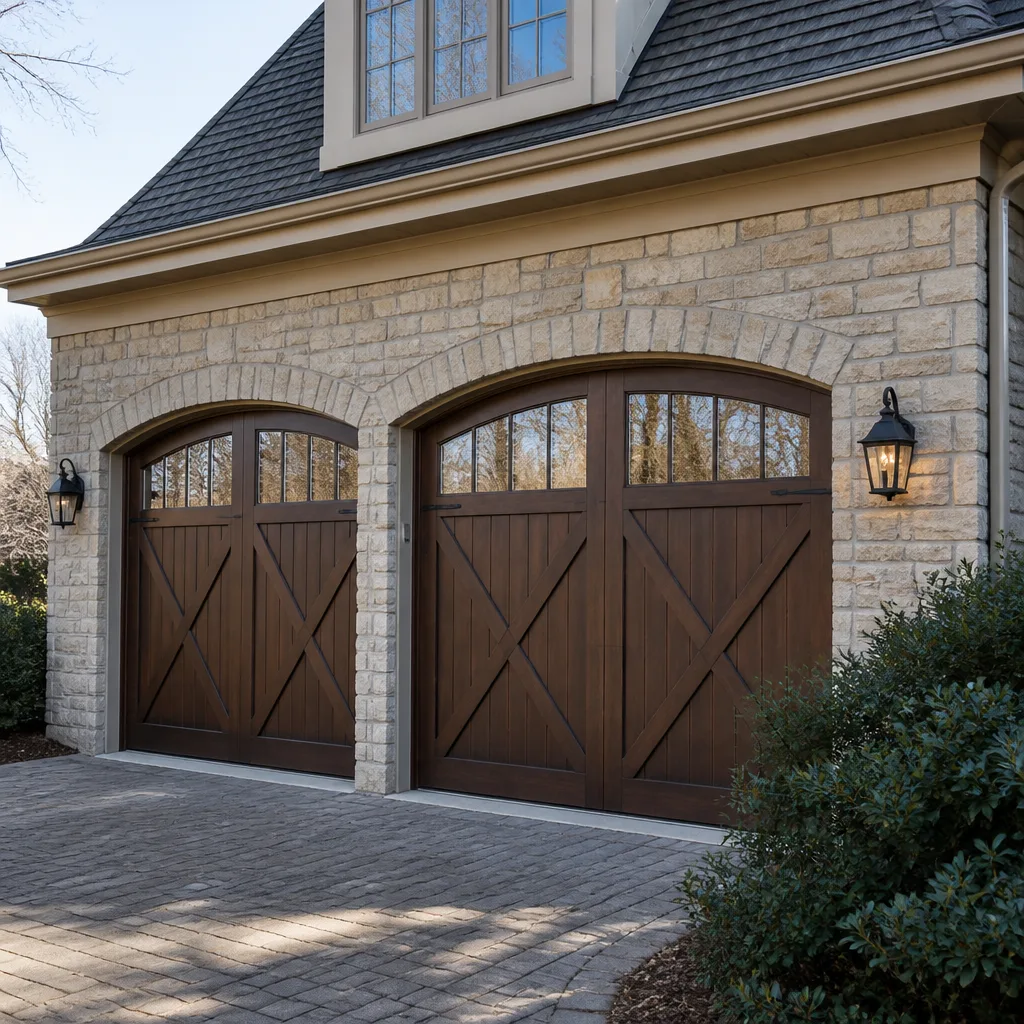 Carriage house
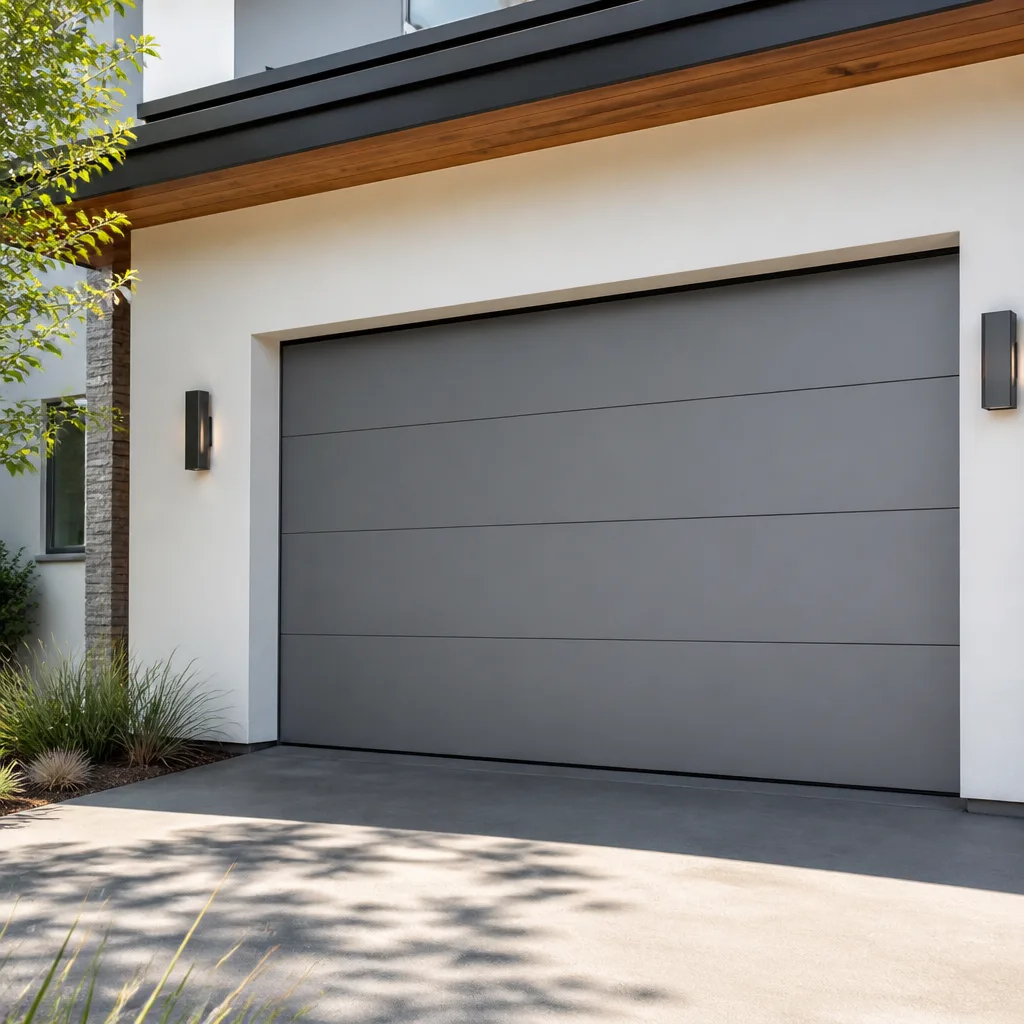 Modern flush
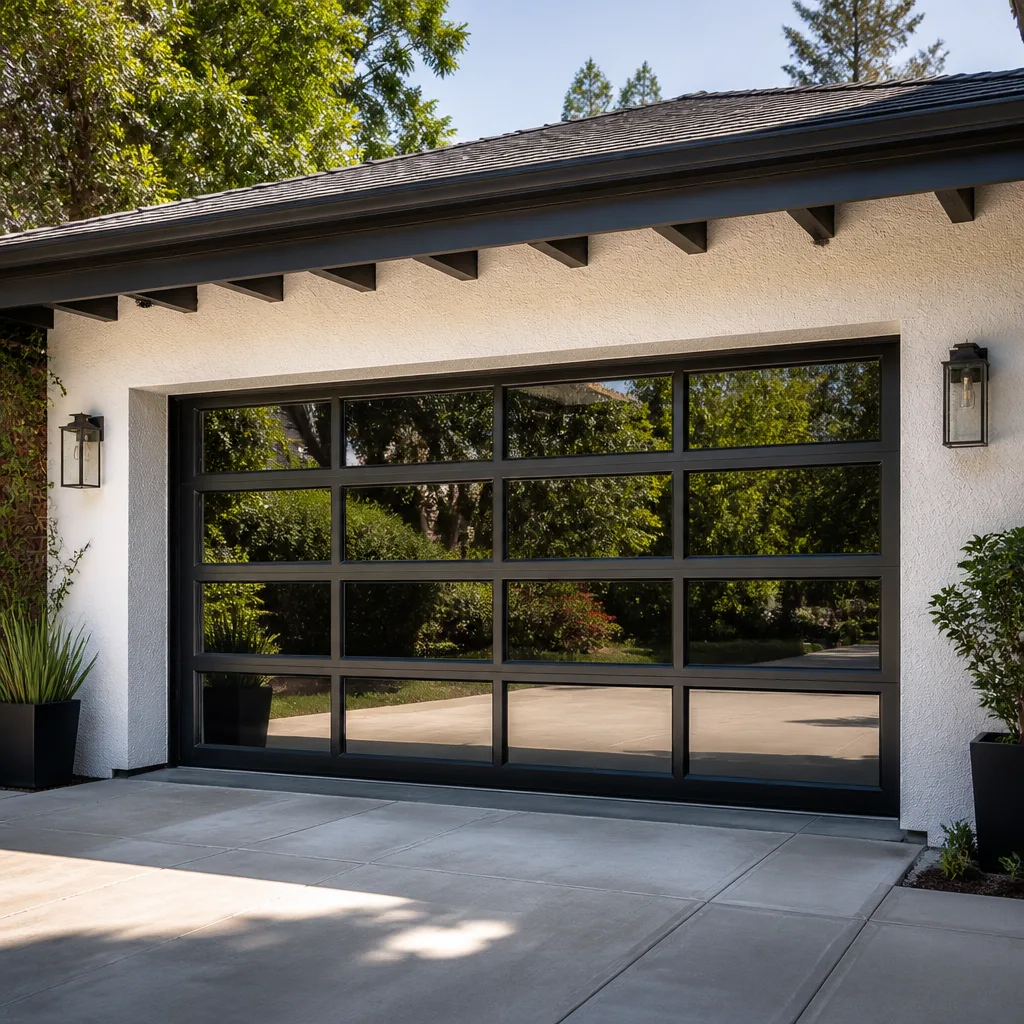 Full-view glass
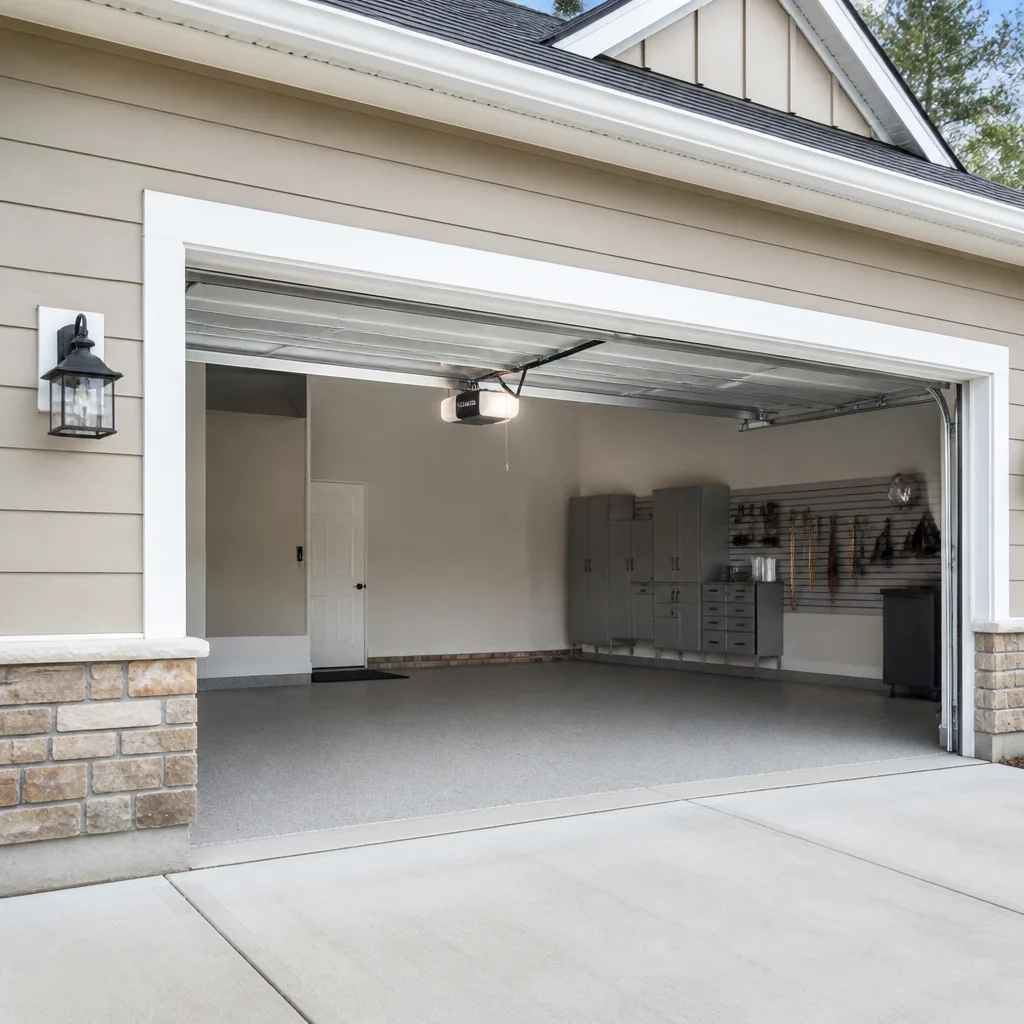 LiftMaster openers
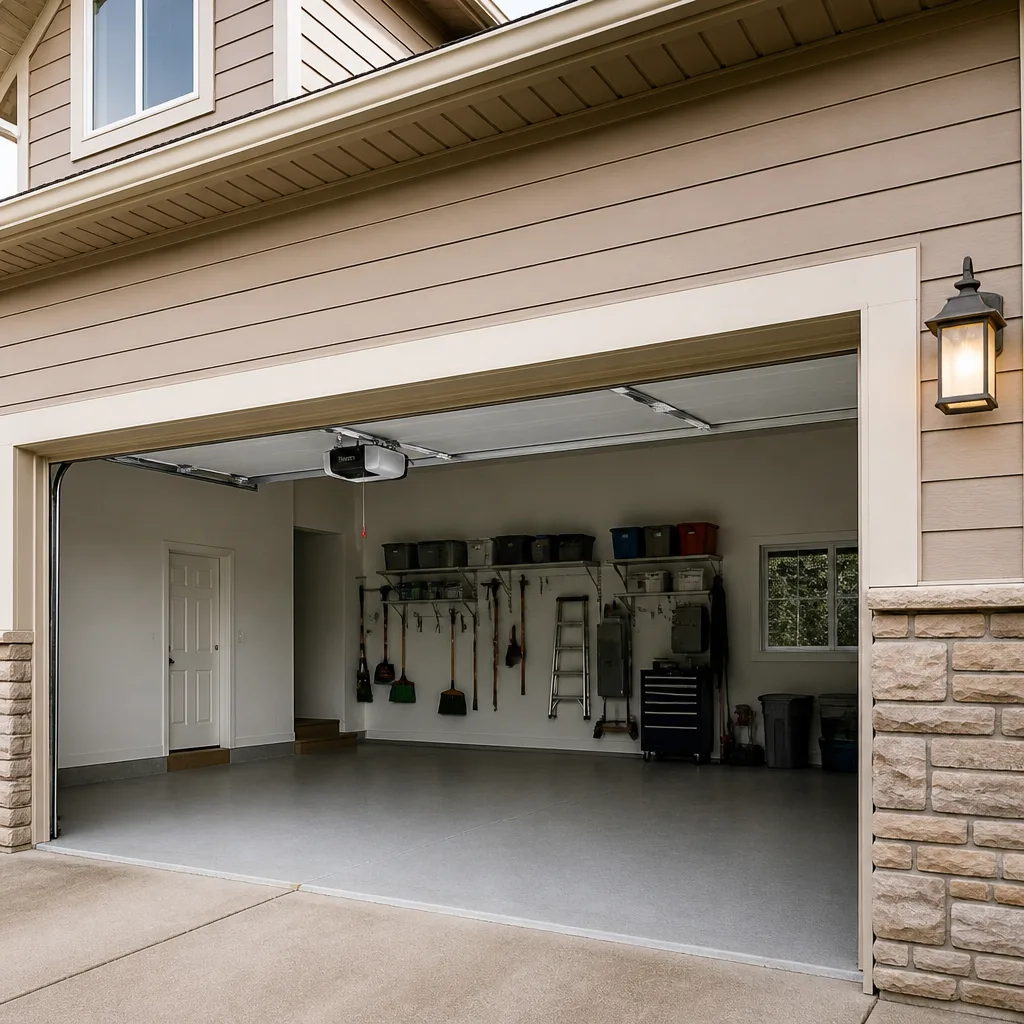 Chamberlain openers
Full 25-point door and opener safety check with every visit - springs, cables, rollers, tracks, and your LiftMaster or Chamberlain opener included
You get a price before we start. It does not change when the pro arrives.
Get your free estimateGarage Door Warning Signs: A Framingham Homeowner’s Reference Guide
Most garage door failures announce themselves weeks before they strand your car. The problem is that homeowners hear a grind, a creak, or a shudder and file it under “I’ll deal with that later.” The gap between a small service call and a much larger repair is usually those weeks of ignored symptoms. Here’s the part that surprises people: a grinding noise on the way up is not the same problem as a grinding noise on the way down. Where in the cycle the sound happens tells a technician which component is failing. This reference maps symptoms to components so Framingham homeowners can describe what’s wrong accurately and understand what a diagnosis means before anyone shows up.
Quick Answer
A grinding sound that happens on the way up usually points to spring tension loss or a roller problem, while grinding on the way down often means a bent track, a failing cable, or an opener force-setting issue. A door that reverses on its own or won’t stay fully open is a spring problem and should be treated as a safety stop. Any visible fraying, gap, or rust streak on a spring or cable means you stop using the door and call a technician. Call (844) 443-3741 for a free estimate – we answer 24/7.
Styles & brands we work with
- Raised-panel steel
- Carriage house
- Modern flush
- Full-view glass
- LiftMaster openers
- Chamberlain openers
Table of Contents
- Symptom-to-Component Map: What the Noise Is Telling You
- The “Slow on the Way Up” Symptom and the Misdiagnosis Problem
- Visual Red Flags on Springs and Cables: When to Stop Using the Door
- How to Tell an Opener Problem from a Door Problem
- New England Warning Signs: Rust, Freeze, and Wood Shrinkage
- The Monthly Safety Test Every Framingham Homeowner Should Run
- What Diagnostics and Repairs Typically Cost in Framingham
- When a Warning Sign Means Replacement, Not Repair
Symptom-to-Component Map: What the Noise Is Telling You
A garage door is the largest moving part on your house, and it gives you a lot of information if you know where to listen. Two identical-sounding noises can come from completely different components. Our technicians have up to 14 years of experience and we work on the brand already on your door – whether that’s a LiftMaster opener, a Clopay door, or a Chamberlain system – which means we can name the component from a homeowner’s description faster than a generalist who treats garage doors as a side job.
Use this reference the next time something sounds or looks off. Read the left column, then the right. If your symptom matches a row, you have a working hypothesis to bring to a phone call.
| Symptom | Most Likely Component | Urgency |
|---|---|---|
| Grinding on the way up | Spring tension loss, worn rollers, or opener gear wear | Schedule within days |
| Grinding on the way down | Bent track, failing cable, or opener force setting | Schedule within days |
| Loud snap followed by door stuck closed | Broken torsion or extension spring | Stop using the door |
| Door reverses before it touches the floor | Safety sensor misalignment or travel limit set too high | Test and schedule |
| Door won’t stay fully open | Spring has lost tension and can’t balance the door | Stop using the door |
| Door shudders or jerks as it moves | Loose hinges, worn rollers, or a bent track | Schedule soon |
| Squeal at the start of travel | Dry rollers, dry hinges, or dry spring | Lubrication or service call |
| Door moves unevenly, one side lags | One cable stretched or detached | Stop using the door |
| Remote or wall button does nothing at all | Opener electrical, sensor, or safety switch | Test the manual disconnect first |
| Door opens partway and stops | Opener force limit or bound mechanical part | Schedule soon |
Notice how one noise location changes the diagnosis. That’s the whole point of mapping symptoms to components rather than treating “noisy door” as one problem. If you can tell us that the grinding happens only in the first two feet of upward travel, we can often narrow it down before the technician reaches your driveway in Framingham.
The “Slow on the Way Up” Symptom and the Misdiagnosis Problem
A door that lifts slowly or labors on the way up is usually losing spring tension, not losing opener power. It’s one of the most commonly misdiagnosed symptoms in the trade, and homeowners often call assuming the opener is dying when the springs are the real story. A garage door opener isn’t built to lift the full weight of the door. It’s built to steer a door that the springs have already balanced. When the springs weaken, the opener has to muscle more of the load, and the door moves slowly because the motor is doing a job it wasn’t designed for.
Here’s what makes this worth understanding: if the springs are the problem and you replace the opener instead, you’ve spent money on the wrong fix and put a new motor into the same overworked condition. The springs fail, then the opener burns out trying to compensate.
Signs that point to spring tension loss rather than an opener fault:
- The door lifts slowly but the opener motor sounds normal and quiet
- The door feels heavy when you lift it by hand with the opener disconnected
- The door won’t stay halfway open when you let go of it
- You can lift the door with two fingers when it’s balanced correctly – if it takes real effort, the springs are weak
- The door hangs unevenly or tips to one side when partly raised
That last test is the one we recommend most. With the opener disconnected and the door at about waist height, a properly balanced door holds its position. A door with weak springs drops. If you’re seeing a slow lift and that drop test confirms it, spring work is the direction. For a full look at how we handle that component, see Framingham Garage Door Repair. For the opener side, our garage door opener repair page covers what electrical diagnosis involves.
Visual Red Flags on Springs and Cables: When to Stop Using the Door
Springs and cables are the two components that can injure someone seriously, so the visual check deserves its own section. Our position on this is simple: spring repairs done right, done safely. That means trained technicians working on torsion and extension springs, not unskilled labor. If you see any of the following under the “stop” list, do not run the door and do not try to tighten, adjust, or replace a spring yourself. High-tension springs carry a stored load that can release violently, and a cable under tension is just as dangerous. This is one job where the correct move is to call a technician.
Stop-Using-the-Door Signs
- A visible gap in a torsion spring. A torsion spring is a horizontal coil mounted on a bar above the door. Look for a clean break anywhere along the coil – often a gap of an inch or more where the spring has snapped apart.
- A stretched or sagging extension spring. Extension springs run along the tracks at the sides. If one spring is noticeably longer than the other, it has stretched and lost tension.
- Frayed or separated cable. A good cable is a tight braid of wire. If you see individual wire strands broken and sticking out like a brush, or a cable hanging loose off the drum, the door is unsafe.
- A cable that has jumped its drum. The cable should ride in the groove of the drum at the top corner. If it’s riding on the outer edge or off entirely, stop.
- A broken safety cable on an extension spring door. The safety cable is a thin wire threaded through the center of the spring to trap it if it snaps. If it’s rusted through or missing, the door needs attention before it’s used.
- One side of the door hanging lower than the other while at rest – evidence of a cable failure.
Schedule-Soon Signs
- Rust spotting along a spring or cable
- A light oil can near any hinge or roller that hasn’t been lubricated in a year or more
- Visible wear where a cable passes over a pulley
- Small dents or bends in the track that don’t affect travel
Any of the “stop” signs above is a call today, not a call next month. You can reach us at (844) 443-3741. We answer 24/7. Fast dispatch is 7am to 7pm, Sunday through Friday.
How to Tell an Opener Problem from a Door Problem
There’s one test any homeowner can safely run: use the manual release. The manual disconnect is the pull cord hanging from the opener rail, or the red handle on the trolley. Pulling it detaches the door from the opener, letting the door move freely by hand. That single step separates a mechanical door problem from an electrical opener problem, and it’s the first thing a technician asks about on the phone.
Run the test like this:
- Close the door completely and make sure no one is standing in the door’s path.
- Pull the manual release cord straight down. You’ll hear the trolley release. The door is now disconnected from the motor.
- Lift the door by hand through a foot or two of travel. Then lower it. Don’t force it.
- Observe. Does the door move smoothly and reasonably light? Does it hold its position when you let go at waist height? Does it hang evenly side to side?
- Reconnect by pushing the door back to closed and pressing the wall button once. The trolley should re-engage. If it doesn’t, run the door up and down by hand again to re-seat it.
If the door moves smoothly by hand but the opener won’t run it, the problem is electrical: opener logic board, sensors, safety switch, remote, or wall button. On LiftMaster and Chamberlain systems, the diagnostic LED on the back of the opener usually blinks a code that a technician can read in seconds. On older Craftsman, Genie, and Raynor units, the clues come from the wall button behavior and the safety sensor lights.
If the door feels heavy, sticks, or drags by hand, the problem is mechanical: springs, cables, rollers, or track. A slow-lifting door that’s heavy by hand is spring-related almost every time. The manual test tells you which specialist you need to call first – and if it’s mechanical, service calls are usually more productive.
New England Warning Signs: Rust, Freeze, and Wood Shrinkage
Framingham’s weather does things to garage doors that a milder climate never touches. Winter freeze-thaw cycles, road salt tracked in on cars, and dry interior heating produce a specific set of damage patterns that every local homeowner learns to recognize. If you moved here from a warmer climate, this section is for you. Local warning signs look different.
Rust Patterns
Rust from moisture damage tends to appear as a uniform orange-brown film along the bottom of the door panels, along the bottom weather seal, and around bolt heads. Rust from road salt – darker, more pitted, and often concentrated near the bottom panel and any exposed hardware close to the floor – is a sign that winter driving is damaging the door’s finish and hinges. Rust on springs or cables is a mechanical warning, not cosmetic. When you see it, schedule an inspection.
Freeze-Related Seal Failures
The bottom weather seal on a New England garage door takes a beating in February and March. Look for the rubber strip at the base of the door pulling away from the panel, cracking, or flattening so badly it no longer touches the floor. A seal that fails in winter means water and cold air can reach the door’s bottom panel, which is where rust starts. It also means your garage becomes a wind tunnel through the frame gaps.
Wood Shrinkage Gaps
Homes with wood-framed garage door openings commonly see gaps open up during the heating season. Dry interior air pulls moisture out of wood framing, and gaps appear between the door jamb and the wall, or along trim. Gaps that seem to close in summer are usually wood shrinkage, not a structural problem. Weatherstripping that has shrunk back from the jamb is the more common symptom, and it’s an easy fix – but only if you catch it before the spring rains.
Cold-Morning Warning Signs
Cold mornings reveal issues fast: a door that grinds only in cold weather usually means thickened or missing lubrication, or a slightly stiff roller. A door that won’t fully close on a very cold morning often has a bottom seal that’s stiffened past the point of sealing. If either becomes a pattern, a service call in autumn will save you a February scramble.
The Monthly Safety Test Every Framingham Homeowner Should Run
A door that reverses when it feels an obstruction is the single most important safety feature on any garage door in a household with kids or pets. It’s easy to test and takes about two minutes.
- Test the photoelectric sensors. With the door open and the opener powered, pass a hand between the sensors (the small lens housings at the bottom of each track). The door should not close. If it does close, or the sensor light is off or flickering, call for service.
- Test the mechanical reverse. With the door open, lay a piece of scrap wood flat on the ground in the door’s path – a 2×4 works. Press the wall button to close the door. The door should contact the wood and reverse. A door that presses down and keeps going needs a technician.
- Test the balance. Disconnect the opener and lift the door halfway. It should hold that position. A door that drops is losing spring tension.
- Test the opener’s force setting. You’re not adjusting it – you’re watching for signs it’s been adjusted too high. A door that powers through obstacles is a symptom; the fix belongs to a technician, not a homeowner with a screwdriver.
Run this test at the same time every month. If you can’t remember when you last ran it, run it today. We’ve heard enough Framingham homeowners describe a door that “just started reversing randomly” to know that the sensors and force settings are the usual culprits, and that they’re both easy to correct once identified. Our garage door repair team handles safety sensor realignment, force calibration, and the mechanical parts of the safety reverse system.
What Diagnostics and Repairs Typically Cost in Framingham
Most warning-sign repairs in Framingham fall between $150 and $450, and the price you agree to before work starts is the price you pay. The ranges below are typical estimates for the work homeowners ask about most – not final prices. Once a technician inspects the door, the written estimate is what sets the final number.
| Job | Typical Estimated Range |
|---|---|
| Service call and diagnosis | $80-$150 |
| Spring replacement, one spring | $180-$340 |
| Spring replacement, matched pair | roughly double the single-spring range |
| Cable replacement | $150-$300 |
| Roller replacement (set) | $150-$280 |
| Track straightening | $120-$250 |
| Opener motor or logic board replacement | $250-$550 |
| Safety sensor and alignment service | $100-$180 |
| Bottom seal replacement | $150-$280 |
| Door panel replacement | $300-$800 per section, varies by brand |
Two things worth knowing before you book. First, springs almost always get replaced in matched pairs, because a pair wears together. We quote one spring price for one spring and explain the pair cost upfront if a pair is what the door needs. Second, larger work like new door or opener installation is scheduled – that means a free measure and a written price before anything is ordered. There’s no same-day promise on installation, and honestly, you shouldn’t trust one.
What we don’t do is quote from the phone and then change the number once a technician arrives. The written estimate is the price. If you’re weighing a repair against a replacement, our garage door installation page covers what a new door involves and what factors affect the range. For exact pricing on the specific symptom you’re seeing, call (844) 443-3741 for a free estimate.
When a Warning Sign Means Replacement, Not Repair
Most warning signs point to a repair. A handful point to a door that’s reached the end of its safe life, and being honest about that distinction is part of a real diagnosis. In our experience, a door becomes a replacement candidate when several of these are true at once.
- A panel has opened up or separated to the point where the door’s structural stiffness is compromised. Panels can sometimes be replaced individually; when most of the door is compromised, replacement is usually the better value.
- Multiple panels are showing corrosion or rot at the hinges, which means the door has been losing strength for years.
- The door has been hit by a car and bent the tracks and panel structure together. Repairs are possible, but on a door with significant impact damage we look at whether repair cost is approaching replacement cost.
- Springs have been replaced multiple times on a door that now shows bowing or shifting in the panel. That pattern usually means the door has gone out of balance permanently.
- An opener that predates smart-home compatibility keeps failing electrical diagnostics. If you already have a LiftMaster or Chamberlain system with app control and it’s on its last legs, replacing the unit alongside the door often makes more sense than fighting it piece by piece.
- The door is too heavy for its opener and the springs have been replaced twice in a short span – a sign the door’s weight has changed or the door was mismatched to its spring from the start.
None of these are decisions a homeowner should make alone. A proper diagnosis includes the balance test, the spring condition, the panel integrity, and the opener’s age and capability. When a repair is the right call, we say so. When replacement is better, we demonstrate why – not as a sales pitch, but as a specialist talking to a homeowner who deserves to know the difference. That’s the value of working with a company that handles repair, opener service, springs, and full installation under one roof: you don’t need a second company for the second opinion. You can also reach us for garage door opener repair advice if the door is mechanically sound but the motor is the problem.
Common Mistakes to Avoid
- Replacing the opener when the springs are the real problem. Slow lifting is a symptom of spring tension loss more often than opener failure. Test the door by hand before you assume the motor is dying.
- Replacing one spring when the pair has worn together. A single new spring on a matched pair puts the older spring under more load and tends to fail sooner. Ask about the pair before you commit.
- Adjusting the opener’s force setting higher to “fix” a slow door. That setting exists to compensate for light friction, not to power through a heavy door. A force setting raised too high is how opener motors burn out.
- Ignoring a rust streak on a cable because the door still runs. A cable near failure can look cosmetic. The next stage is a snap that drops one side of the door.
- Letting a bottom seal fail through a Framingham winter. A stiffened or cracked seal lets cold air and moisture reach the door’s bottom panel, where rust takes hold. It’s a cheap fix until it isn’t.
- Assuming “noisy in cold weather” is normal. Cold mornings do expose lubrication gaps, but a door that grinds only in cold weather still needs service. The grind doesn’t disappear in summer; it’s just masked by warmer, thinner lubricant.
- Relying on the safety sensors without testing them monthly. A disabled or misaligned sensor won’t stop the door for a child or a pet. The two-minute test is worth doing on the same day every month.
See the difference
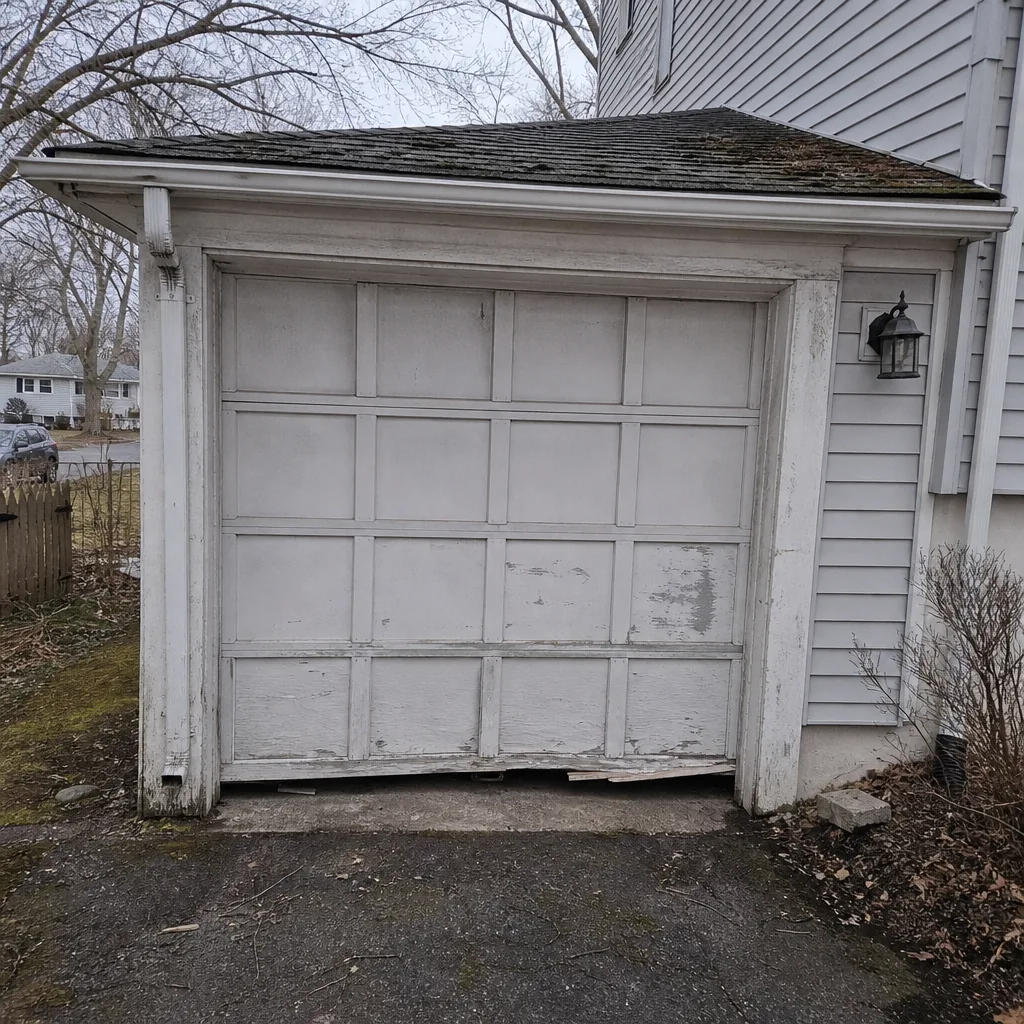 Before
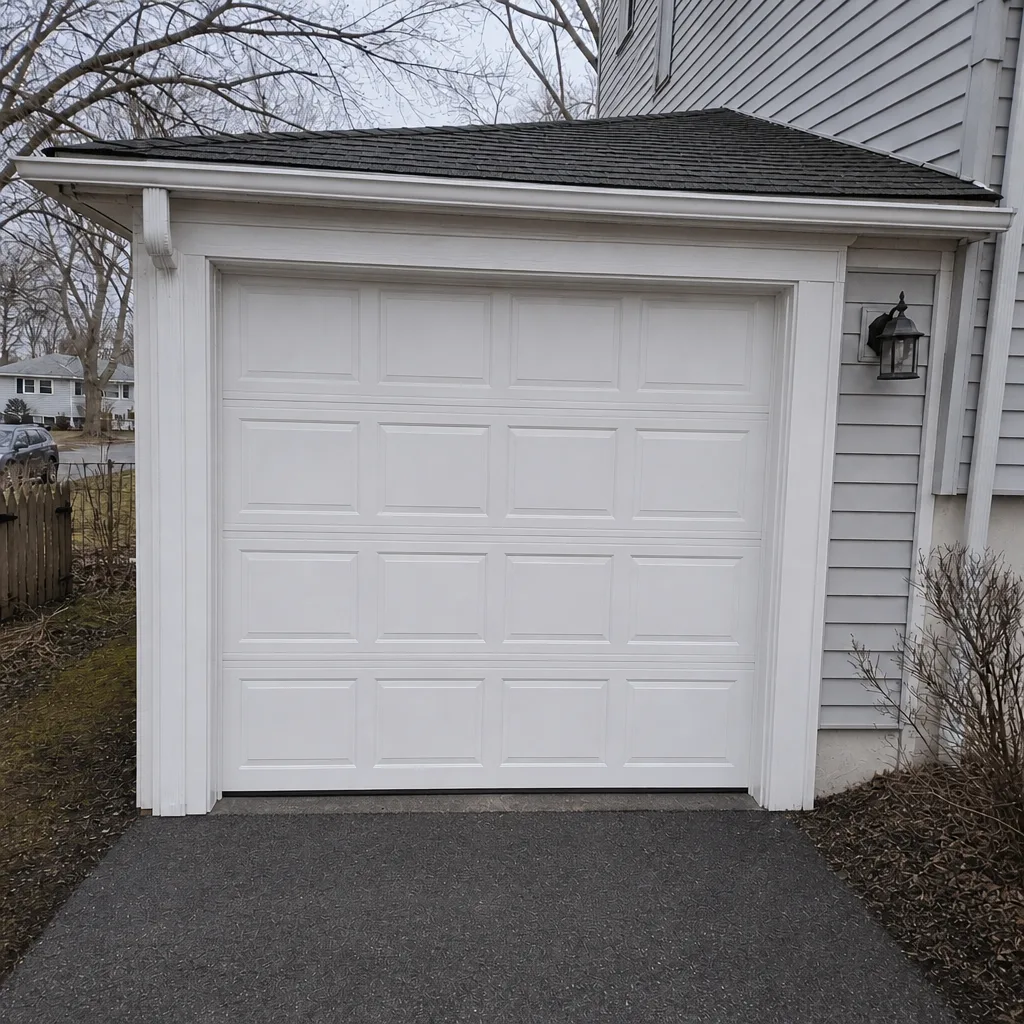 After
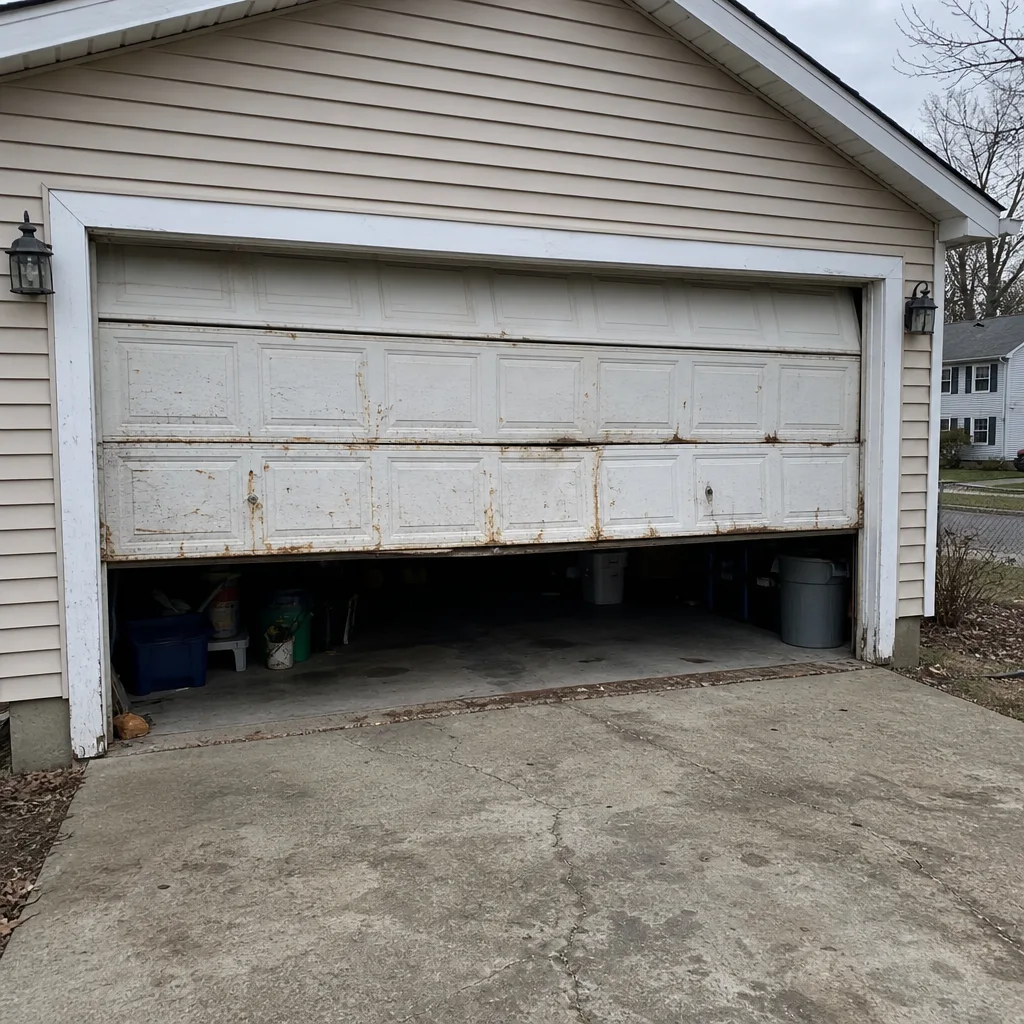 Before
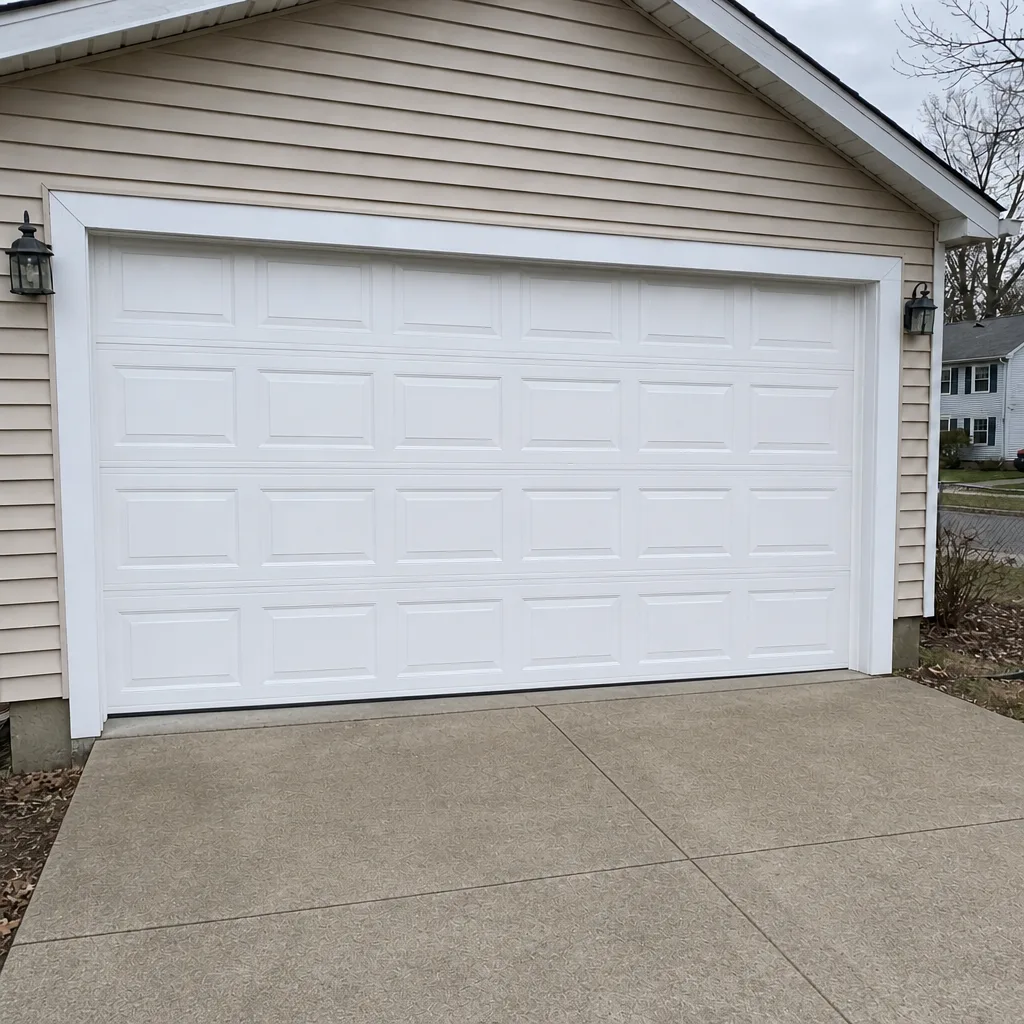 After
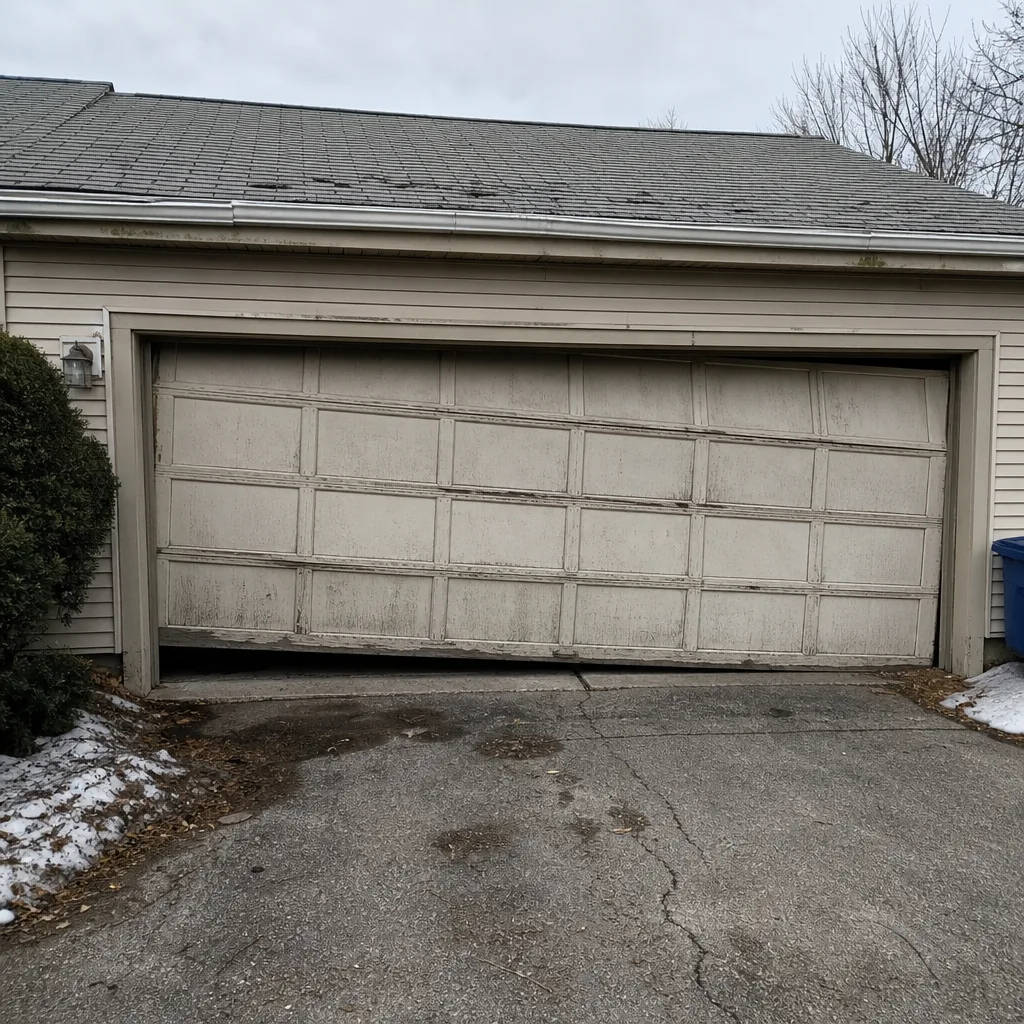 Before
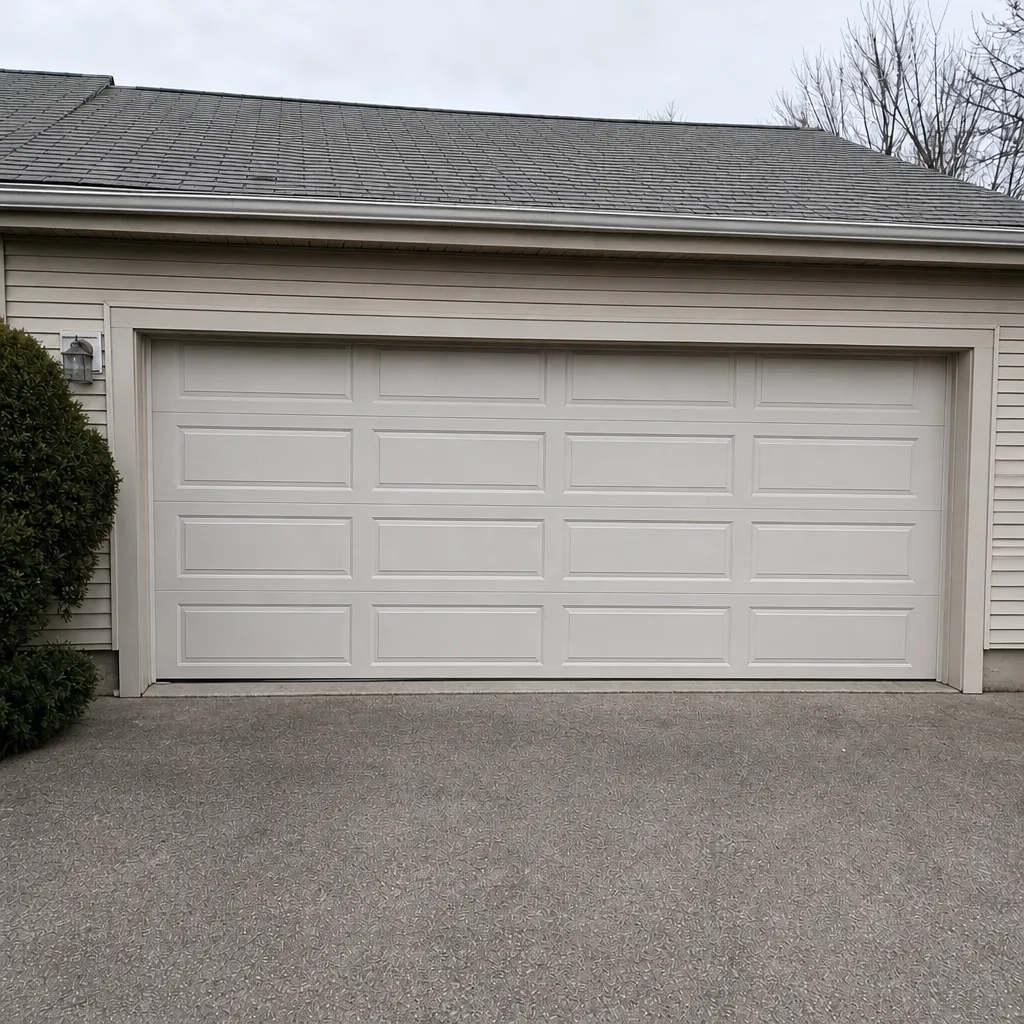 After
When to Call a Professional
Call a technician if any of these are true: a spring has snapped or is visibly cracked, a cable is frayed or hanging loose, the door won’t stay open or reverses on its own, the door hangs unevenly at rest, or the safety sensor test fails. Stop using the door immediately for the spring, cable, and uneven-hang symptoms; those are the ones with real injury risk. If you’re not sure, use the manual disconnect test and call anyway – the description you give will help the technician arrive ready. Framingham Garage Door Repair offers free estimates in Framingham – call (844) 443-3741. Spring repairs done right, done safely, and the diagnosis before the repair is what we do every day.
Frequently Asked Questions
A broken spring, a frayed cable, or a door that hangs unevenly at rest is the most serious warning sign because any of them can let a heavy door drop without warning. Stop using the door and call (844) 443-3741 for a free estimate.
Typical spring replacement in Framingham runs $180-$340 for one spring, and a matched pair usually costs about twice that. The written estimate sets the final price, and the price is agreed before any work starts. Call (844) 443-3741 for an exact quote – estimates are free.
Yes, same-day service is available for emergency repair when a broken door leaves your home unsecured or your vehicle trapped, and emergency garage door repair is a dedicated service for us. Call (844) 443-3741. We answer 24/7, and fast dispatch runs from 7am to 7pm, Sunday through Friday. A call outside dispatch hours is booked into the next opening.
No. The written estimate you agree to before work begins is the price you pay, and any change in scope comes back to you as a new written estimate first. Call (844) 443-3741 for a free estimate and an upfront number.
Yes. The local professional we send to your door is licensed and insured as Massachusetts requires, and spring repairs are handled by trained technicians – not unskilled labor. Call (844) 443-3741 for a free estimate.
We work on the brand already on your door, including LiftMaster, Chamberlain, Genie, Clopay, Amarr, Wayne Dalton, Craftsman, and Raynor products. Being factory-familiar with those brands means we diagnose faster and source the right parts the first time. Call (844) 443-3741 for a free estimate.
The manual disconnect test tells you whether the problem is in the door’s mechanical parts or in the opener’s electrical system – pull the release cord, move the door by hand, and observe. Call (844) 443-3741 with what you felt or saw and we’ll book the right technician.
Repair is the answer for most warning signs, and replacement becomes the answer when multiple panels are compromised, the door has structural damage, or spring failures keep recurring on a door that’s out of balance. A proper diagnosis decides which. Call (844) 443-3741 – estimates are free and there’s no pressure if repair is the right call.
The Bottom Line
Warning signs on a garage door are a map, not a warning bell. A grind on the way up and a grind on the way down come from different components. A slow lift is usually spring tension loss, not an opener failure. Stop-using signs on springs and cables are non-negotiable. The manual disconnect test tells a homeowner which specialist to call first, and the monthly sensor test is the cheapest safety measure in the house. In Framingham, add the New England layer: rust patterns, freeze-damaged seals, and wood shrinkage gaps. Catch these early and the repair stays small. Ignore them and the repair grows into the door. When it’s time to call, call (844) 443-3741. One call covers it – repair, opener, springs, or a full new door. We answer 24/7. Fast dispatch from 7am to 7pm, Sunday through Friday. Your garage door is your home’s largest moving part, and here’s the reference guide to keep it moving now.
Written by the team at Framingham Garage Door Repair.