
Last updated November 22, 2026
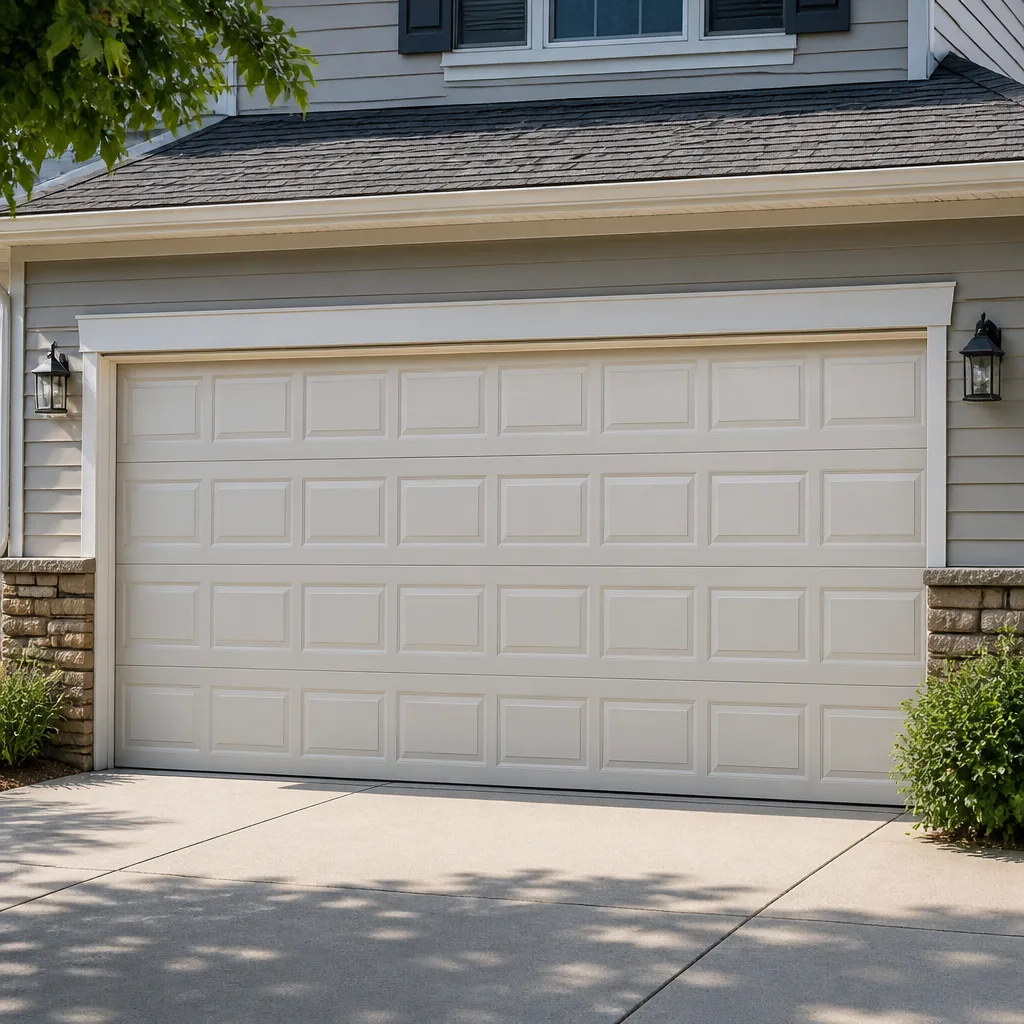 Raised-panel steel
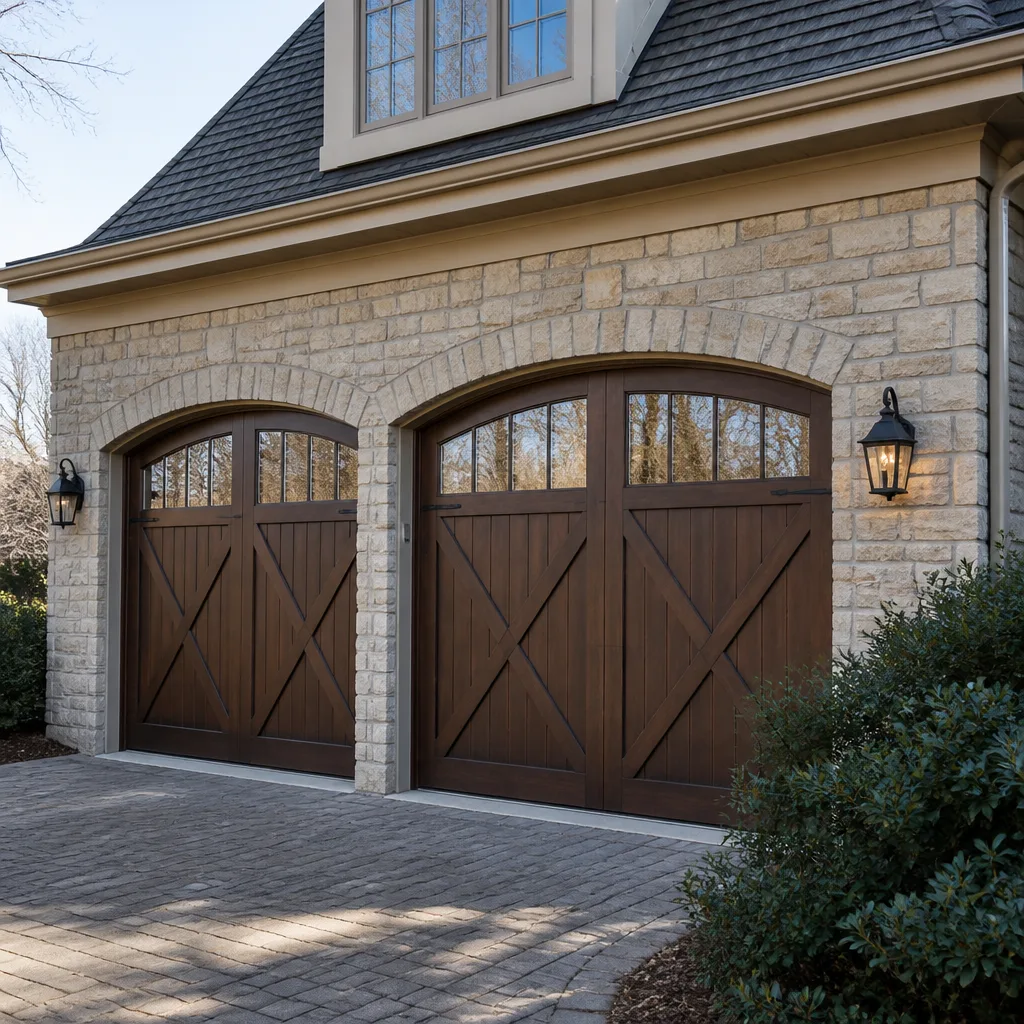 Carriage house
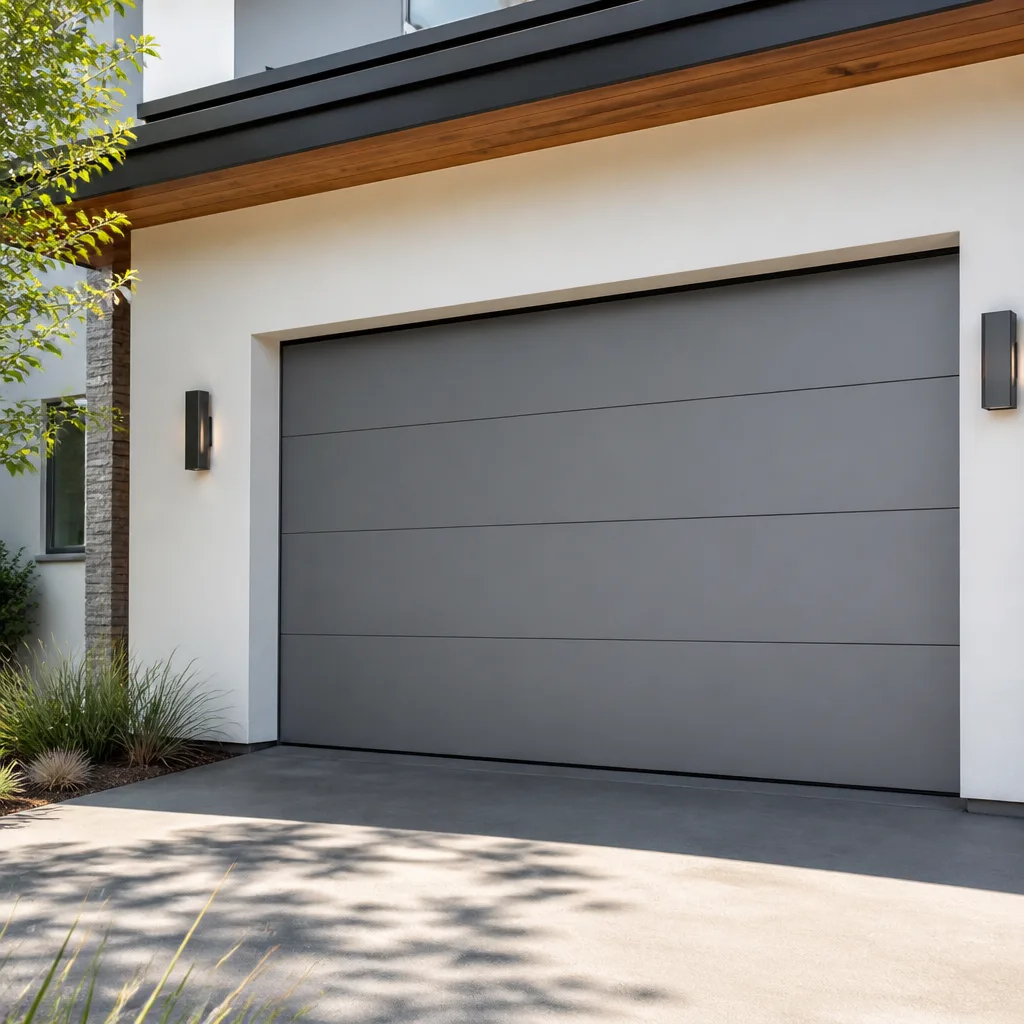 Modern flush
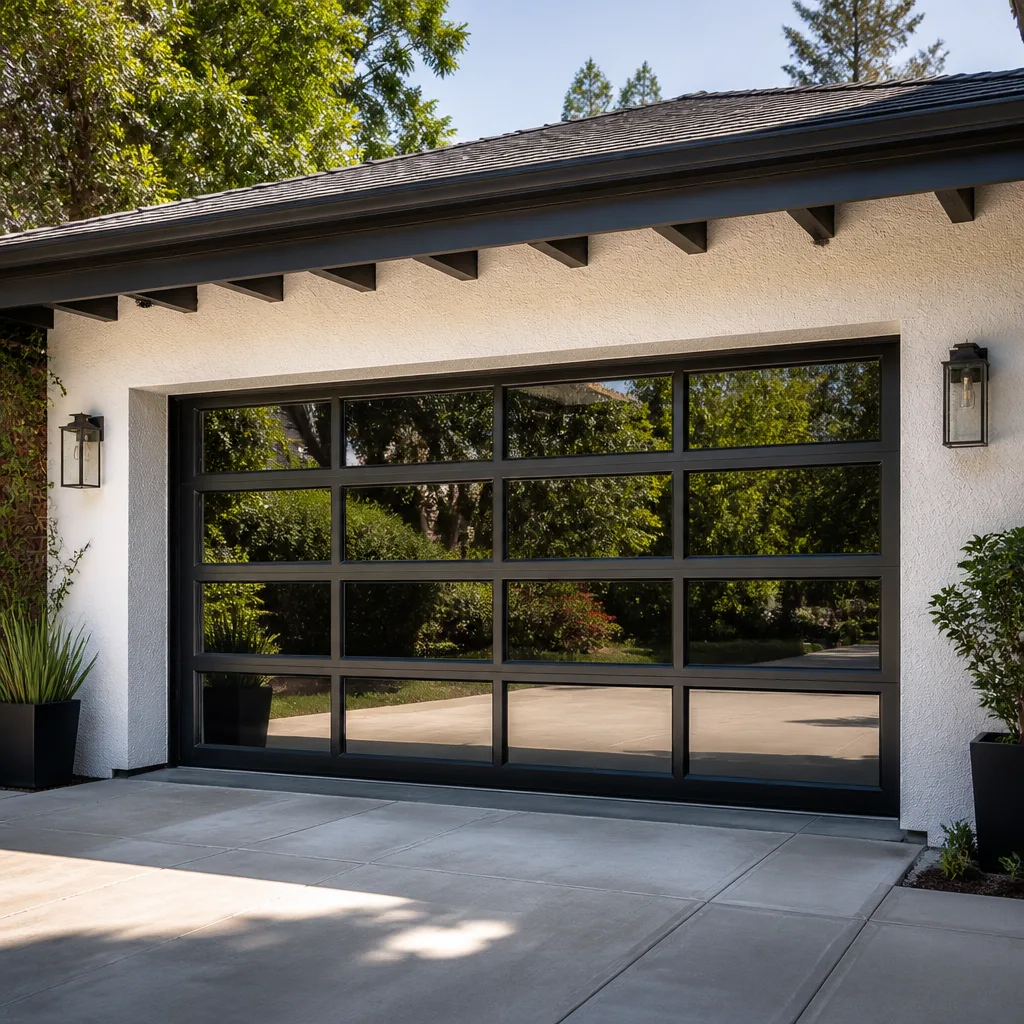 Full-view glass
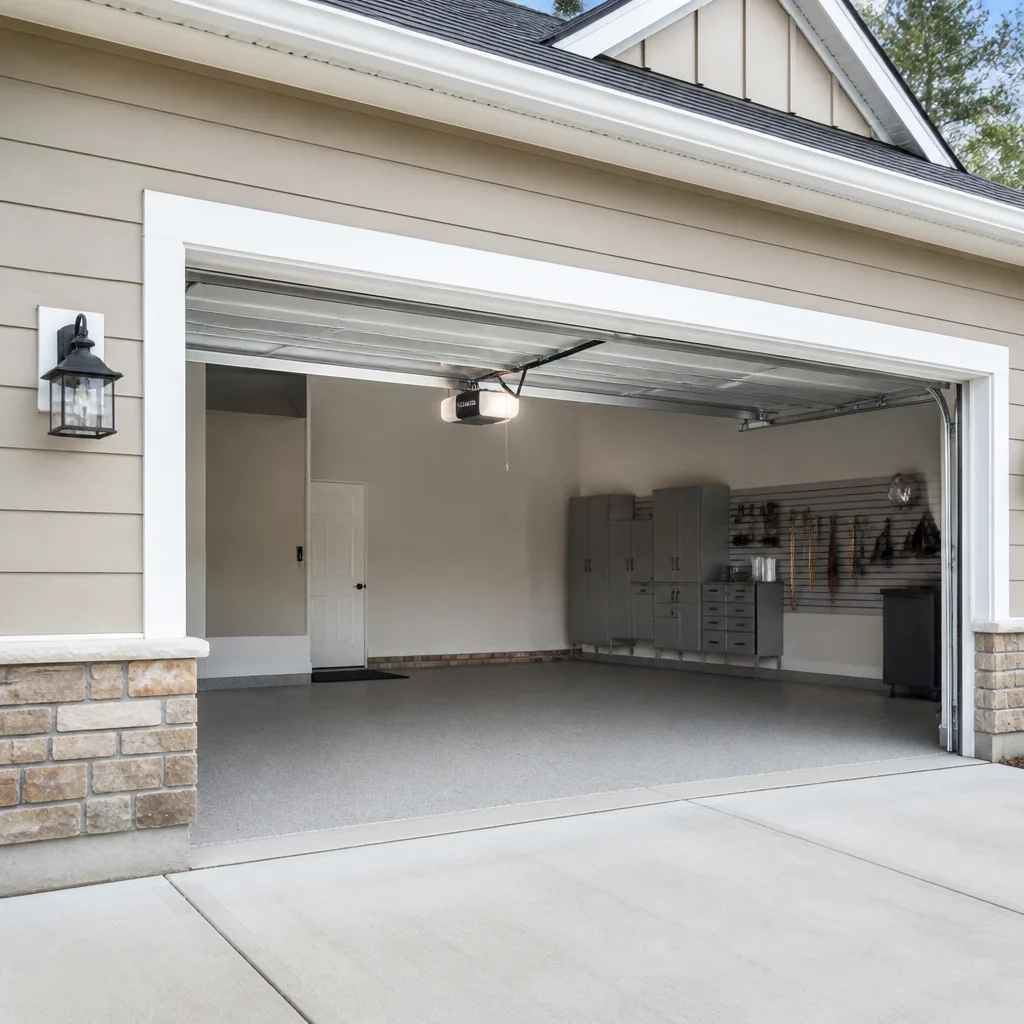 LiftMaster openers
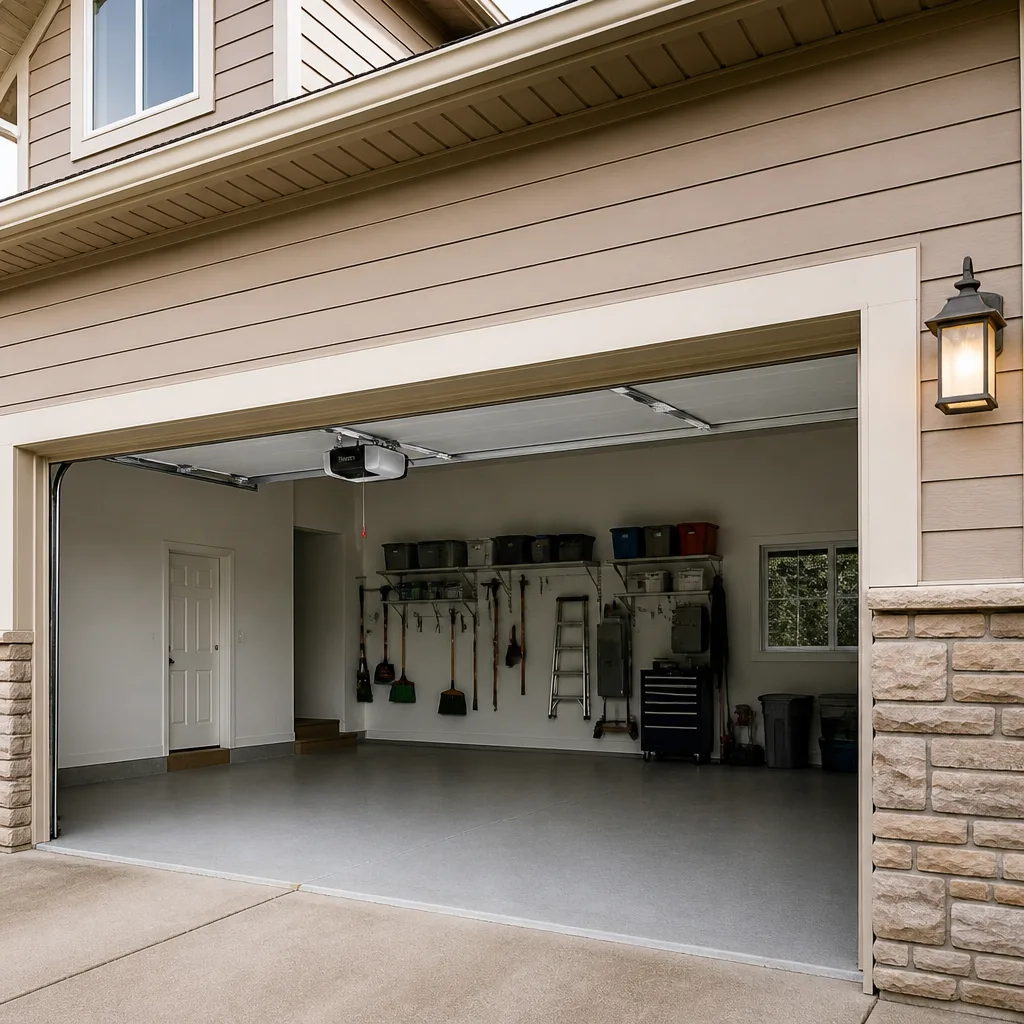 Chamberlain openers
Full 25-point door and opener safety check with every visit - springs, cables, rollers, tracks, and your LiftMaster or Chamberlain opener included
You get a price before we start. It does not change when the pro arrives.
Get your free estimateGarage Door Repair Troubleshooting in Framingham: Common Problems and How to Fix Them
A garage door spring under tension stores enough energy to break a wrist or crack a skull, yet most online troubleshooting guides walk homeowners straight toward it with nothing more than a cheerful set of steps. That’s the first thing we want to fix about how people think about garage door problems. Here’s the shift: your door isn’t a single machine with a single fault. It’s a chain – opener, springs, cables, rollers, tracks, sensors, balance – and the symptom you see at the floor is usually two or three links away from the part that’s actually failing. This guide teaches you to read that chain, tells you which problems you can safely handle yourself, and flags the ones that belong in trained hands. We’ll use Framingham examples because local weather and local housing shape these failures in specific ways.
Quick Answer
Most garage door problems fall into four families: opener and electrical faults, spring and cable failures, track and roller wear, and safety-sensor or remote issues. Sensors, tracks, remote programming, and lubrication are safe homeowner territory. Torsion springs, extension springs, cables, drums, and bottom brackets are not – those store lethal force and require a trained technician. If your door won’t close, won’t stay up, or has started making a grinding or popping sound, stop operating it and get it looked at.
Styles & brands we work with
- Raised-panel steel
- Carriage house
- Modern flush
- Full-view glass
- LiftMaster openers
- Chamberlain openers
Table of Contents
- Match the Symptom to the System
- The DIY vs. Call-a-Pro Boundary
- How New England Weather Creates Framingham-Specific Failures
- What a Door That “Works But Sounds Different” Is Telling You
- Manual Release and Re-Engagement, Step by Step
- The Real Diagnostic Work
- When to Call a Professional
- Frequently Asked Questions
Match the Symptom to the System
The single most useful troubleshooting skill is mapping a symptom to the component responsible for it. Most homeowners skip straight to the part that looks broken, which is often not the part that is. Here’s how the failures break down on the doors we see around Framingham.
Door won’t open at all
Start at the opener, not the door. A dead opener (no lights, no click, no sound) points to power, a tripped breaker, or a failed logic board. If the opener hums or clicks but the door sits still, the problem is more likely in the mechanical chain – a broken spring, a snapped cable, or a stripped drive gear. A quick tell: if you can lift the door by hand more easily than usual with the opener disconnected, the spring has failed. If it feels very heavy, spring or cable.
Door opens a few inches and stops
Partial travel is almost always a limit switch or travel-setting problem on the opener, sometimes a safety sensor that is misaligned or blocked. On LiftMaster and Chamberlain units, the logic board uses travel limits that can drift or lose their setting after a power event. This is opener territory and often fixable during a routine tune-up.
Door reverses before closing
Two causes dominate. Either the safety sensors are misaligned, dirty, or have a sun glare problem, or the opener’s force limit is set too low. Sensors should be checked first – a stray leaf, a cobweb, or a bumped bracket will interrupt the beam. If your door reverses on warm days but not cool ones, the force setting is the more likely culprit.
Grinding, popping, or rumbling noise
Grinding frequently comes from dry or worn rollers, a misaligned track, or a failing bearing plate. Popping is more serious – a spring that has begun to crack or a cable that is unwinding. Rumbling usually means the opener’s drive gear or motor bearings are wearing. A noisy door that “still works” is often one of these components inches from a full failure; hearing it early is how you avoid a surprise.
Door is crooked or off its track
A door hanging unevenly at one corner is off its track, has a broken cable on one side, or has a binding roller. Stop operating it. Forcing a crooked door can bend the track, break a panel, or pop the torsion cable – all of which turn a moderate repair into a full replacement of hardware.
The DIY vs. Call-a-Pro Boundary
Knowing where you shouldn’t go is the most important troubleshooting skill of all. Garage door systems divide cleanly into homeowner territory and trained-technician territory, and the split is not about difficulty – it’s about stored energy and injury risk.
Safe for homeowners
- Safety sensor cleaning and alignment – wipe the lenses, confirm the LEDs, nudge a bumped mounting bracket back into line.
- Track straightening and adjustment of small bends – a track that was bumped gently can usually be nudged back without unloading the door. If the door is stuck or binding heavily, stop.
- Lubrication – rollers, hinges, and the torsion bar bearings take a garage-door-specific lubricant, not grease or WD-40.
- Remote programming – pairing a new remote or keypad to the opener logic board is a manual job, not a repair.
- Force and travel settings – a liftMaster or Chamberlain opener’s force and travel limits are adjustable on the motor head or through the app.
- Manual release and re-engagement – the pull cord is there for whoever needs it.
Belongs with a trained technician
- Torsion springs – wound under hundreds of pounds of tension; releasing or adjusting one without the right winding bars and training can cause severe injury.
- Extension springs – less dramatic than torsion, still under real load and often without safety cables on older doors.
- Cables and drums – cables are under tension, and a slipping cable can take fingers with it.
- Bottom brackets – the fitting at the bottom corners carries cable tension and is a known injury point.
- Off-track doors with load – a crooked, stuck, or hanging door on a loaded spring is a hazard to force.
- Panel replacement with spring adjustment – even a “simple” panel swap usually means rebalancing the door.
If you remember one rule from this guide: do not touch the springs, cables, or bottom brackets. Everything inside your door’s mechanical range but outside that list is fair game if you’re careful. And when the failure turns out to be more than you’re equipped for, garage door repair is how the door safely gets back into service.
How New England Weather Creates Framingham-Specific Failures
Framingham sits in the kind of climate that punishes hardware with dozens of freeze-thaw cycles each winter and swing-from-humid-to-bone-dry conditions the rest of the year. Generic garage door troubleshooting guides written for a mild climate miss this, so the failure patterns experienced technicians here expect are a little different from the ones you’ll read about online.
Freeze-thaw and the bottom seal
Every winter the ground near a door heaves and settles. In Framingham, that push-and-pull draws the bottom weather seal against the slab, and by February a seal that was sealing in October is often hanging a half-inch below the door. Water gets under it, freezes, and jams the door against the slab. The fix is usually a new bottom seal and a small flush adjustment – not a new door. Homeowners who misread this as a motor problem waste time and money.
Humidity swings and wood doors
Older Framingham homes carry a lot of wood garage doors, and wood moves. A door that fits fine in July can drag on one side by late August once the panels have swelled, then clear by the first dry week in October. On a wood door, the message is not “the opener is weak” – it is “the door is heaviest when it’s wettest, and the opener’s force setting is probably on the edge.” Adjusting the force too far in the wet season can hide a developing balance problem.
Cold-shocked springs
Garage door springs fail more often in cold snaps. Metal that has been under constant load for years becomes brittle at low temperatures, and the first hard freeze often finds the weakest point. In Framingham, this is why so many spring failures land in a January or February cold stretch. If your door worked fine on Saturday and won’t lift on Monday morning and the temperature dropped hard, spring failure is the first thing to suspect.
Ice and the photo-eye
A dusting of snow landing on the sensor eye, then freezing into a thin shell, is one of the most common winter service calls in this area. Before calling anyone, clear the lenses and confirm both sensor LEDs are lit. If they aren’t, and clearing doesn’t fix it, the sensor or the wiring is more likely the cause.
What a Door That “Works But Sounds Different” Is Telling You
Most catastrophic garage door failures announce themselves first. A door that “still works” but has started telling you it’s unhappy is usually days or weeks from a much more expensive problem – and this is where paying attention really pays. Here’s what to listen for.
- A single loud bang from the ceiling, followed by a door that feels very heavy – a torsion spring has snapped. Stop operating the door and call for spring repair.
- Rhythmic thumping as the door travels – a flat-spotted roller, a bent track, or a loose hinge. Small problem, easy fix, gets worse if ignored.
- Screeching or squealing – dry bearings or dry rollers. Left alone, the noise compounds and rollers seize.
- Grinding at the opener head – the nylon drive gear inside the opener is wearing. This happens more in cold weather, and a failing gear can leave the door stuck mid-cycle, which is inconvenient and occasionally dangerous if the door drops.
- Creaking or groaning at a specific point in travel – usually a torsion bar bearing or a hinge that needs lubrication. Sometimes it’s the opener’s rail pulling against a settling bracket above the door.
- Intermittent popping – a cable that has started to part. This is genuinely urgent; stop using the door.
In our experience, the doors that truly cost their owners money are not the ones that broke suddenly – they’re the ones that were making noise for a month while their owners hoped it would go away. A short annual tune-up catches nearly all of these before they become the emergency call.
Manual Release and Re-Engagement, Step by Step
When the power goes out or the opener fails completely, your door has a manual release so it can be opened and closed by hand. This is safe to use – it’s designed for homeowners – but a few steps matter for your safety and the health of your door. Do not use the manual release on a door whose springs have failed; if the door feels far heavier than usual, stop and call for help.
Releasing the door
- If the opener has power, press the wall control once so the door travels to the fully closed position, then stop. Releasing a door that’s a few feet off the floor can let it slam.
- Pull the manual release cord straight down, sharply. You’ll hear and feel the trolley detach from the carrier.
- Lift the door by the handle to about waist height to confirm you can raise it. If it feels like lifting dead weight rather than a balanced door, the spring has failed – do not let go, lower it carefully and call for service.
- If you need the door open for an extended period, prop it securely at the top of the travel. Do not leave it at half-mast on a hot day – the door can drift.
Re-engaging the door
- Close the door by hand until it’s fully seated on the ground.
- Stand inside the garage near the trolley and press the wall control or app once. The trolley runs to the door, but for most openers you’ll need to press the wall control a second time to send the trolley through the carrier.
- Listen for the click of the trolley catching the carrier. Give the door a gentle tug by hand – if it moves freely, it’s not engaged. Repeat.
- Press the opener once more to let the door cycle fully open and closed to confirm engagement and check the safety sensors.
If the re-engagement won’t catch on multiple attempts, the carrier or trolley may be damaged, which is common on older units. On newer LiftMaster and Chamberlain models, some of this process can be confirmed in the app. If it keeps failing, the opener is telling you it’s ready for garage door opener repair rather than continued coaxing.
The Real Diagnostic Work
Once you’ve eliminated the safe-to-fix problems, what’s left is almost always the mechanical chain. That’s the part where accurate diagnosis saves you from replacing the wrong component – and where working across the industry’s leading brands matters. We’re factory-familiar with Wayne Dalton, Craftsman, Raynor, and LiftMaster door and opener systems among the eight brands we regularly work on, which means we’re rarely guessing at which parts a given door actually needs.
Balance testing your door
This is the single most useful test a homeowner can run, and it tells you more than any other single diagnostic. With the door disconnected from the opener, lift it to about waist height and let go. A properly balanced door should stay roughly where you left it. If it drops or rises on its own, the springs are out of balance – which is a call-a-pro problem, because rebalancing means adjusting spring tension.
When to suspect springs vs. opener
A door that won’t lift, feels unusually heavy, or has snapped free at the top usually has a spring problem. A door that runs its motor normally but doesn’t move has an opener or trolley problem. A door that runs and moves but struggles is a balance problem. A door that closes then reverses is a sensor or force-limit problem. That four-way split covers most of what we see in Framingham.
What it looks like in a typical spring replacement
Spring repair is the one job in this trade that we treat as a specialty rather than a routine call. When a torsion spring breaks, a technician will first confirm both springs (torsion springs are almost always replaced in matched pairs), wind down the tension safely, remove the broken spring, install the new pair, and rebalance the door’s travel. The whole visit usually runs from under an hour to a couple of hours depending on access and door size. If the door needs a full new section, a rebalance, and a fresh set of rollers, that can stretch into a longer job. garage door installation is the other end of the same work when a door is old enough that repair stops making sense.
See the difference
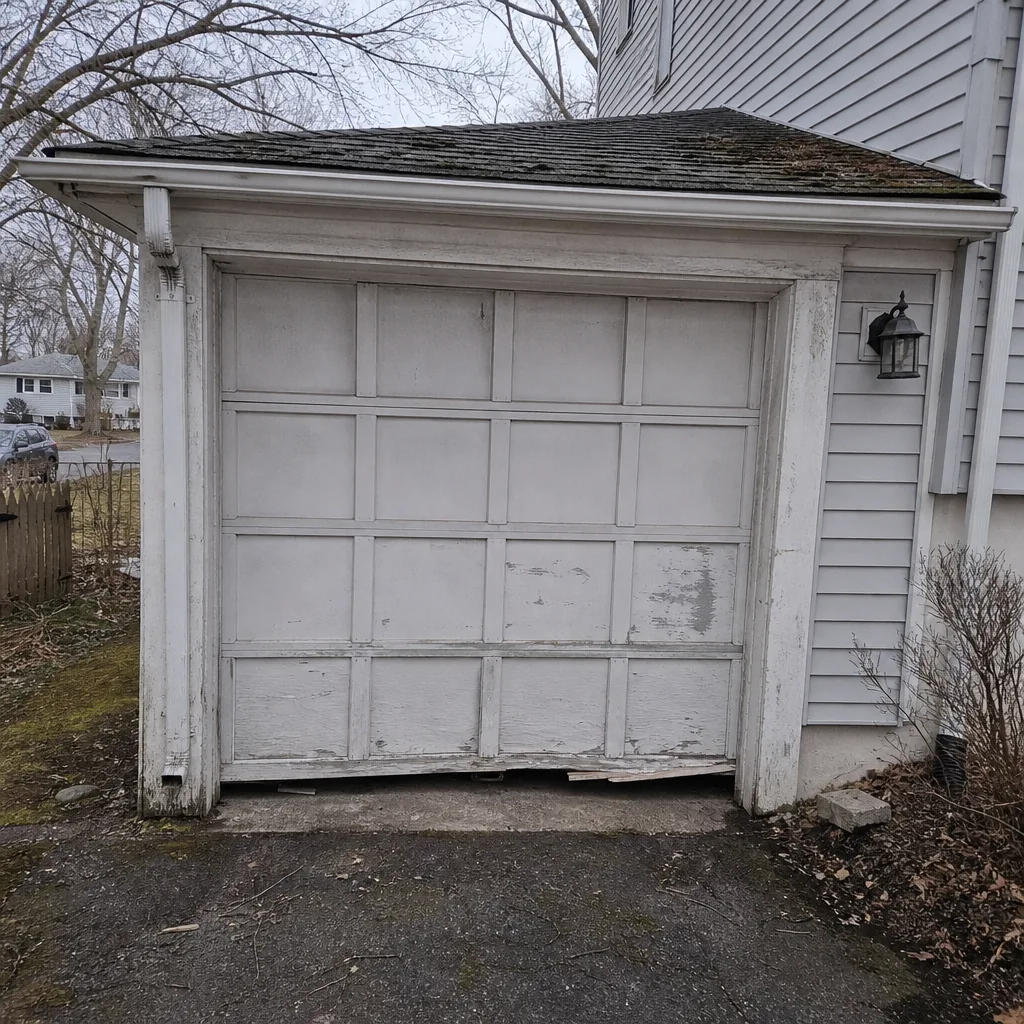 Before
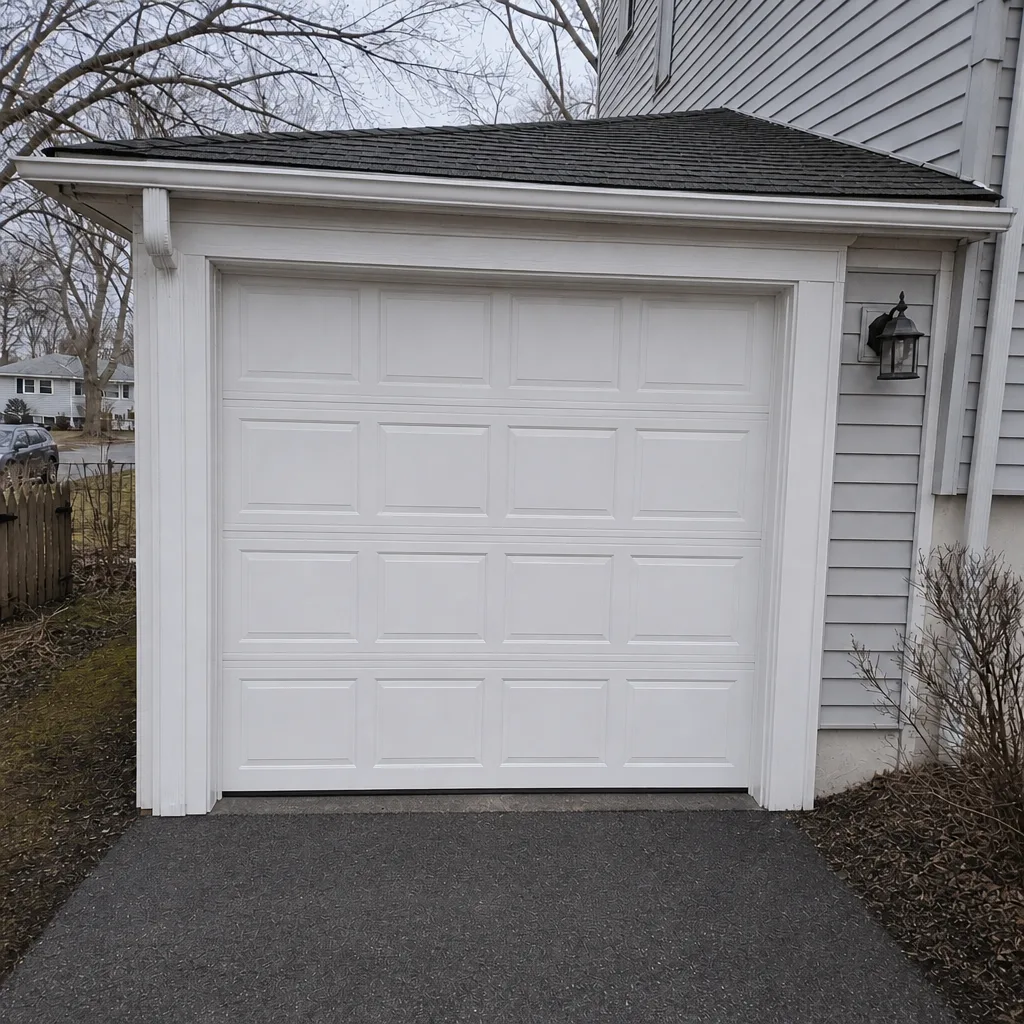 After
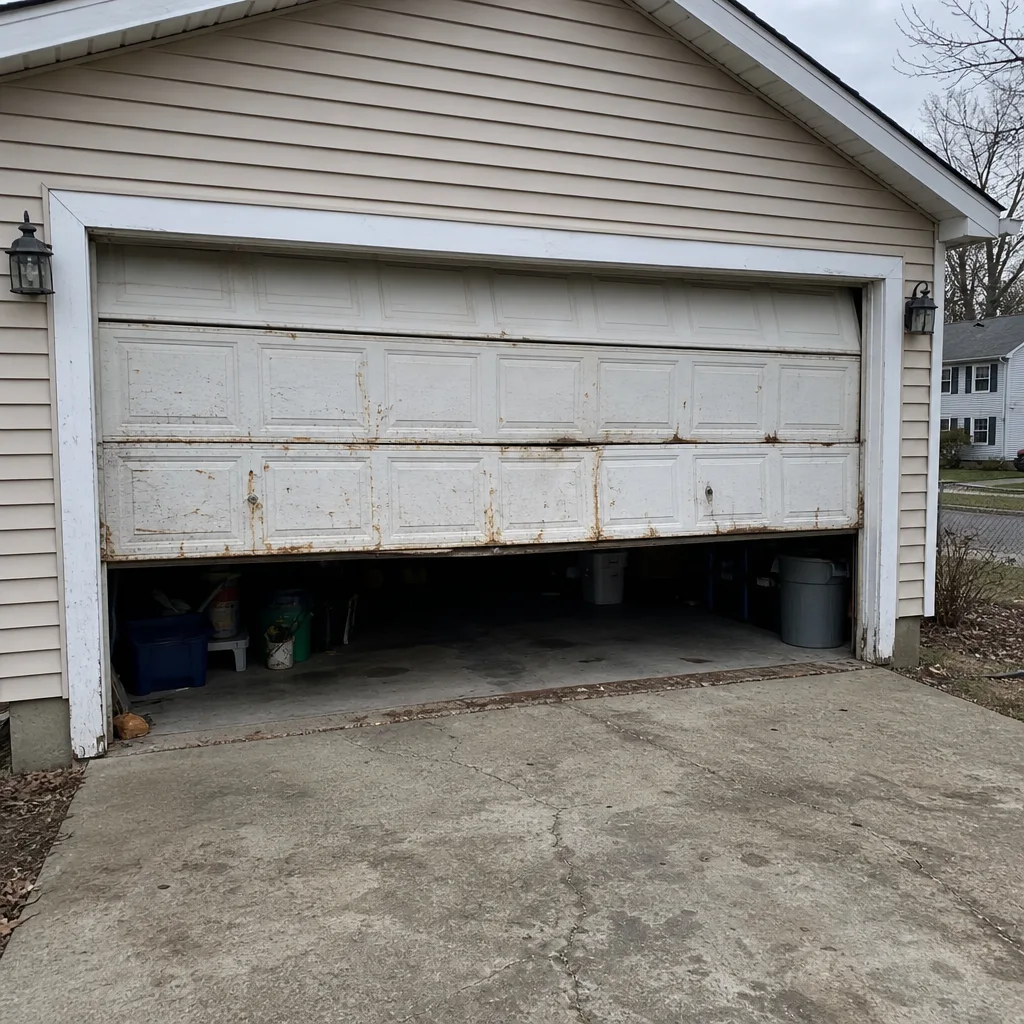 Before
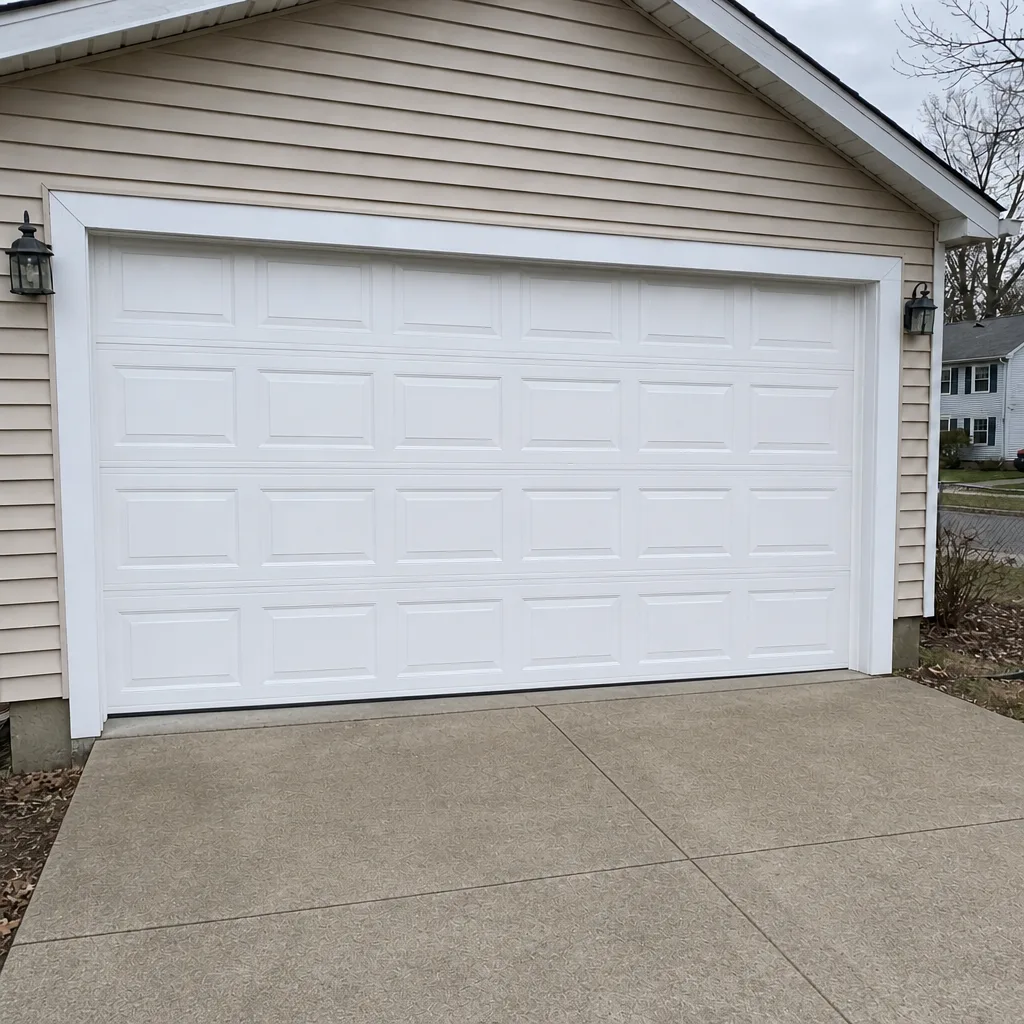 After
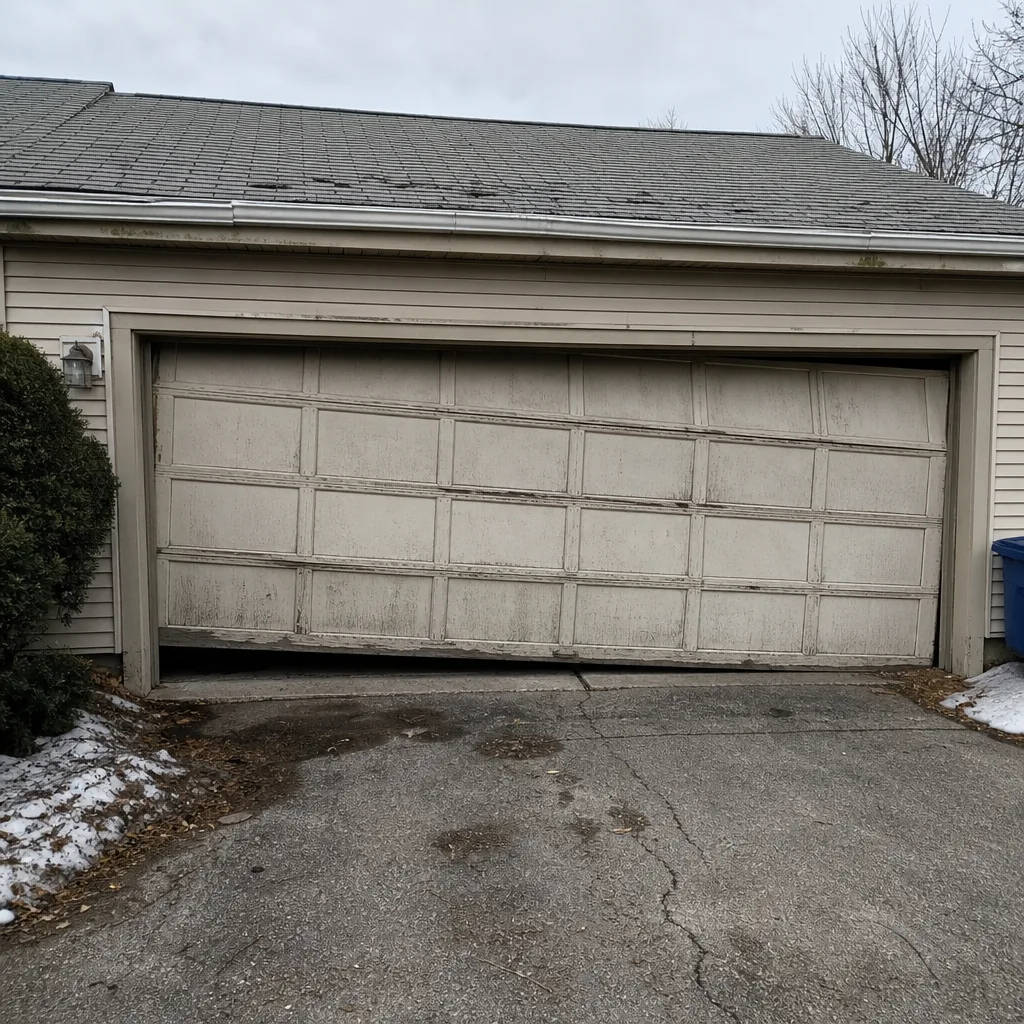 Before
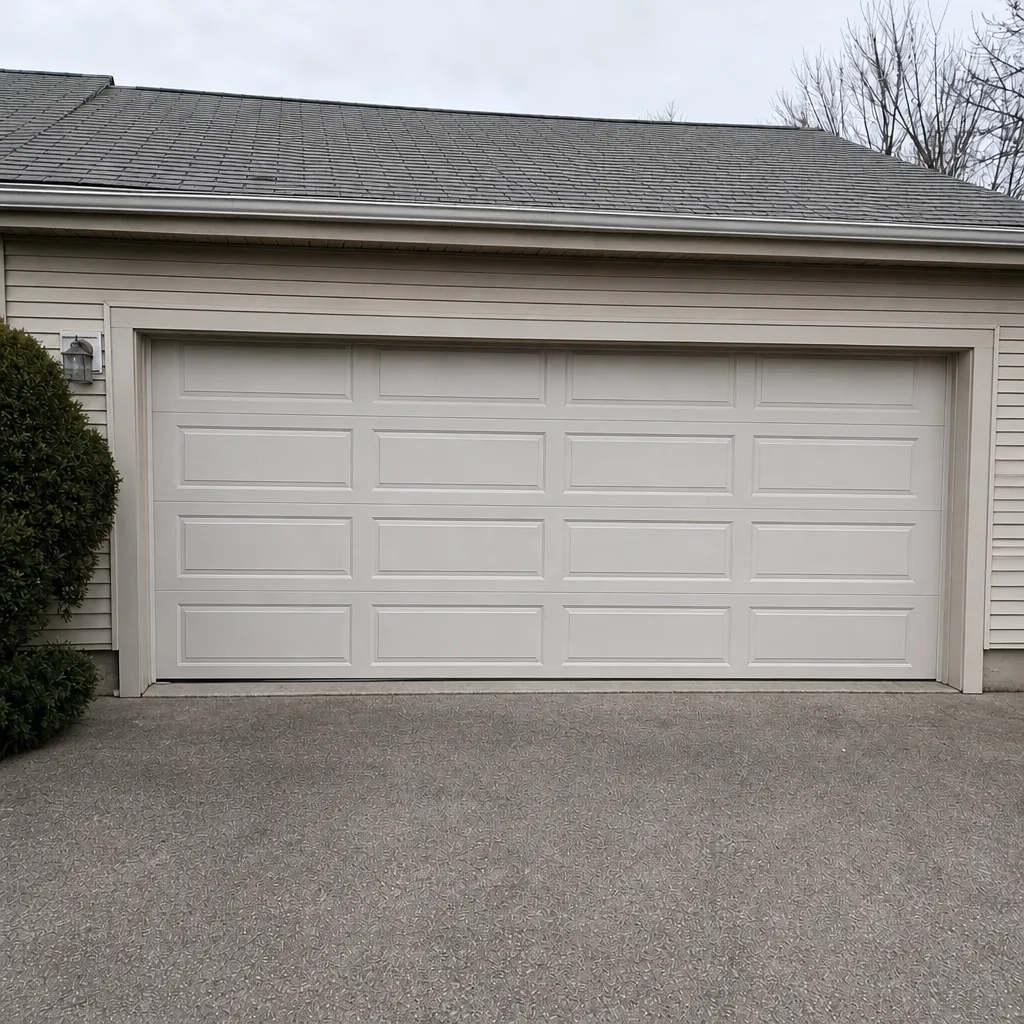 After
Common Mistakes to Avoid
- Forcing a stuck door with the opener. If the door won’t move, the opener will burn out its drive gear or strip the trolley – a small repair becomes two. Set the opener aside and address the mechanical cause.
- Trying to “help” a torsion spring by hand. The winding bars, not muscle, are the tool. This is where injuries happen, and no internet guide can make it safe.
- Using grease or WD-40 on door hardware. Garage door rollers and hinges need a door-specific lubricant that won’t attract grit. Grease collects debris and makes tracks wear faster.
- Ignoring the bottom seal in Framingham winters. A seal that’s slightly torn in November becomes a jammed door by February. Small seasonal maintenance prevents the bigger call.
- Adjusting the force setting as a first response to every symptom. Cranking up force mask a real imbalance problem, and then the door works against its own spring – which shortens the life of both.
- Assuming every noise is the opener. Grinding, rattling, and thumping usually trace to the door, not the motor. Diagnosing from the door side first saves replacing a motor that was fine.
- Replacing a remote that isn’t the problem. A remote that works intermittently is often a battery or logic board pairing issue, not a dead remote. Before buying a replacement, try a fresh battery and re-pair once.
- Ignoring a door that’s “just a little” crooked. A door that’s hanging unevenly has either lost tension on a cable or jumped a roller. Operating it accelerates track damage.
When to Call a Professional
Call a professional any time the diagnosis lands on springs, cables, drums, or bottom brackets – without exception. Call when the door is crooked, off its track, or hangs by one corner. Call when a loud bang from the ceiling is followed by a heavy door. Call when the door won’t close all the way and you can’t identify a sensor or force-limit issue. Call when the opener head is grinding and the door is stuck mid-cycle. And call when your door is old enough that the question isn’t “what’s broken” but “is it worth fixing at all” – that’s a conversation worth having before a piece of hardware fails at a bad moment.
Framingham Garage Door Repair offers free estimates in Framingham. Call (844) 443-3741 for an exact quote – the price is confirmed before any work starts. Emergency garage door service is a real, dedicated line for us, whether you’re locked out or your home isn’t secure. We answer 24/7. Fast dispatch from 7am to 7pm, Sunday through Friday.
Frequently Asked Questions
Typical spring repair in the Framingham area runs in the $180-$340 range per spring, which is the price for one spring. Torsion springs are almost always replaced in matched pairs, so a pair costs roughly twice that. The written estimate you receive before any work begins is the price you pay. Call (844) 443-3741 for an exact quote – estimates are free.
Yes, a door that won’t close is exactly the kind of call we prioritize, and same-day service is common for repair and emergency work. We answer 24/7. Fast dispatch from 7am to 7pm, Sunday through Friday. Call (844) 443-3741 and we’ll let you know the earliest slot. A call outside dispatch hours is booked into the next opening, Sunday through Friday, 7am to 7pm.
No – the price is quoted and agreed before any work starts, and the written estimate is what sets it. What can change is scope: if we find a second problem (a cable that’s also frayed, a bottom bracket that’s cracked) we’ll show you before we touch it and quote that separately. There’s no job where we surprise you with a bill bigger than the estimate.
Yes. The local professionals we connect you with are state-licensed and insured as their state requires, and our technicians have up to 14 years of experience working on garage doors and openers. Spring work – torsion and extension – is handled by trained technicians, not general helpers, which matters because it’s the most dangerous repair most homeowners will ever see.
Disconnect the opener with the manual release, then lift the door by hand to waist height and let go. If the door stays roughly where you left it, the door’s balance is fine and the opener is a strong suspect. If the door drops, rushes up, feels very heavy, or hangs unevenly, the door’s mechanical system is the cause and the opener is fine. That one test points the diagnosis.
We’re factory-familiar with eight of the industry’s most-installed brands, including Wayne Dalton, Craftsman, Raynor, and LiftMaster, along with Chamberlain, Genie, Clopay, and Amarr. That means we’re usually able to work with the door and opener that’s already installed rather than recommending a swap. If your brand isn’t on that list, call anyway – the diagnosis process is the same, and we’ll tell you honestly whether we can help.
The Bottom Line
Troubleshooting a garage door is mostly about knowing where the fault is in the chain, not about being handy. Sensors, tracks, lubrication, remote programming, and knowing how to use the manual release are yours to handle. Springs, cables, drums, and bottom brackets are not – they store enough energy to injure you and belong in trained hands. Framingham’s freeze-thaw winters add a few failure patterns worth knowing: seal jams in February, cold-shocked springs, and photo-eyes with a shell of ice. Read the noise, not just the motion; a door that “still works” but sounds wrong is telling you something. And when the diagnosis lands on the mechanical chain, one call covers it – repair, opener, springs, or a new door.
Call (844) 443-3741 for a free estimate. We answer 24/7. Fast dispatch from 7am to 7pm, Sunday through Friday. Emergency service is a real, available line – not a vague promise – and the price is confirmed before any work starts.
For more about how we work across Framingham, start at Framingham Garage Door Repair.
Written by the team at Framingham Garage Door Repair.