
Top Signs You Need Garage Door Service – Don’t Ignore These
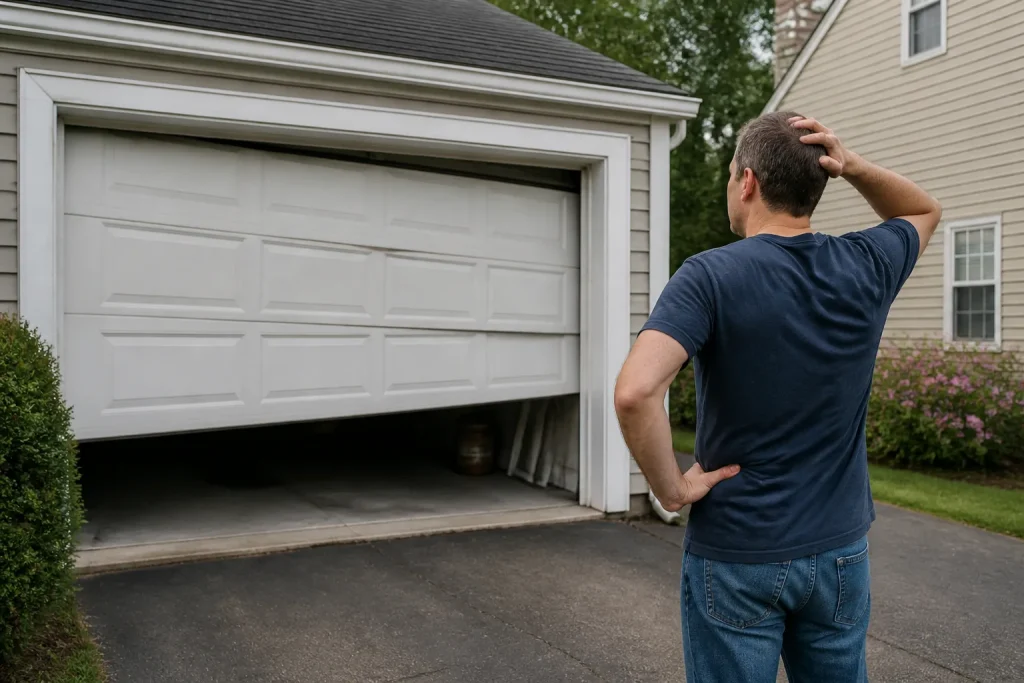
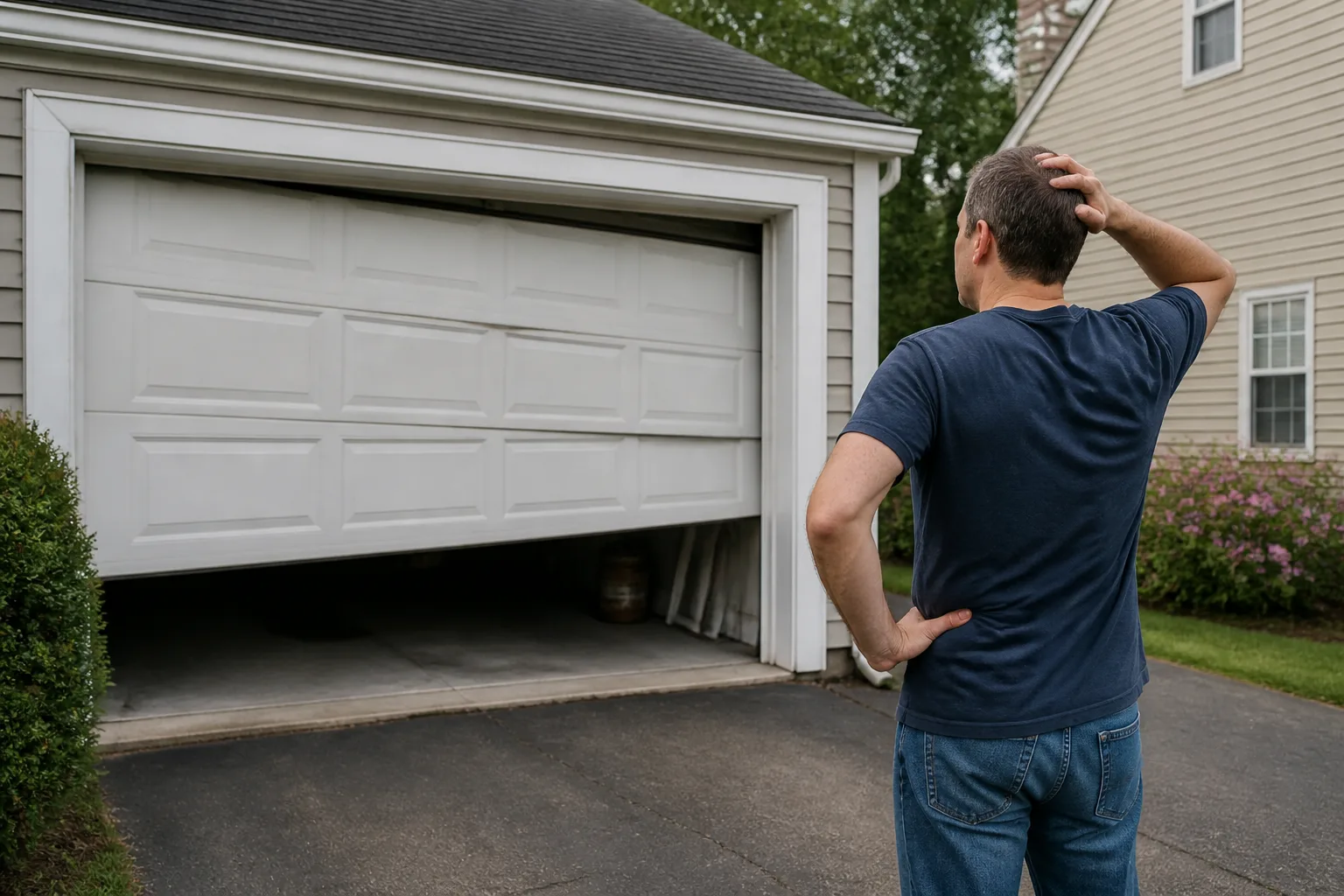
The sign you need garage door service is usually a change, not a catastrophe: a new grinding noise, a door that opens a little slower than it used to, a cable that’s started to fray where it winds around the drum. Most garage door failures don’t show up out of nowhere. They announce themselves weeks in advance, and most of us are very good at ignoring the announcement. Here’s what to listen for, what to look at, and why catching it early saves real money in Framingham. If you’d rather not DIY, call (844) 443-3741 and we’ll take a look.
Key Takeaways
- Sounds, speed changes, and visible wear are your door’s early warning system.
- Grinding, popping, scraping, and rhythmic clicking each point to a different component.
- A door that hesitates or jerks is showing a mechanical fault, not normal aging.
- Small parts are cheap. Ignoring them long enough to damage the track or springs is not.
What Does It Mean When a Garage Door Grinding, Popping, or Scraping?
Each noise below tells a trained ear where to look, and that’s the first step toward an accurate garage door repair in Framingham. The trick is that homeowners hear them all as “the door’s just loud,” when in reality four common sounds mean four different things.
- Grinding. Usually worn gears inside the opener itself, or rollers that have lost their bearings and are dragging against the track. On a Genie or LiftMaster unit, a grinding opener often needs internal gear work rather than a whole new motor.
- Popping or a loud bang from above. This is the sound of spring tension releasing, often in steps. Torsion springs don’t fail quietly, and a popping spring is the single most dangerous sign on this list.
- Scraping. Metal-on-metal sliding, most often a roller out of the track or a section that has shifted. Scraping wears both parts down fast, so it’s worth a look sooner rather than later.
- Clicking at the same point every cycle. The door hits something, or a bent section or a loose obstruction interrupts travel at that spot. Because it repeats in the same location, it’s easy to track down.
If a sound only happens on the way up, or only on the way down, note which. That detail shortens the diagnostic call considerably, and it’s one of the ways our technicians, who have up to 14 years of experience, cut straight to the problem instead of guessing.
What Visible Wear Should You Check on a Garage Door?
The parts most likely to fail are also the most visible if you know where to look. Give the door a scan once a season and watch for these signs. It takes about a minute and it’s the best free maintenance you’ll ever do.
- Cables that look furry or unlaced. A healthy cable is smooth and taut. Wires poking out of the braid mean it’s fraying. A fraying cable is loaded under high tension and should never be touched by hand. Treat it as a professional-only repair.
- Rust on a spring. A light dusting of rust is cosmetic. Streaks, pitting, or a visibly stretched spring suggest it’s near the end of its life. Springs on Clopay and Amarr doors age the same way as any other, so brand doesn’t protect you.
- Gaps under the bottom seal. Light showing under the door can mean a worn seal, but it can also mean the door is out of level or the track has shifted. The difference matters.
- Loose or bent hinges and rollers. If a hinge wiggles in the hand, it’s loose. If the roller is flat on one side, it’s wearing a groove into the track.
In our experience helping Framingham homeowners, the rusty, slightly stretched spring is the most overlooked. It’s the part most likely to let go without warning, and the same spring that fails at 7am is the one you’ve walked past all winter.
Why Is My Garage Door Opening Slower or Hesitating?
Speed and movement changes are mechanical symptoms, not signs of age. A door that opens slower, jerks at a specific point, or hesitates before it lifts is telling you a component has changed. It’s the difference between a door that has always been a little slow and one that used to be faster. If you can remember it opening more smoothly last year, that memory is data.
- Slower open. Usually a spring that has lost tension, which puts more load on the opener. Left alone, the opener starts to strain, and the strain is what shortens its life.
- Jerking or hesitation at a specific spot. A track kink, a bad roller, or a section that’s out of alignment. If you can point to the height where it happens, that’s your starting point.
- Stops and reverses near the top. Often the opener’s force limit or a sensor issue. On smart systems from Chamberlain or LiftMaster, it can also be a communication glitch worth checking before assuming the worst.
- Uneven lift on one side. One spring carrying more load than the other, or a cable that’s slack. Neither is a DIY fix.
Movement problems in Framingham climb out of the normal range quickly. The door is your home’s largest moving part, and a small daily strain adds up over a year of use.
Contact the team at Framingham Garage Door Repair
Some problems can wait for a scheduled visit. These can’t. If you notice any of the following, it’s time to call rather than keep observing:
- A cable that’s visibly frayed, dangling, or unlaced. Stop using the door. Cables are under enormous tension and cause serious injury when they snap or come loose. This needs a trained professional, not a general handyman and certainly not a weekend project.
- A popping or banging spring. Same rule: keep the door closed and leave it alone. Spring work is the most dangerous repair in the trade, which is why we handle torsion and extension springs as their own specialty rather than an afterthought.
- A door that won’t close all the way, leaving your garage open to the street.
- An opener that runs but the door doesn’t move, or one that won’t respond to a remote at all.
If your garage door is stuck, unusable, or leaving your home unsecured, emergency garage door service is a real service line here, not a vague promise. We answer 24/7. Fast dispatch from 7am to 7pm, Sunday through Friday. One call covers repair, opener work, springs, or a full replacement, so you don’t need to track down a second company.
If you’d rather not handle the assessment yourself, call (844) 443-3741. We work on the brand already on your door, including Wayne Dalton and Genie systems, so there’s no guessing about parts.
Related services in Framingham: If your opener’s the problem rather than the door, our garage door opener repair covers both legacy and smart systems. And if the door itself is beyond saving, garage door installation replaces it with a properly fitted new one.
Why Does Ignoring a Small Issue Cost So Much Later?
The math on delay is the reason this post exists. A worn roller is cheap to replace. Ignore it for a few months and the same roller cuts a groove into the track, and now you’re replacing track. Small mechanical issues in a garage door don’t stay small, because every part of the system carries load for the others. One worn piece forces the next one to work harder.
- A cracked roller wearing a track into a kink.
- An unbalanced door straining the opener’s gears.
- A slow spring putting extra stress on the cables.
- A loose hinge bending a section out of line.
None of these are dramatic. That’s the problem. They degrade quietly, week after week, until the door finally stops moving on a morning when you need it most. Replacing a part early is the cheaper path nearly every time. The same logic applies in Framingham as anywhere else: a door that’s serviced proactively lasts longer and breaks less often.
What’s the Difference Between a Manual Door and One That Runs on Its Own?
If your door moves by hand but won’t respond to the opener, or the opener runs but the door doesn’t move, that split is a diagnostic shortcut. Each points to a specific, findable problem, and knowing which side it’s on changes what you check first.
- Door moves by hand, opener won’t lift it. The opener is getting power but not sending drive. Could be the motor, the drive gear, a disconnected carriage, or a force setting.
- Opener runs, door doesn’t move. The motor works but the connection to the door has failed. Usually a stripped gear, a broken drive belt or chain, or the release cord has been pulled.
- Door won’t move by hand either. A spring or cable problem, not the opener. The door is too heavy to lift, which is a mechanical issue above the door, not an electronic one.
- Remote won’t work, wall button does. This narrows it to the remote, the receiver, or the safety sensors. On modern Chamberlain and LiftMaster systems, a locked-out door often points to a sensor misalignment.
When we take a call, the first question is often which half is working. That one detail lets us carry the right parts and get it right the first time.
The Bottom Line
Your door tells you what’s wrong before it fails. Grinding means gears or rollers. Popping means springs. Scraping means track. Clicking means something is in the way or bent. Speed changes and jerking mean a component has lost its edge. Catching these signs early is the difference between a small fix and a door that’s down on the day you need it. If you’ve noticed anything on this list, don’t talk yourself out of it because it “still works.”
If you’re in Framingham and need help, Framingham Garage Door Repair offers free estimates. Call (844) 443-3741. We answer 24/7, with fast dispatch from 7am to 7pm, Sunday through Friday. Spring work is dangerous, so leave the cables and springs to a pro. You can read more about our Framingham garage door repair capabilities if you want a sense of what we cover.
Frequently Asked Questions
A new noise is the most common early sign, followed by a door that opens more slowly than it used to. Grinding points to gears or rollers, popping to springs, scraping to the track, and clicking to an obstruction or bent section. Any of these that appears suddenly, or gets steadily worse, is worth a call.
Same-day service is often possible for a door that’s stuck or won’t secure your home. We answer 24/7, and a call outside dispatch hours is booked into the next opening, Sunday through Friday, 7am to 7pm. Call (844) 443-3741 for an exact estimate, and we’ll tell you what can be done.
No. The price is quoted and agreed before any work starts, so the written estimate is what you pay. We look at the door, tell you what’s wrong, and give you the number before we touch anything. If a job turns out to be bigger than expected, we talk to you before proceeding.
The local pro is licensed and insured as their state requires. Our technicians have up to 14 years of experience and work across all the major brands, including Genie, Clopay, Amarr, Wayne Dalton, and Chamberlain, so they can diagnose your door correctly. Estimates are free, so call (844) 443-3741 for an exact quote.
Written by the team at Framingham Garage Door Repair.
Need Garage Door Help?
Call Framingham Garage Door Repair - the local pro we connect you with is licensed and insured, here with fast help in Framingham.
(844) 443-3741