
Last updated November 22, 2026
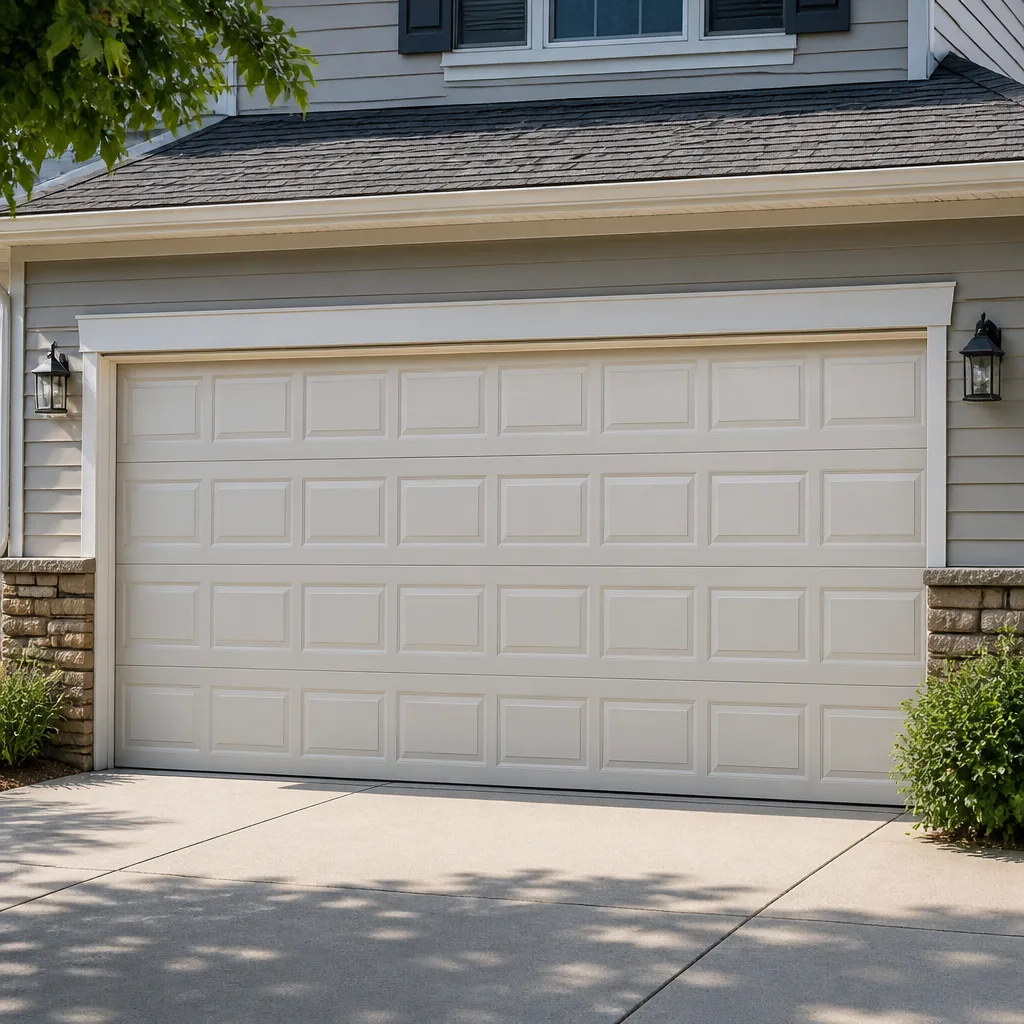 Raised-panel steel
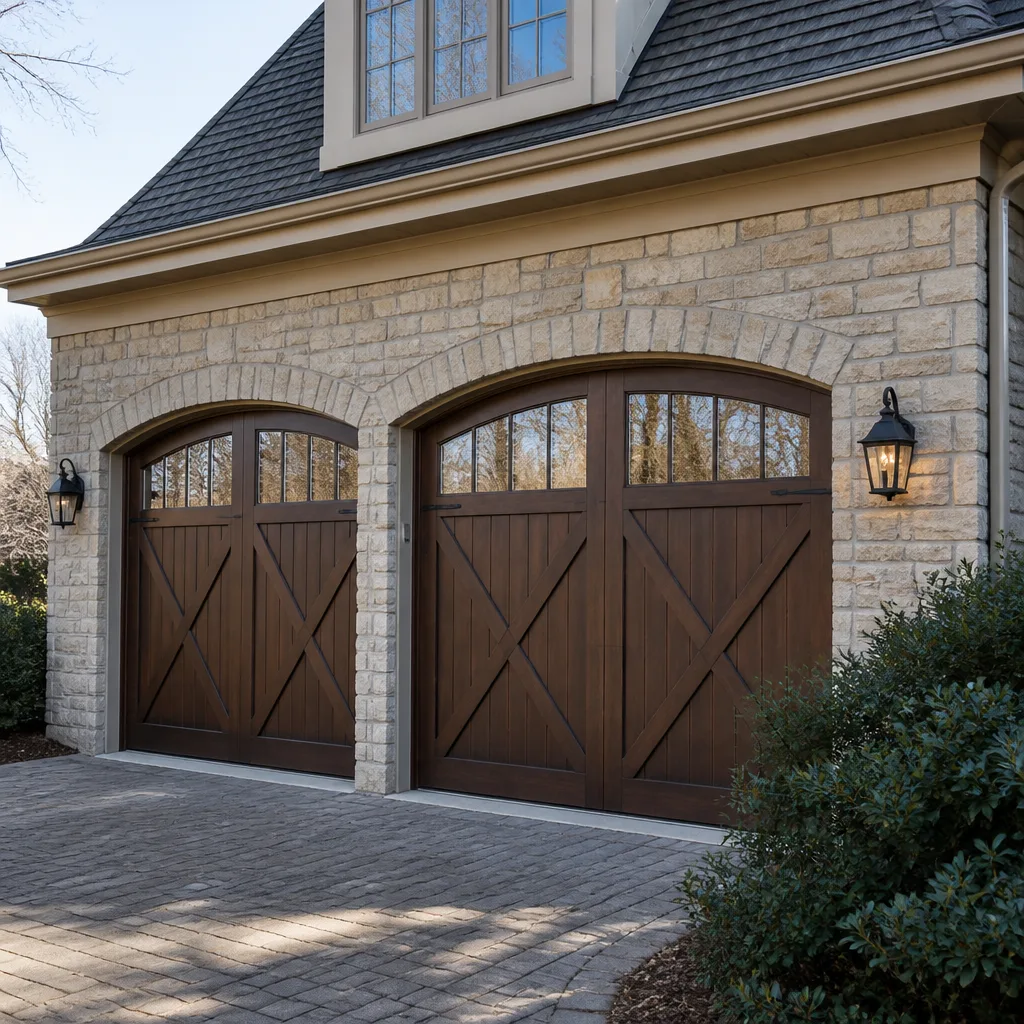 Carriage house
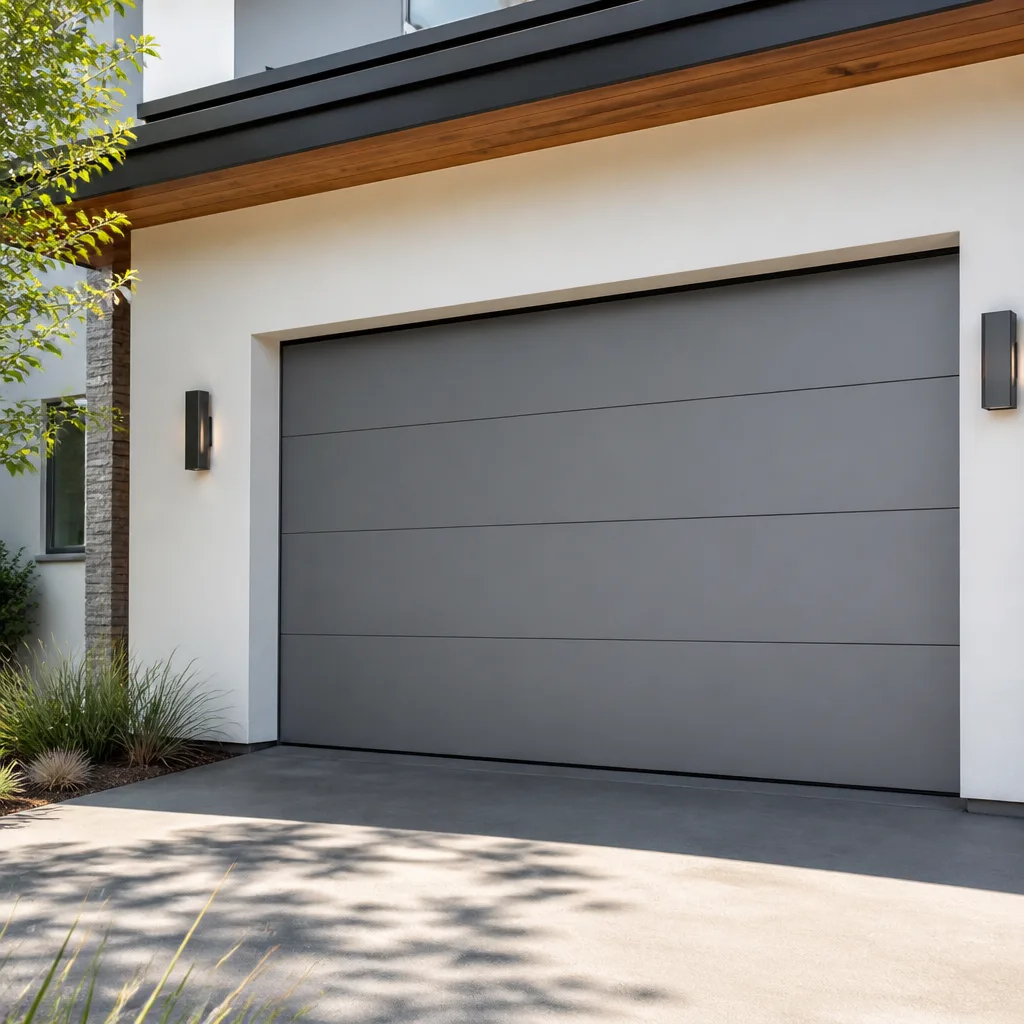 Modern flush
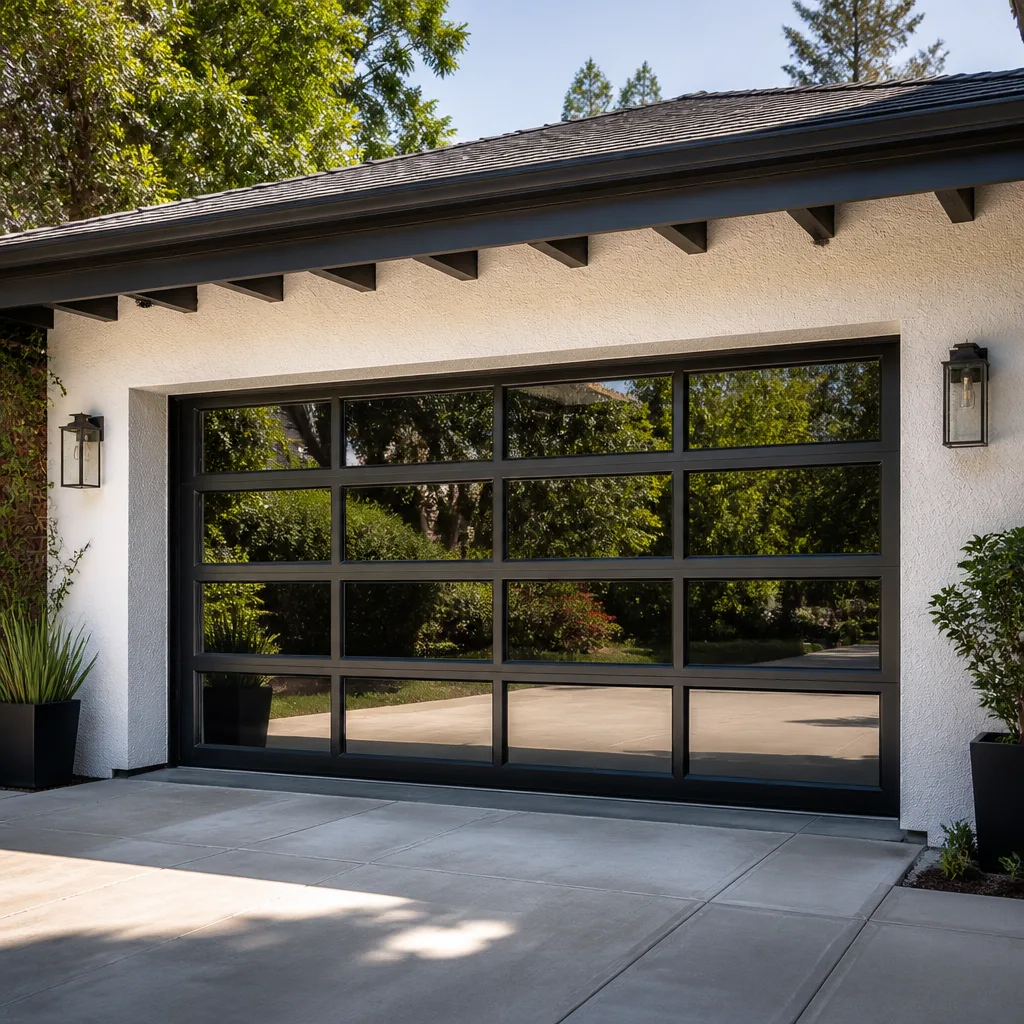 Full-view glass
 LiftMaster openers
 Chamberlain openers
Full 25-point door and opener safety check with every visit - springs, cables, rollers, tracks, and your LiftMaster or Chamberlain opener included
You get a price before we start. It does not change when the pro arrives.
Get your free estimateSeasonal Garage Door Care for Framingham: Year-Round Homeowner’s Guide
Most garage door advice treats the year as four equal seasons of the same checklist, and that’s the wrong frame for Framingham. What actually decides whether your door opens in January is a short window in October and November, and what decides whether your springs survive to next winter is the thaw in March and April. Everything in between is maintenance, but those two stretches are where doors are won or lost. This guide walks you through both transition periods with the specific tasks that matter, explains why they matter mechanically, and covers the summer humidity problem unique to homes near Lake Cochituate and the Sudbury River basin. By the end you’ll know what to check, what to adjust, and what to leave to a trained technician.
Quick Answer
Seasonal garage door care in Framingham comes down to two dates on your calendar. In October, before the first hard freeze, lubricate the rollers, hinges and springs, test the bottom seal for compression, and verify your opener’s auto-reverse sensitivity. In March and April, inspect cables and springs for the fatigue damage cold weather exposes, and clear the tracks of grit and ice melt residue. The rest of the year is light monthly observation, with extra attention to wood door swelling during Framingham’s humid summers.
Styles & brands we work with
- Raised-panel steel
- Carriage house
- Modern flush
- Full-view glass
- LiftMaster openers
- Chamberlain openers
Table of Contents
- Why Framingham’s Climate Is Hard on Garage Doors
- The Pre-Freeze Checklist: October and November
- Ice Damming and What It Does to Your Tracks
- Spring Thaw Inspection: Why March Breaks Springs
- Summer Humidity and Wood Door Swelling
- The One Fall Task That Prevents Winter Emergencies
- Monthly Checks That Take Five Minutes
- Common Mistakes to Avoid
- When to Call a Professional
Why Framingham’s Climate Is Hard on Garage Doors
Framingham averages around 48 inches of snow annually, and temperatures swing from roughly 95°F in July to single digits in January. That’s not a gentle climate. It’s a wide range, repeated twice a year, and your garage door’s hardware cycles through all of it. The steel in your springs, the rubber in your bottom seal, the plastic in your opener’s gears and the wood in your door panels all expand and contract at different rates. When they move together, nothing happens. When they move at different rates across a rapid temperature change, that’s where stress accumulates.
Your garage door is the largest moving part of your home and also your most-used entry point. In a lot of Framingham homes, the garage is where everyone actually comes in and out, which means the door cycles far more often than people realize. A door that opens and closes four times a day runs through about 1,460 cycles a year. Every one of those cycles puts your torsion spring or extension springs through a loading sequence. Cold weather stiffens the grease in the rollers and hinges, which raises the force required to move the door, which puts additional load on the springs and the opener. Warm weather loosens everything up again. Over years, the accumulation of that cycle is what fails first.
We work on doors across every neighborhood in Framingham, from older homes near Saxonville to newer construction out toward the Framingham/Natick line, and the pattern is consistent. The failures cluster in transition months. A door that worked fine in September starts binding in December. A spring that made it through the winter snaps in late March. That’s not random. It’s the pattern of a mechanical system being asked to operate outside its comfortable range.
The good news is that the failures are largely preventable. A homeowner who does the right three tasks in October and the right three in April avoids most of the emergency calls we get the rest of the year. The rest of this guide explains exactly what those tasks are and why they matter.
The Pre-Freeze Checklist: October and November
The two months before the first hard freeze are the highest-leverage time you’ll spend on your garage door all year. Once temperatures drop below freezing reliably, grease stiffens, rubber seals harden, and any small issue becomes a bigger one. October and November are when you can fix the small issues before they turn into winter failures.
Step 1: Lubricate the moving parts on a schedule
Lubrication matters more in cold weather because the wrong grease or a dried-out grease is what causes binding. Use a lithium-based or silicone-based garage door lubricant, not WD-40 or general-purpose oil. Those thin out and attract dust. Apply it to:
- Rollers (the bearing surfaces, not the roller face)
- Hinges (at every pivot point)
- Torsion spring coils (a light coat only, never heavy)
- Extension spring coils if your door uses them
- The opener rail and trolley assembly
- Lock and handle mechanisms if you have a manual lock
Schedule: once in October before the freeze, once again in January if you live in a spot that sees repeated freeze-thaw, and once more in April when the thaw is done. Skip the tracks, by the way. Garage door tracks are meant to be clean and dry, not lubricated. Grease in the tracks collects grit and ice melt residue, which is worse than the friction you were trying to reduce.
Step 2: Run a bottom seal compression test
The bottom seal is the rubber strip along the bottom edge of your door, and it’s what keeps cold air, snow, and pests out. When it deteriorates, you don’t just get drafts. You get ice forming inside the garage at the threshold, and that ice can travel back into the track area. A simple test: close the door completely, then look at the seal from inside and outside. It should compress slightly against the floor along its entire length. If any section is flattened, cracked, torn, or visibly not touching, it needs replacing before winter. This is a job you can usually do yourself with a replacement seal sized to your door. If you’d rather not climb around under the door, a garage door technician can handle it during a routine visit.
Step 3: Check and adjust opener force settings
Your opener has two settings that most homeowners never touch: the force adjustment and the travel limits. Both live on the opener head unit or in the manual. The force setting determines how hard the opener pushes before it gives up and reverses. When a door gets cold and binding, the force required to move it goes up. If your force setting is already near its maximum, the opener may strain against the cold and either reverse unnecessarily or, worse, push through resistance it shouldn’t. If your opener’s force setting is at default and the door is moving smoothly, leave it. If the door has started reversing on cold mornings, that’s a signal to have it checked rather than to crank up the force. Turning up the force is not the fix, because it masks the underlying problem (usually a stiff roller or a worn spring) and it disables the safety feature that protects people and pets.
Step 4: Test the balance of the door
Disconnect the opener using the manual release (pull the red handle). Lift the door by hand about halfway and let go. A properly balanced door should stay roughly where you put it. If it drops, the springs are losing tension. If it rises, they’re overtightened. Either way, it’s worth having a trained technician look before winter. An unbalanced door forces the opener to compensate, and the compensation is what wears out gears and snaps springs.
If anything during this checklist turns up a problem you’re not comfortable handling, particularly with springs, do not attempt a DIY repair. Winding or unwinding a torsion spring is one of the most dangerous jobs in home repair, and it requires specific tools and training. Call a professional. A spring repair done right is quick; a spring repair done wrong can put someone in the hospital. Our team handles torsion and extension spring work every week, and we’d rather you call us than try it yourself.
Ice Damming and What It Does to Your Tracks
Most Framingham homeowners know about ice dams and what they do to roofs and gutters. Fewer connect ice dams to garage door damage, which is why it’s worth spelling out. Ice dams form when heat escapes through your roof, melts snow on the upper portion, and the meltwater refreezes at the eave. The ice builds up and forces water back under shingles, causing interior leaks. That’s the well-known problem.
The less-known version is what happens on the garage side. Garages are typically under-insulated compared to the rest of the house, and garage roofs often have the same ice dam issue. When ice backs up and water gets inside the garage, some of it makes its way to the door opening, where it can freeze in the tracks. Once ice is in the tracks, the door stops moving cleanly. It may open partway and stick, or the opener may strain and either reverse or trip its overload protection. Even after the ice clears, the freeze-thaw cycle has a second effect: meltwater carries grit, road salt, and ice melt products into the track channel, where they dry and harden into a paste that binds the rollers.
What to do about it:
- Clear snow and ice away from the outside of the garage door before it can refreeze against the seal and threshold.
- After any ice event, inspect the tracks from the inside. If you see hardened grit or salt residue, wipe the tracks down with a damp cloth and dry them. Don’t spray lubricant in the tracks to “fix” it.
- If ice has gotten into the tracks and the door has been forced, have the door checked. Forcing a door with ice in the tracks can bend the track or damage the rollers.
- Consider whether the garage ceiling is insulated. A well-insulated garage ceiling reduces the heat loss that feeds the ice dam in the first place.
Ice damming is one reason a Framingham garage door can fail in winter even when it was fine in fall. If your door has been through an ice event and hasn’t quite sounded right since, that’s worth a look before the next storm. Call us and we’ll come out to check it. We answer 24/7. Fast dispatch from 7am to 7pm, Sunday through Friday.
Spring Thaw Inspection: Why March Breaks Springs
March is when we get the most spring and cable failures of the year, and the reason is not obvious. The spring that “made it through winter” snaps in the thaw because winter didn’t actually break it. Winter fatigued it. The thaw is when the accumulated fatigue finally exceeds what the spring can carry.
Here’s the mechanic in plain terms. Garage door springs are made of steel wire wound into a coil. Every time your door opens and closes, the spring stretches and compresses, and the steel deforms microscopically. Most of that deformation recovers, but a small amount doesn’t. Over thousands of cycles, that unrecovered deformation accumulates, and the spring becomes less able to return to its original shape. Cold weather accelerates this because cold metal is less ductile. It’s stiffer and more brittle, and every cycle at low temperature does more damage than the same cycle at room temperature. By the time March arrives, your spring has been through a winter of cold cycles plus the extra load from stiff grease, ice in the tracks, and any imbalance the door picked up along the way. The thaw is when the temperature softens the metal, the load returns to normal, and the weakened spring has to carry the door for the first time in months without the cold-stiffening that was masking its loss of strength. That’s when it snaps.
The same logic applies to cables. Cables carry the tension from the spring to the door. They fray slowly and the fraying is accelerated by every cycle at low temperature. A cable that’s down to half its strands can still work fine in February, and then fail in April when the door’s load comes back to full.
What to inspect in March and April:
- Look at the springs (from a safe distance, without touching them). Torsion springs should have an even coil gap. If you see a gap in the coil or the spring looks like two pieces instead of one, it has broken. Do not touch it or try to open the door. Call a professional.
- Look at the cables on both sides. They should be straight and taut. Fraying, kinks, or a cable that looks like it’s slipped off a drum means the door should not be operated until it’s inspected.
- Test the balance again (pull the manual release, lift halfway, let go). If the door doesn’t hold, springs are suspect.
- Wipe the tracks down with a damp cloth to clear winter grit and salt residue. Dry them fully.
- Check the bottom seal again. Winter is hard on rubber, and the seal that survived October may have cracked by April.
- Test the safety reverse (see the next section). It should have been tested in fall, and it’s worth re-testing in spring after everything has been through the cold.
If a spring or cable has failed, do not run the door. A door with a broken spring is not just inconvenient, it’s dangerous. The opener can’t hold the weight, and a door that comes down under its own weight can injure someone underneath it. Call us. We work on both torsion and extension springs and know exactly what we’re looking at when we arrive.
Summer Humidity and Wood Door Swelling
Summer is the quiet season for most garage door problems, but Framingham’s specific geography makes it a real season for wood doors. The town sits in the Sudbury River basin and includes Lake Cochituate, and those water bodies keep summer humidity higher than the surrounding area. The result is that wood doors in Framingham swell in summer and shrink in winter, and they do it more than the same doors in drier towns further inland.
What swelling actually does is subtle. Wood panels absorb moisture and expand across the grain. When they expand, the joints between sections tighten, the door can warp slightly, and the panel faces push against the frame. On a door with a raised-panel design, the panel edges can start to show gaps or cracks. On a sectional door, the sections can start to bind against each other when the door rolls up. And the swelling isn’t uniform, because the outside face of the door sees the humidity and the inside face sees whatever the garage interior is doing. That differential is what causes bowing.
What to check in summer:
- Look at the joints between door sections. If they’ve tightened to the point of binding, the door will strain when opening.
- Look at panel edges for gaps or cracks that weren’t there in the spring.
- Check the door edges against the frame for rubbing marks.
- Watch for any change in how the door sounds when it operates. A door that starts squeaking or groaning in July is telling you it’s binding.
The fix for mild swelling is usually seasonal: the door will settle back as humidity drops in fall. But if the door is binding badly, or if the wood is showing cracks, that’s a job for a technician. We work with Clopay, Amarr, and Wayne Dalton doors regularly, and we know how their wood-backed and wood-look models behave in this climate. If your door is binding through the summer, call us to schedule a look before the pre-winter window opens. We answer 24/7. Fast dispatch from 7am to 7pm, Sunday through Friday.
The One Fall Task That Prevents Winter Emergencies
If you only do one thing before the first hard freeze, do this: test and adjust the auto-reverse sensitivity on your opener. It’s the single task that reduces winter emergency calls more than any other, because a door that fails to reverse properly is a door that’s about to become a safety hazard, and a door that’s failing to close in winter is the most common emergency call we get.
Every garage door opener manufactured since 1993 has two safety features: a mechanical auto-reverse (which triggers when the door meets an object) and a photoelectric safety system (the invisible beam across the door opening that stops and reverses the door when something breaks it). Both need to function correctly, and both get progressively less reliable as temperatures drop.
Test them now, in October, before the cold:
- With the door open, place a piece of 2×4 lumber flat on the floor in the middle of the door opening.
- Close the door using the opener. When the door contacts the 2×4, it should reverse and go back up. If it doesn’t reverse, or if it takes more than about an inch of contact to reverse, the sensitivity is too low.
- For the photoelectric system, with the door open, wave a broomstick or similar object through the beam at the bottom of the tracks. The door should not close, or should reverse immediately.
- Check that the safety sensors on both sides of the door are aligned (most have a small LED that stays lit when aligned). Wipe the lenses clean. Dirt and spiderwebs reduce sensitivity.
If either test fails, don’t just leave it. The auto-reverse is the safety feature that prevents your door from crushing a child, a pet, or an adult. If it’s not working, the door needs to be serviced. A technician can adjust the sensitivity and replace the sensors if they’ve failed. We handle opener repair across all the major brands, and adjusting or repairing an auto-reverse system is a routine part of our work.
Why does this matter more in cold weather specifically? Two reasons. First, the door gets stiffer, so the opener has to push harder to move it, and a door that’s near the edge of its force setting will trigger the reverse too easily, or the opener will strain. Second, the sensors are more likely to get ice or snow on them, which mimics an obstruction. A properly adjusted opener handles both. A poorly adjusted one turns either condition into a door that won’t close. That’s a Framingham winter emergency we’d rather prevent than fix.
If you’ve tested and your auto-reverse isn’t working properly, or you’d rather have a technician verify it, call us. garage door opener repair is something we do every day. We answer 24/7. Fast dispatch from 7am to 7pm, Sunday through Friday.
Monthly Checks That Take Five Minutes
Between the two big seasonal windows, a monthly five-minute check keeps small problems from becoming big ones. Here’s what to look at, run through it once a month and it becomes second nature.
- Visual scan of springs and cables. From a safe distance, look for gaps in springs and fraying on cables. You are not touching them, just looking.
- Track cleanliness. Wipe any visible dirt or grit out of the tracks. Don’t lubricate the tracks.
- Roller condition. Look at the rollers. They should be round and smooth. Cracks or flat spots mean replacement is coming.
- Door movement. Open and close the door and listen. Grinding, squeaking, or a door that moves in jerks are all signals.
- Safety reverse test. Do the 2×4 test once a month if you have time, definitely once a season.
- Weather seal. Look at the bottom seal and the side seals for cracks or gaps.
- Opener lights and displays. Most modern openers have indicator lights that show error codes. If any are flashing, look up the code in your manual.
Five minutes a month is enough to catch most of what would otherwise become an emergency call in Framingham. If something turns up that you’re not comfortable handling, call us. garage door repair is what we do.
Common Mistakes to Avoid
- Lubricating the tracks. This is the most common mistake we see. Garage door tracks are designed to run dry, and adding grease or spray lubricant attracts grit that binds your rollers. Clean the tracks, don’t grease them.
- Increasing opener force to mask a stiff door. If your door is binding, turning up the force does not fix the binding. It makes the opener push through resistance it shouldn’t, and it disables the safety feature that protects people and pets. Find and fix the source of the resistance.
- Skipping the October check because “it worked last year.” Winter damage accumulates quietly. A door that worked fine last winter may be closer to failure than you realize. The October checklist is cheap; the December emergency call is not.
- Ignoring ice in the tracks. Frost and ice in the tracks that goes unaddressed can bind the door and force the opener into repeated failure cycles. Clear snow and ice from the door opening area after every storm.
- Attempting a DIY spring repair. Torsion springs are wound under tension, and releasing that tension incorrectly can cause serious injury. This is one of the few home repair tasks that genuinely should always be done by a trained technician. Our team handles spring replacement daily, and we’ve seen what happens when a homeowner tries it alone.
- Not testing the auto-reverse before winter. Cold weather makes doors stiffer and sensors more prone to obstruction. A safety reverse that was marginal in October can fail entirely in January. Test it before the first freeze.
- Assuming wood door swelling is just cosmetic. Framingham’s summer humidity, driven in part by Lake Cochituate and the Sudbury River basin, causes real movement in wood doors. A binding wood door puts stress on springs, rollers, and the opener. If it binds, have it inspected.
- Letting the bottom seal go. A worn bottom seal lets in cold air and moisture, and moisture is what causes rust at the track and sill. A replacement seal is inexpensive and quick to install.
Every item on this list has a matching thing a trained technician can do right. If any of them describe your door, garage door installation may not be the answer, but a service call is.
When to Call a Professional
You should call a professional any time your door is not operating safely or reliably, and specifically when you see: a broken spring (visible gap in the coil, or a door that won’t hold its weight when disconnected from the opener); a frayed or kinked cable; a door that reverses or won’t close and the auto-reverse test fails; an opener that runs but the door doesn’t move; a door off its track; or damage after a storm or ice event. Also call if you’re not comfortable with the inspection, or if you’ve done the seasonal checks and something doesn’t feel right. Our team works on both torsion and extension spring systems across Framingham and we carry parts for the major brands, including LiftMaster, Chamberlain, Genie, Clopay, Amarr, Wayne Dalton, Craftsman, and Raynor. Framingham Garage Door Repair offers free estimates in Framingham. Call (844) 443-3741.
See the difference
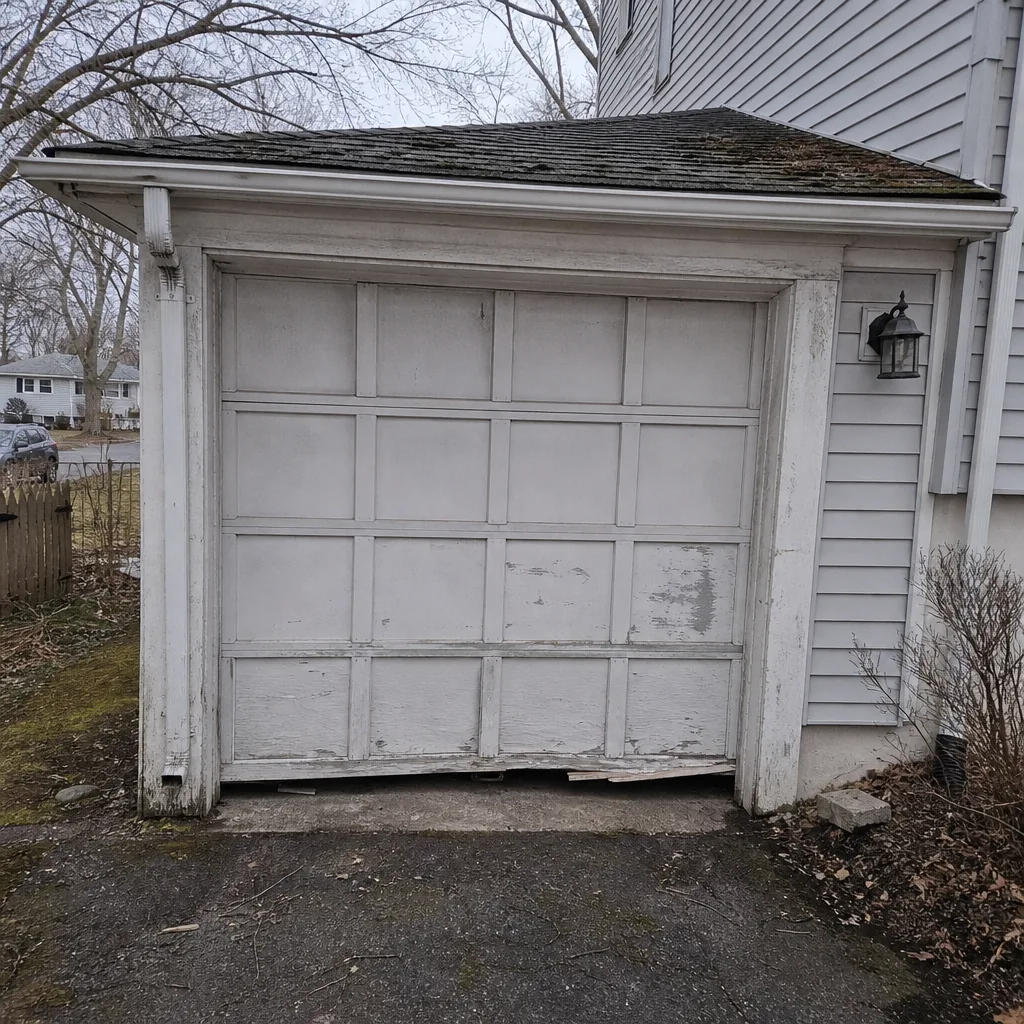 Before
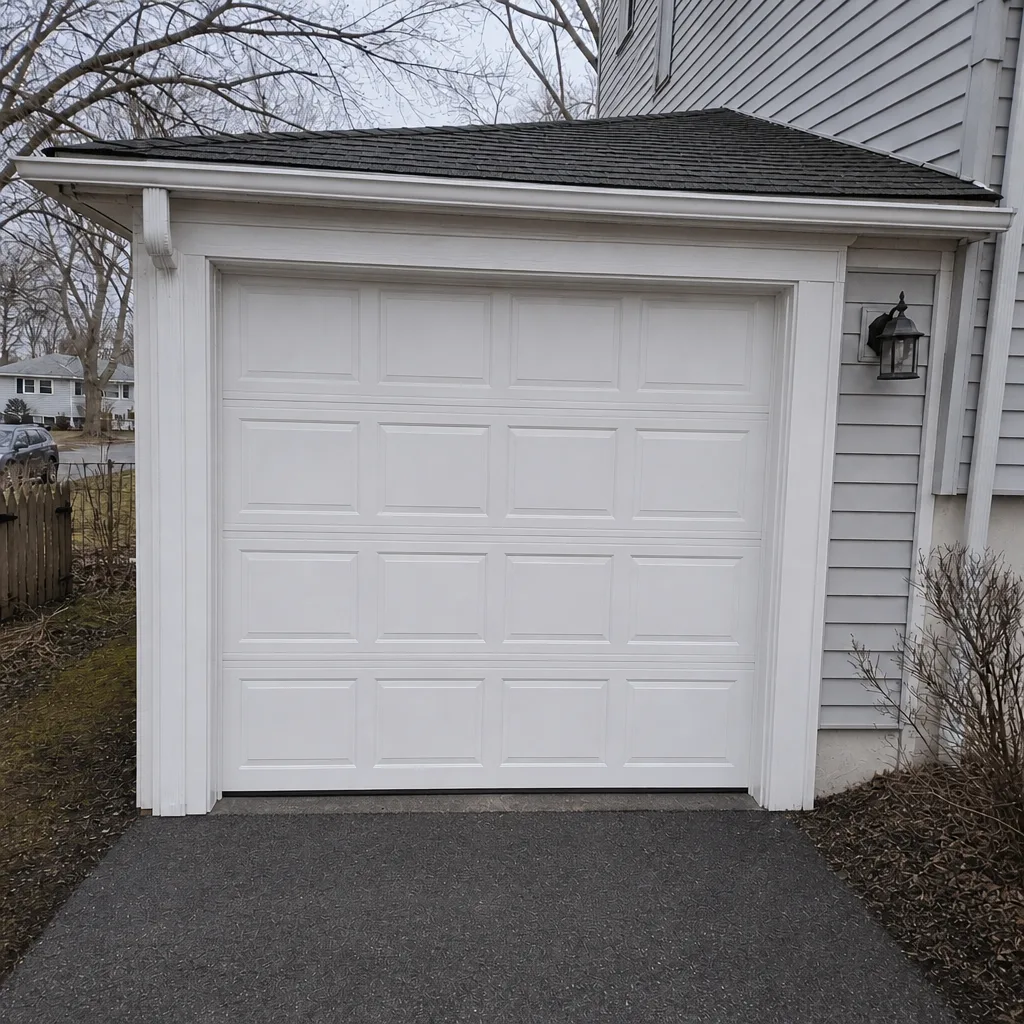 After
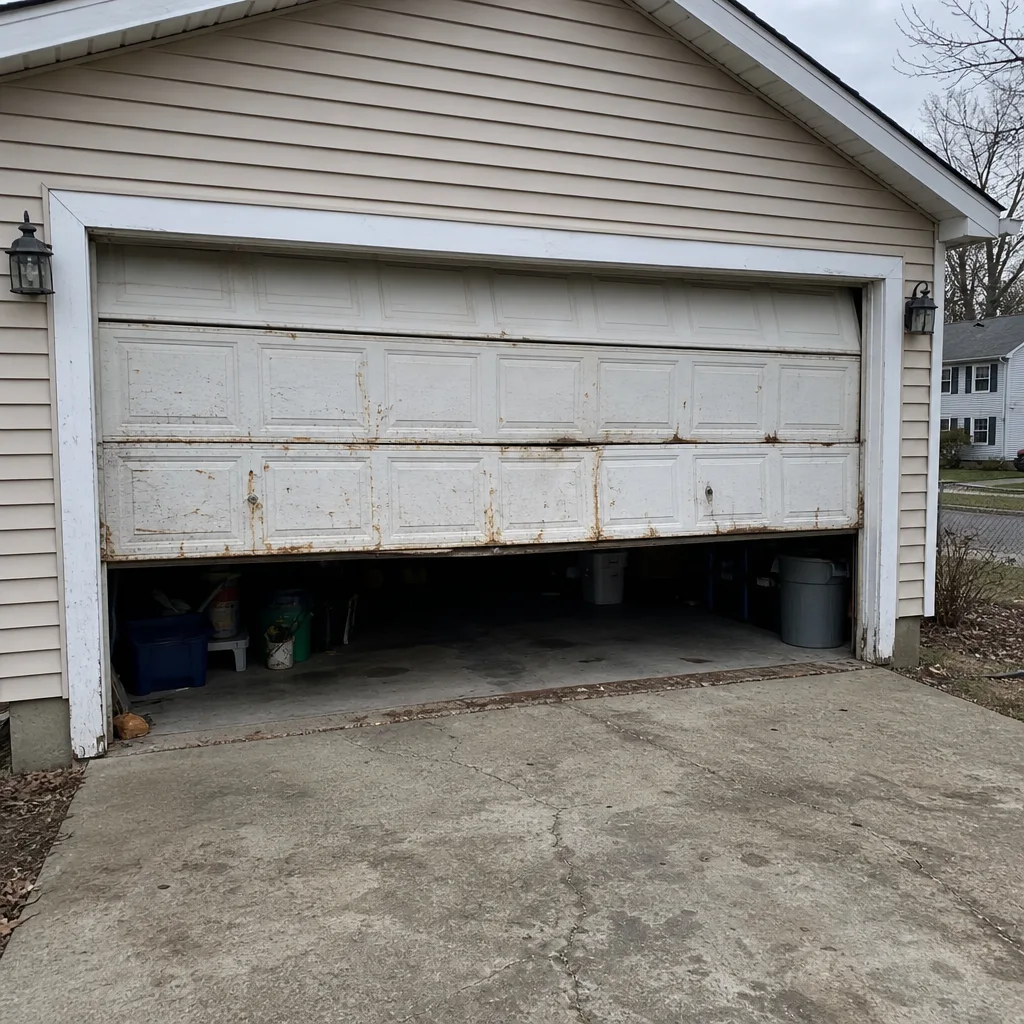 Before
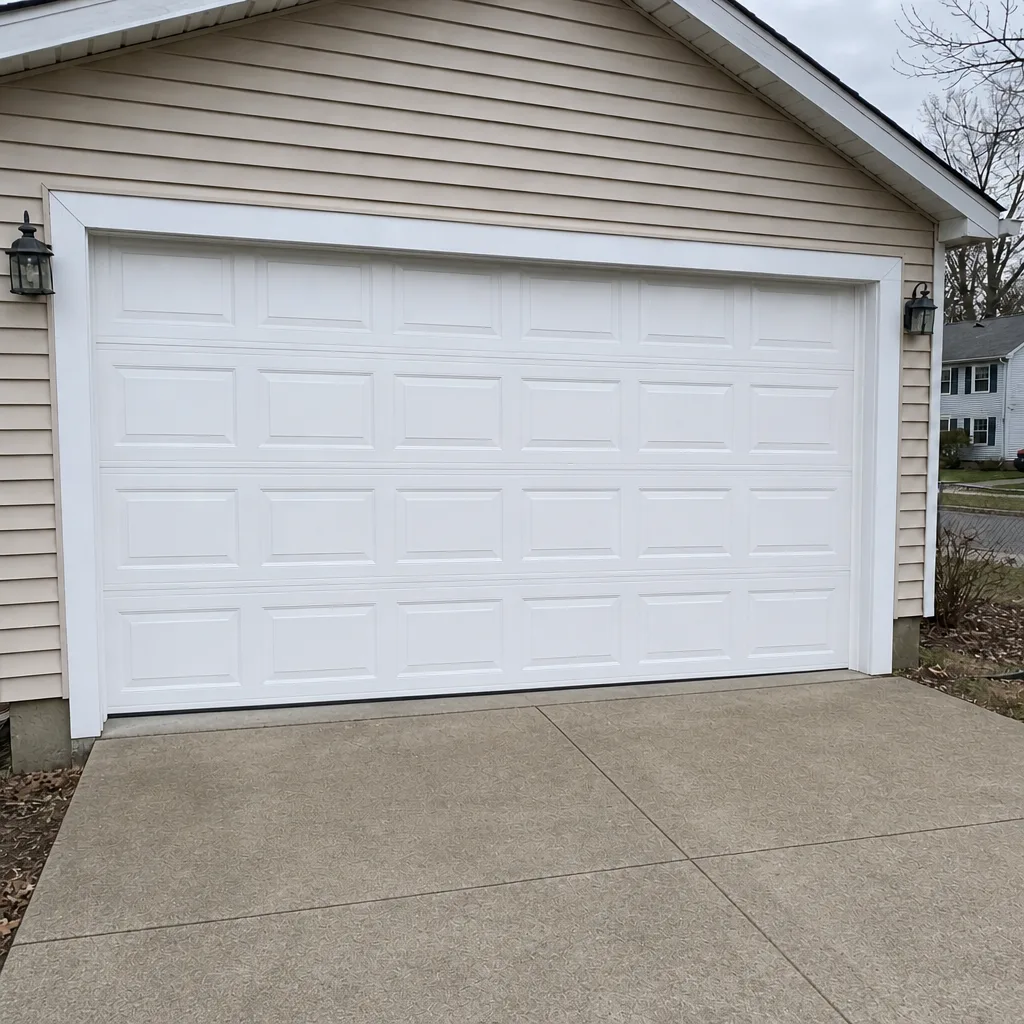 After
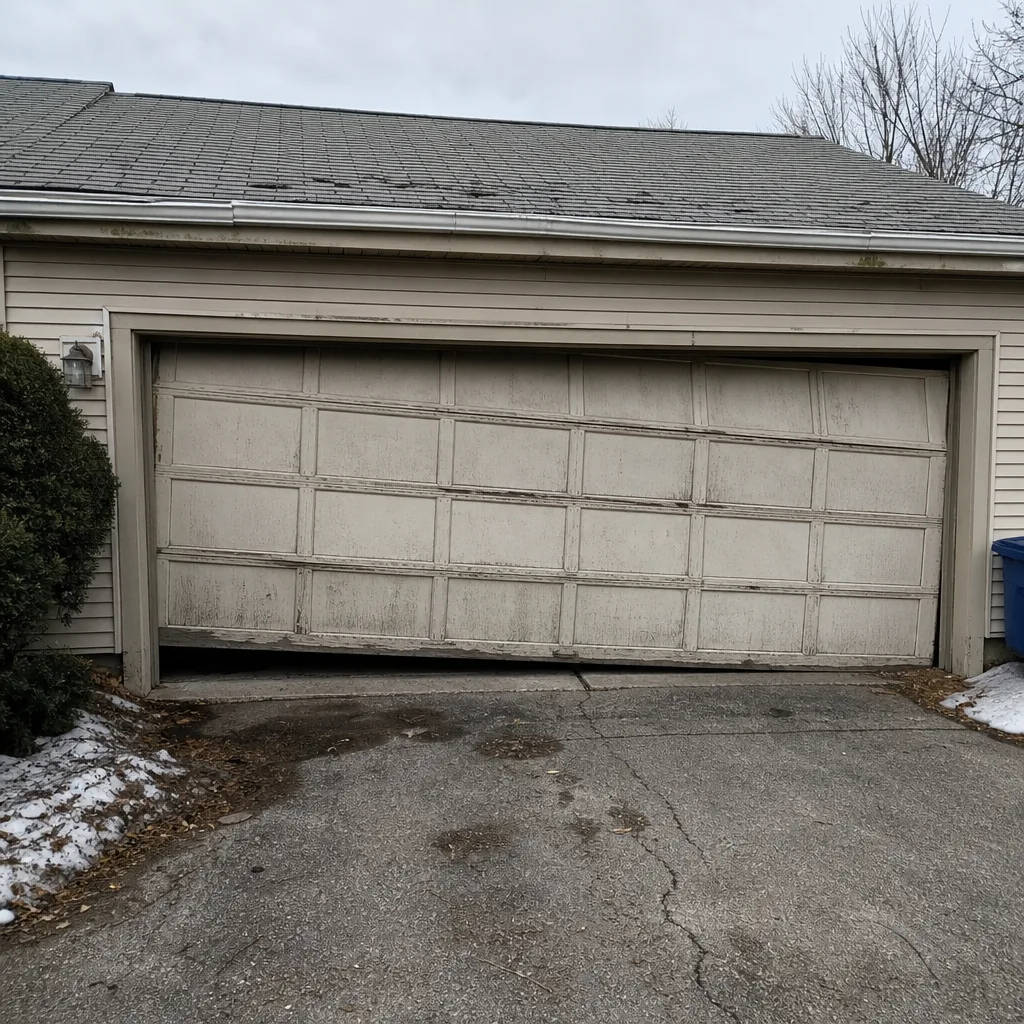 Before
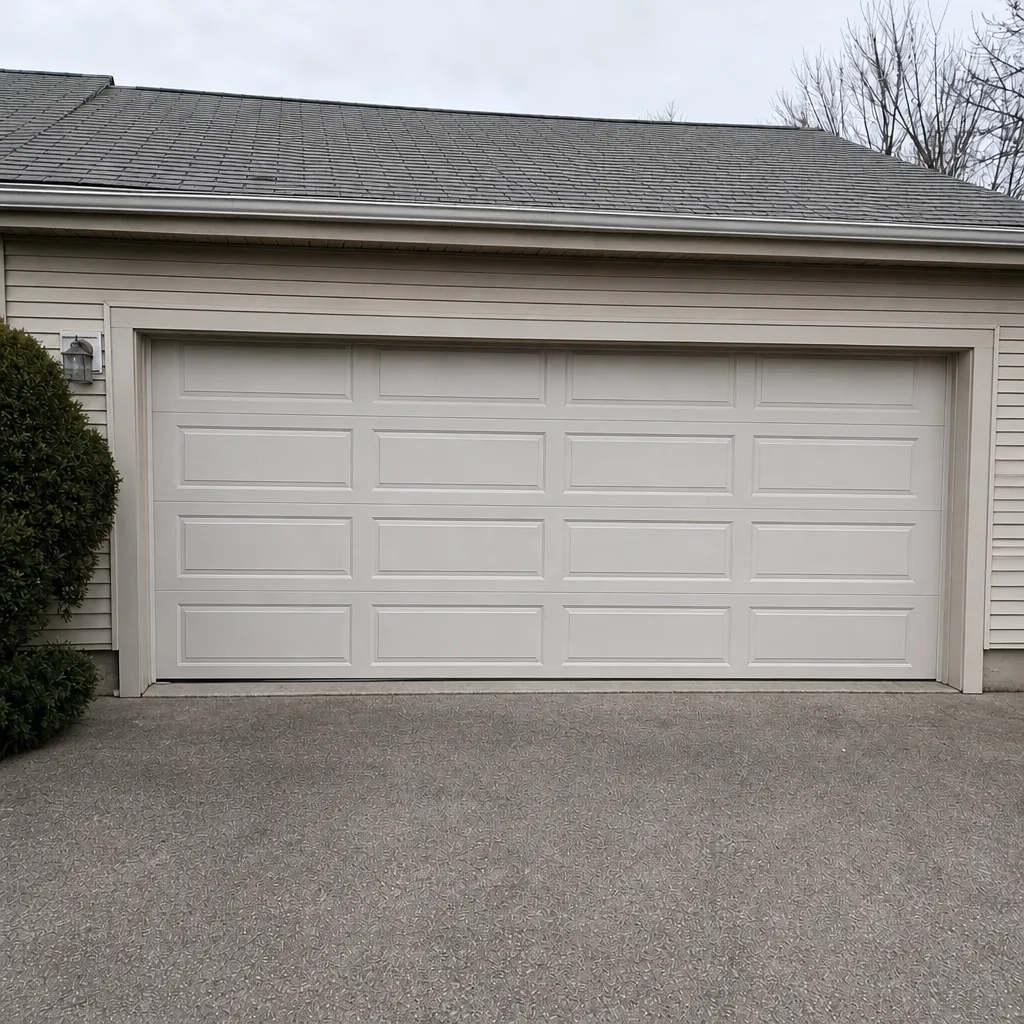 After
Frequently Asked Questions
The single most important window is October, before the first hard freeze. Book a service visit in early October to lubricate the moving parts, test the bottom seal, balance the door, and verify the auto-reverse before the cold sets in. A second inspection in March or April, after the thaw, catches the damage winter caused. Between those, a monthly five-minute visual check is enough.
Because the damage accumulates in winter and the failure happens when the thaw arrives. Cold weather makes the metal in the springs stiffer and less ductile, so every cycle at low temperature does more fatigue damage than a warm-weather cycle. The spring holds together through winter because the same cold stiffening that damages it also masks its loss of strength. When the thaw comes and the door’s load returns to normal, the weakened spring finally gives. That’s why March is one of our busiest months for spring repair.
Yes, more than in many nearby towns. Framingham’s position in the Sudbury River basin, with Lake Cochituate on the west side, keeps summer humidity higher than the surrounding area. Wood panels absorb that moisture and swell, sometimes enough to bind against the section above or the door frame. If your wood door starts binding in July and settles back in October, that’s the cause. It’s worth having it checked if the binding is significant.
Yes, lubrication is a safe homeowner task. Use a lithium-based or silicone-based garage door lubricant, applied to the rollers, hinges, spring coils (a light coat), and opener rail. Never lubricate the tracks. If the door is binding after lubrication, or if the rollers or springs look worn, that’s a job for a technician. Also call if the door is at all difficult to move by hand when disconnected from the opener.
Ice damming on the roof lets meltwater back up under shingles and eventually inside the garage. When it gets to the door opening, it can freeze in the tracks, and when it melts it carries grit and salt into the roller channel. Both conditions bind the door. The fix is to clear snow from the door opening after every storm, wipe the tracks down after any ice event, and consider whether the garage ceiling is insulated well enough to reduce the ice damming in the first place.
Do a visual check from a safe distance first. Look for broken springs (a visible gap in the coil), frayed or hanging cables, bent or misaligned tracks, and a door that isn’t sitting level. Then test the auto-reverse: put a 2×4 flat on the floor under the door and close it; the door should reverse on contact. If any of these checks fail, do not operate the door, and call a professional. If you’d rather not test it yourself, call us. We answer 24/7. Fast dispatch from 7am to 7pm, Sunday through Friday.
It reduces the risk substantially but doesn’t eliminate it. A well-maintained door still has worn parts that will eventually fail, but the failures are more predictable and usually less expensive when they’re caught early. The October visit is the highest-value one, because it’s the one that catches problems while there’s still time to fix them before cold weather turns them into emergencies.
Yes. We work on the brand already on your door, whether it’s a Clopay, Amarr, Wayne Dalton, Craftsman, or any other major manufacturer. We handle repairs, opener service, spring replacement, and full new door installation as a single point of contact, so a single call covers whatever your door needs.
The Bottom Line
Seasonal garage door care in Framingham is really about two windows, October and March. The October checklist (lubrication, bottom seal compression test, balance check, auto-reverse test) is what gets your door through winter without an emergency. The March and April inspection is what catches the fatigue winter accumulated before it turns into a snapped spring or a frayed cable. In between, monthly visual checks and attention to summer humidity (especially for wood doors near Lake Cochituate and the Sudbury River basin) keep small issues small. It’s a manageable routine that saves real money and real frustration.
If anything during your seasonal checks looks off, or if you’d rather have a trained technician handle the inspection, we’re here. Our technicians have up to 14 years of experience, and we handle Framingham garage door repair for every major brand. Our estimates are free. Call (844) 443-3741. We answer 24/7. Fast dispatch from 7am to 7pm, Sunday through Friday.
Written by the team at Framingham Garage Door Repair.