
Last updated November 22, 2026
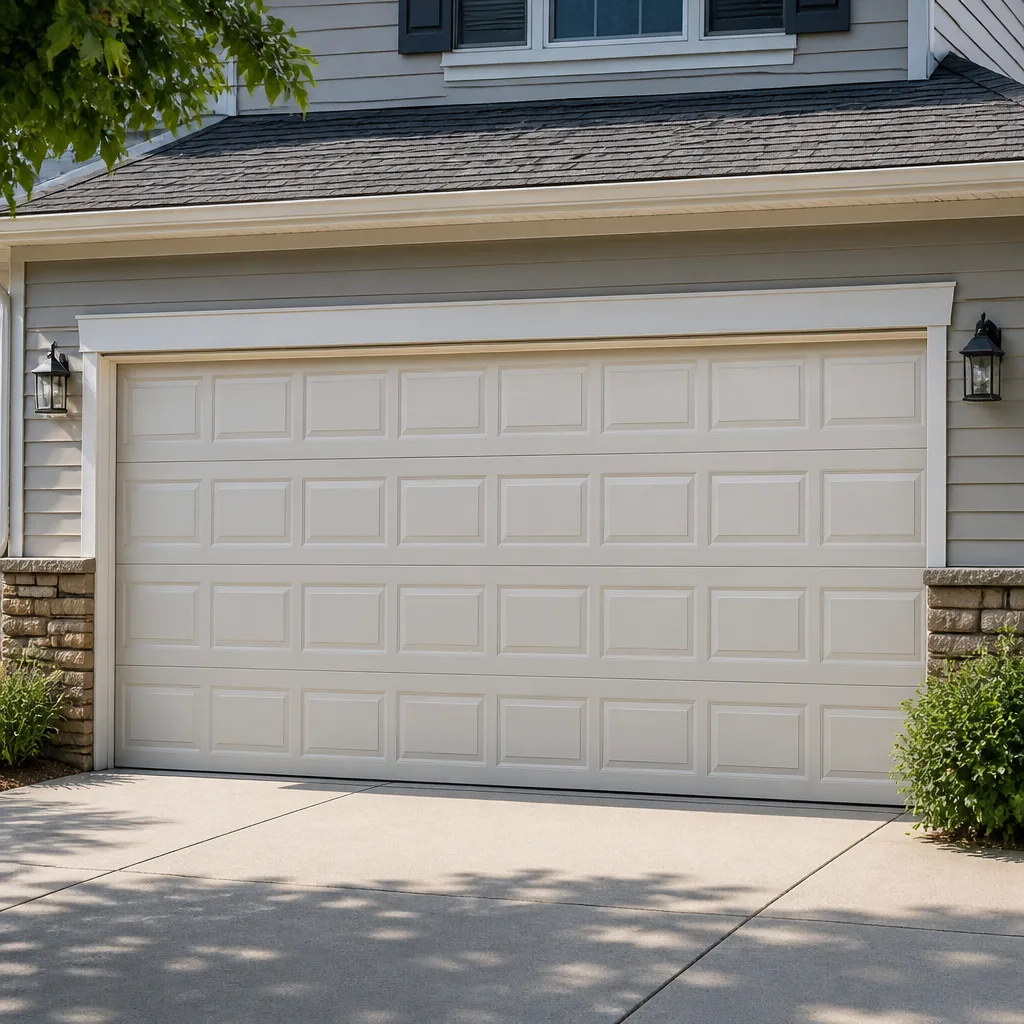 Raised-panel steel
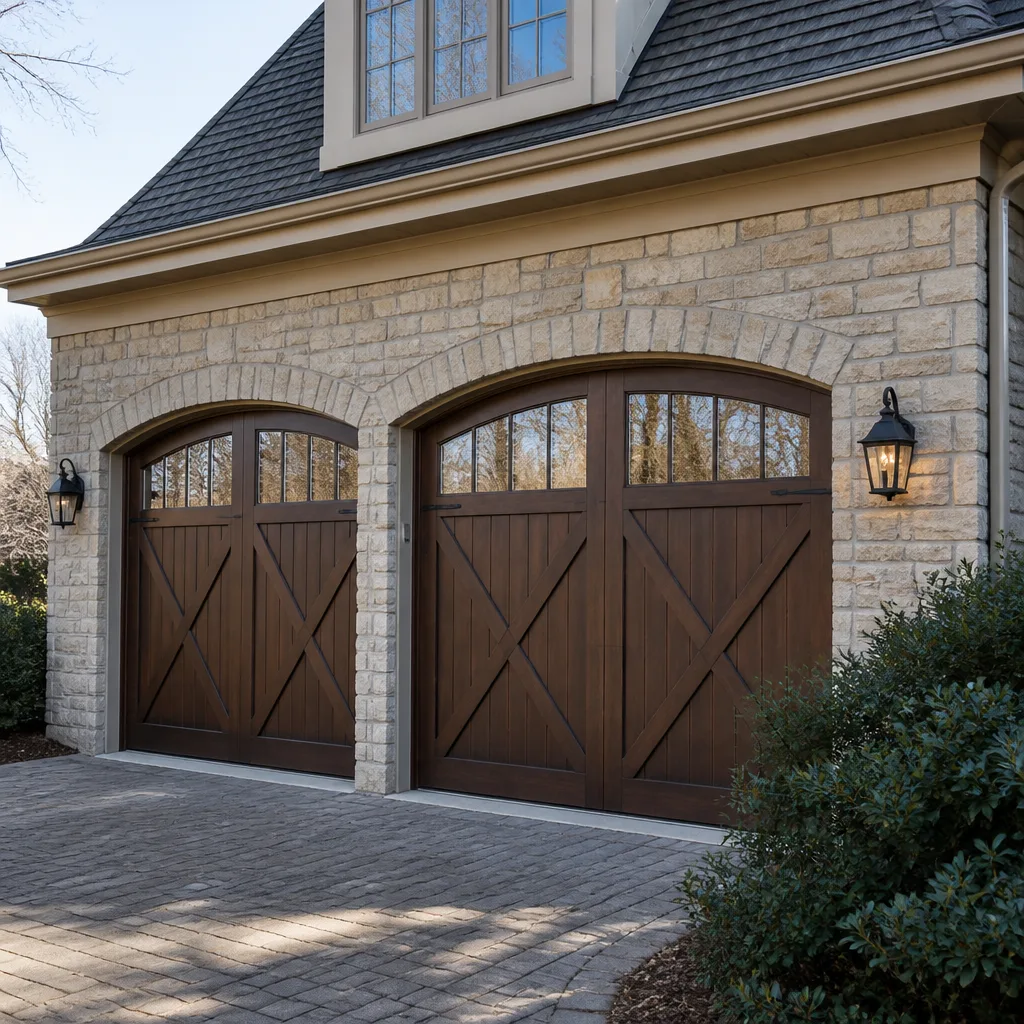 Carriage house
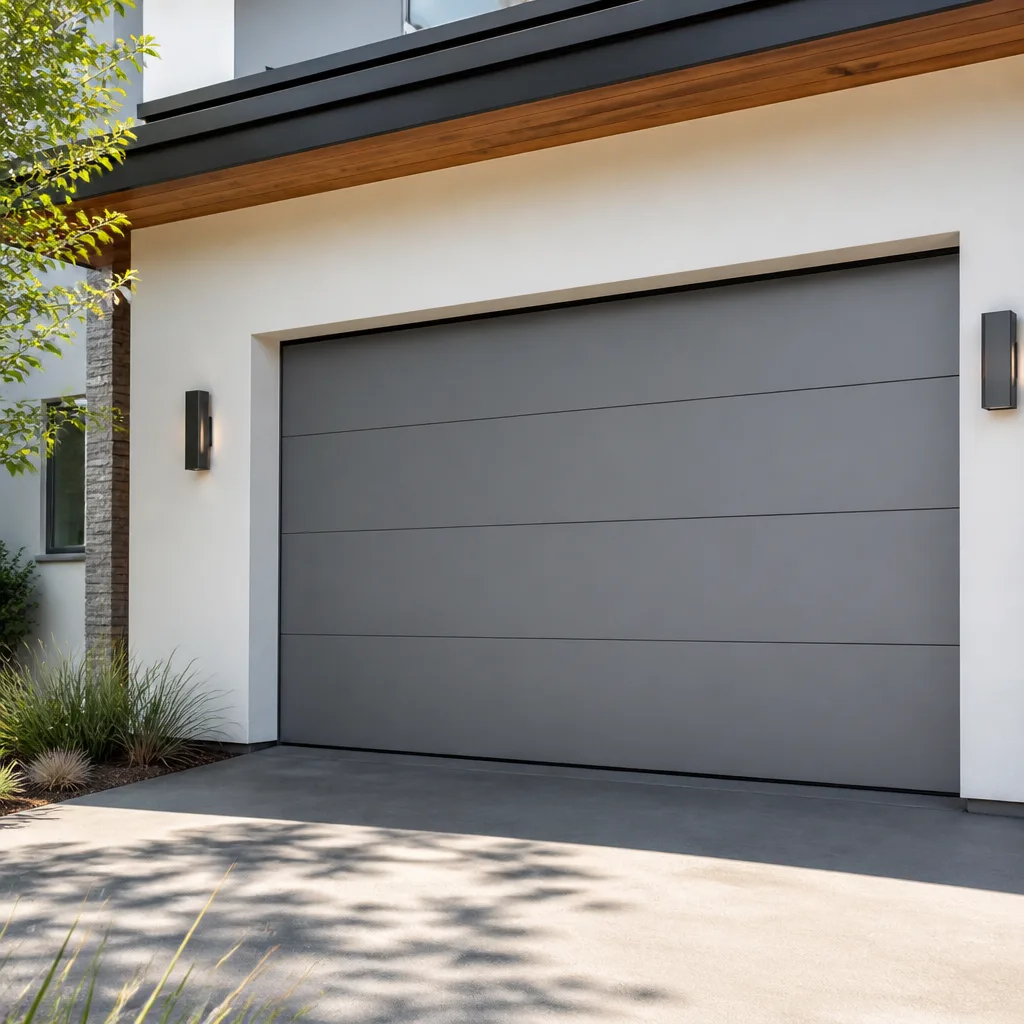 Modern flush
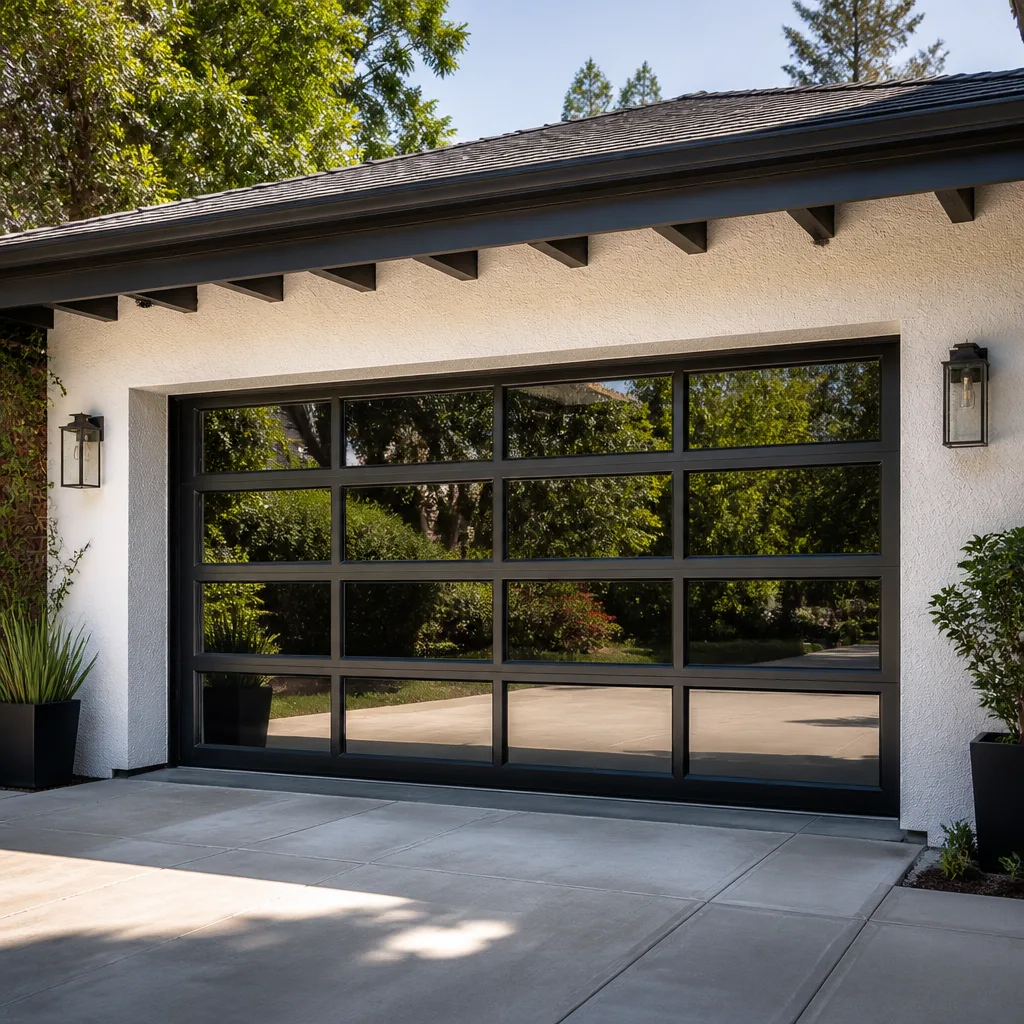 Full-view glass
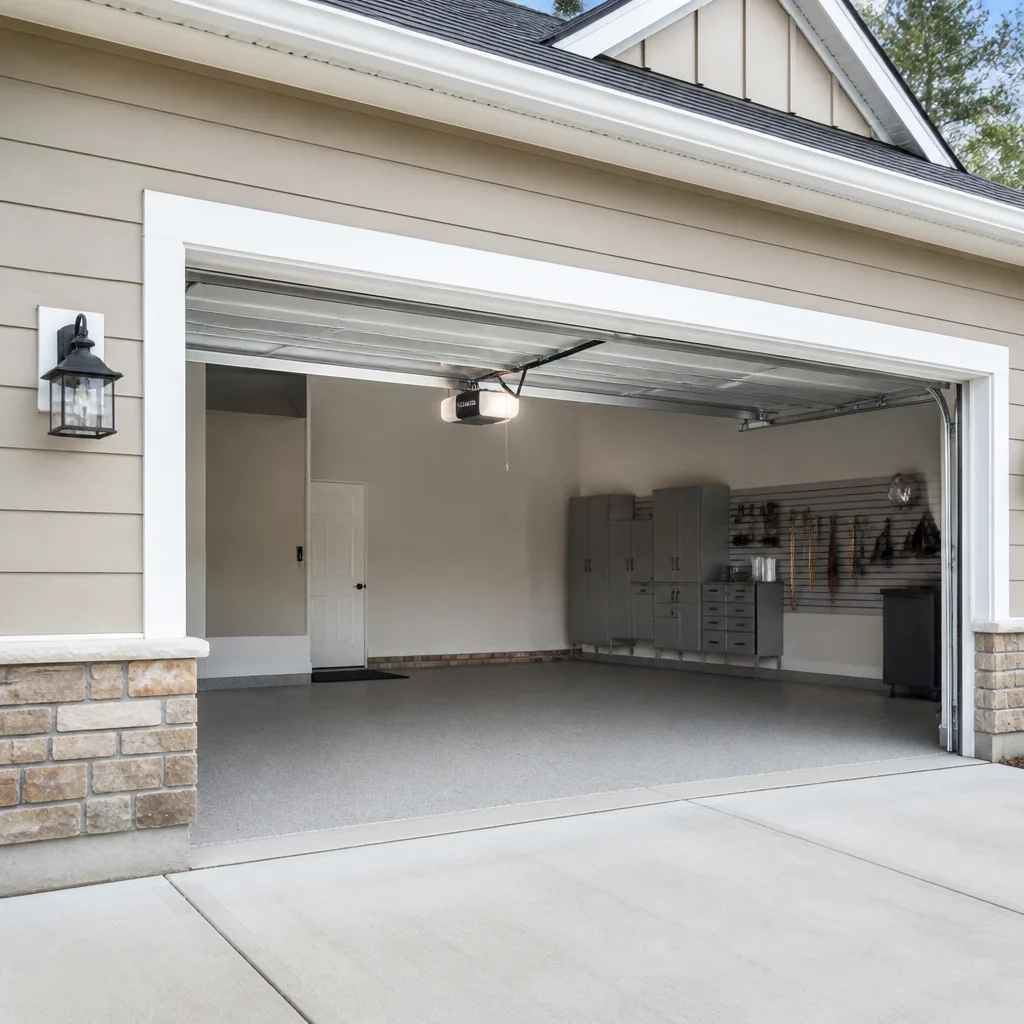 LiftMaster openers
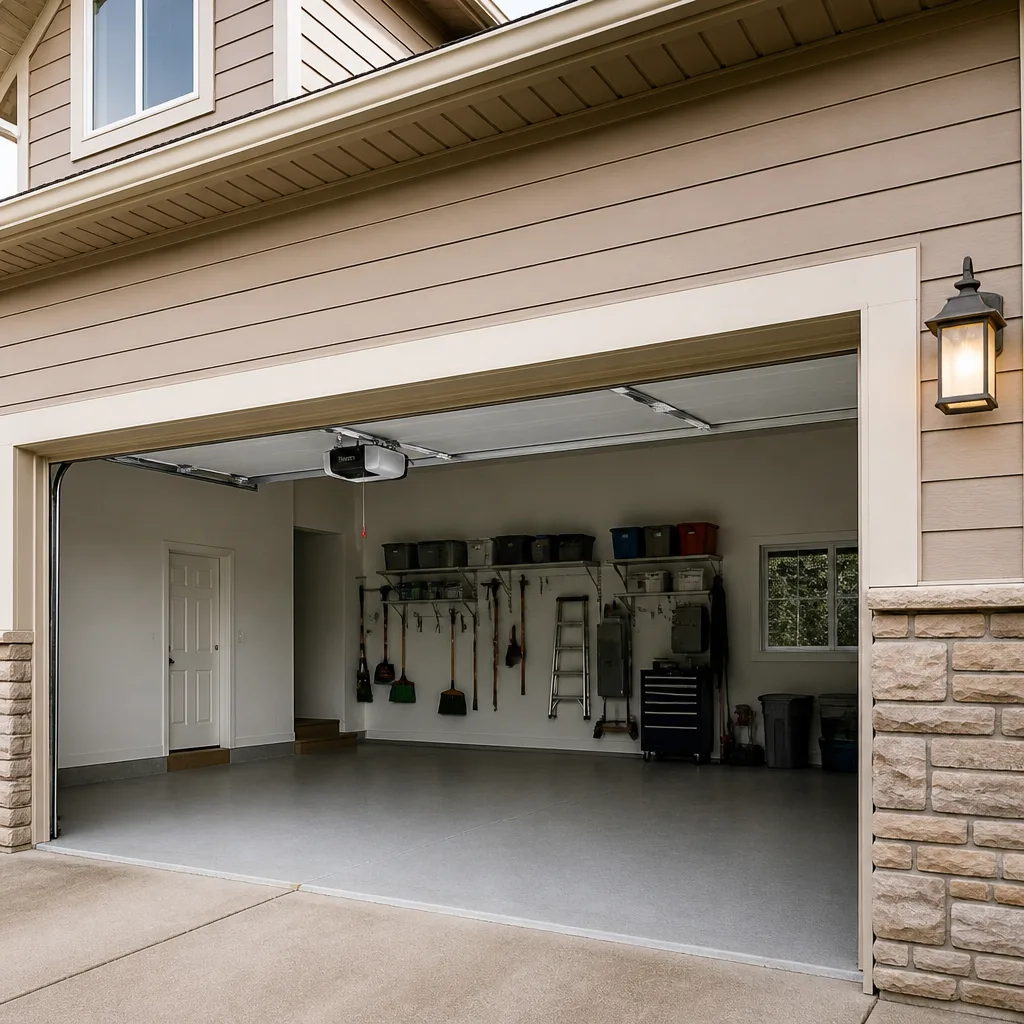 Chamberlain openers
Full 25-point door and opener safety check with every visit - springs, cables, rollers, tracks, and your LiftMaster or Chamberlain opener included
You get a price before we start. It does not change when the pro arrives.
Get your free estimateHow to Hire a Garage Door Contractor in Framingham: A Step-by-Step Guide
Massachusetts doesn’t license garage door technicians. That single fact changes how you should hire. There’s no state-issued credential that proves someone knows how to size a torsion spring or set cable drums correctly, so a generalist handyman and a true specialist can look identical on paper. What separates them shows up in the questions they ask, the way they quote, and what their reviews actually say. This guide walks you through hiring a garage door contractor in Framingham the way we’d want a neighbor to do it: verify the legal basics, test their technical depth, read their pricing and reviews with a critical eye, and know exactly what to ask before anyone touches your door.
Quick Answer
To hire a garage door contractor in Framingham, verify the company’s Home Improvement Contractor registration on the state’s consumer affairs website, confirm they carry liability insurance that specifically covers torsion spring work, and ask three technical screening questions a generalist can’t answer (spring sizing, cable drum specs, opener torque). Get a written, itemized estimate before work starts. In Framingham, where older homes often have legacy openers and doors that need matched parts, a specialist who works on your existing brand will save you money the first time something breaks.
Styles & brands we work with
- Raised-panel steel
- Carriage house
- Modern flush
- Full-view glass
- LiftMaster openers
- Chamberlain openers
Table of Contents
- Step 1: Verify Massachusetts HIC Registration in 60 Seconds
- Step 2: Why “Insured” Isn’t Enough for Spring Work
- Step 3: Three Questions a Generalist Can’t Answer
- Step 4: Red Flags Unique to the Garage Door Trade
- Step 5: How to Read a Framingham Contractor’s Reviews
- Step 6: What Garage Door Work Costs in the Framingham Area
- Step 7: Specialist vs. Generalist: Why It Matters Here
- Common Mistakes to Avoid
- When to Call a Professional
- Frequently Asked Questions
- The Bottom Line
Step 1: Verify Massachusetts HIC Registration in 60 Seconds
Massachusetts requires home improvement contractors to register with the state Office of Consumer Affairs and Business Regulation. That registration, called an HIC number, is the closest thing to a legal credential the trade has, and it’s the first thing to check. A company doing residential work in Framingham should be able to give you that number without hesitation.
Here’s how to verify it quickly:
- Ask the contractor for their HIC registration number before they visit. A legitimate operation gives it readily.
- Go to the Massachusetts consumer affairs website and use the Home Improvement Contractor lookup tool.
- Match the number to the company name, not just to an individual. The registration should be current, not expired.
- Confirm the company name on the registration matches the name on the estimate and the contract.
- If the number doesn’t check out, or the company says registration “isn’t required for garage doors,” move on.
Registration isn’t a skill test. It doesn’t prove the crew knows how to safely handle a torsion spring under tension. What it does prove is that the company operates legally in Massachusetts, which matters when a dispute arises and you need recourse. Treat it as a filter, not a certificate of competence.
Step 2: Why “Insured” Isn’t Enough for Spring Work
Every contractor says they’re insured. The question a Framingham homeowner needs to ask is: insured for what, and how much? Garage door work, and spring work in particular, is one of the few residential trades where the insurance question genuinely separates professionals from hobbyists.
Torsion springs store enormous energy. When one fails during a repair or a DIY attempt, the result can be serious injury to whoever is standing in the wrong place. Extension springs carry the same risk. A contractor working on those components without proper liability coverage is exposing you to potential financial liability if something goes wrong on your property.
What to ask:
- General liability coverage: How much, and can you provide a certificate of insurance? Don’t accept a verbal “yes” – ask for the certificate.
- Workers’ compensation: If a crew member is injured on your property and the company isn’t covered, you may face a claim. Confirm it.
- Specific coverage for mechanical work: Some policies exclude certain high-risk mechanical repairs. Ask directly whether spring replacement is covered.
We treat the insurance question as non-negotiable for our own technicians, because spring work is the most dangerous repair in the trade. Any contractor who waves off the question, or can’t produce a certificate, isn’t worth the risk on your door.
Step 3: Three Questions a Generalist Can’t Answer
The fastest way to tell a specialist from a generalist is to ask a technical question only real experience answers. A handyman who “does garage doors” as a sideline will start to waffle here. Someone who works on doors and openers every week will answer without hesitation.
Question 1: How do you size a torsion spring?
A proper answer involves matching the spring to the door’s actual weight, the number of cycles required, and the counterbalance system the door uses. The weight isn’t guessed – it’s measured. If the contractor quotes a spring replacement over the phone before knowing your door’s weight and configuration, ask why. Correct sizing keeps the door safe and balanced; guessing leads to premature failure.
Question 2: What are the cable drum specifications for my door?
Cable drums, not just cables, determine how the door lifts and travels. A specialist can explain how cable drum diameter, the door’s drum configuration, and the low-headroom or standard lift layout all affect the cable tension and the safety of the door. A generalist who swaps cables without understanding the drums is guessing at the geometry, and guessing leads to doors that bind or cables that snap.
Question 3: What’s the opener’s torque rating, and does it match the door?
An opener has to have enough torque to move the door without straining, and the rating should suit the door’s weight and size, not just its width. If the contractor can’t talk about torque, how it relates to door weight, and why a mismatched opener fails, they don’t understand the systems they’d be working on. Our technicians work with LiftMaster, Chamberlain, Genie, Craftsman and other major openers, so they’ll talk torque and spring tension on the same visit.
When you’re vetting contractors, listen for whether they ask you questions – door weight, door type, how it’s used – before they quote. A specialist needs that information; a generalist tends to skip it.
Step 4: Red Flags Unique to the Garage Door Trade
General contractor red flags (no contract, cash-only, high-pressure sales) apply to garage door work too. But the trade has its own tells, and these are the ones a Framingham homeowner should watch for specifically.
- Quoting over the phone without asking door weight. A real spring or cable quote depends on the door’s actual weight and configuration. Anyone who names a price without those details is guessing.
- Refusing to itemize parts and labor. A written estimate should separate the parts (springs, cables, rollers, opener) from labor. If you can’t see what you’re paying for, you can’t compare bids or question a change order.
- Selling only on price. If the first thing out of their mouth is a number with no questions about your door, they’re not diagnosing, they’re quoting from a script.
- No brand familiarity. Your door may be a Clopay, Amarr, Wayne Dalton or Genie system. A specialist recognizes the existing hardware on sight and sources the right parts the first time. A generalist shrugs and improvises.
- Pressuring you into full replacement when a repair will do. Some repairs, like a bent section or a bad opener, call for replacement parts, not a whole door. Get the reason in writing.
- No written estimate. If it isn’t written, it doesn’t exist. The written price is what you agree to; verbal ballparks are how surprises start.
If a contractor hits two or more of these in the first visit, that’s your signal to keep shopping. There are enough specialist options in the Framingham area that you don’t need to talk yourself into a doubtful bid.
Step 5: How to Read a Framingham Contractor’s Reviews
Review profiles are useful, but only if you read them correctly. A five-star average tells you almost nothing on its own; a handful of negative reviews tells you even less. What matters is what kind of complaints show up.
Negative reviews worth discounting:
- Complaints about price, where the customer expected a repair to cost less than the itemized estimate they agreed to.
- Comments about a door that “didn’t match the website photo” or a color mismatch that wasn’t promised.
- One-off scheduling complaints, especially during a busy season.
Negative reviews that are real red flags:
- Reviews that mention a door failing again shortly after a spring or cable repair. Repeat failures point to sizing or installation errors.
- Reports of a price that grew beyond the written estimate without explanation.
- Descriptions of unsafe work: a technician leaving a door propped, a spring left in a dangerous state, or a job abandoned mid-repair.
- Multiple reviewers describing the same experience – the same problem, the same excuse – which usually signals a systematic issue, not a bad day.
Also look for reviews from Framingham and nearby towns like Ashland, Natick or Southborough. Local reviewers who used the contractor on older doors and legacy openers give you a realistic sense of how they handle the housing stock you’ll actually be dealing with. And read the replies: a company that answers negative reviews with explanations rather than excuses tends to be the one you want on your door.
Step 6: What Garage Door Work Costs in the Framingham Area
Pricing varies by door weight, part quality, and the scope of the visit. Here are typical estimated ranges we see for common garage door work in the Framingham area. These are estimates; the written, itemized quote you receive is the final word on what you’ll pay, and it’s set before any work begins.
| Service | Typical estimated range |
| Torsion spring replacement (one spring) | $180 – $340 |
| Extension spring replacement (pair) | $150 – $300 |
| Cable replacement (pair) | $130 – $260 |
| Roller replacement (set) | $120 – $250 |
| Opener repair (parts + labor) | $150 – $400 |
| New opener installation | $350 – $750 |
| Full garage door installation | $1,200 – $3,500 |
A matched pair of torsion springs is usually replaced together because they wear at the same rate. A pair typically runs about twice the single-spring range above. Ask your contractor to itemize parts and labor separately, and confirm the price is agreed before work starts.
Massachusetts homes vary in age and style, and some Framingham garages still run legacy openers alongside newer smart-home-compatible systems. That range is one reason a specialist who knows multiple brands – LiftMaster, Chamberlain, Genie, Clopay, Amarr, Wayne Dalton, Craftsman, Raynor – tends to diagnose faster and avoid unnecessary replacement.
Step 7: Specialist vs. Generalist: Why It Matters Here
Most homeowners can recognize a specialist on sight once they know what to look for. The distinction isn’t marketing – it’s where the knowledge lives. A garage door is your home’s largest moving part and one of its most-used entry points, and the systems behind it (springs, cables, drums, opener) are interlocking mechanical parts that reward specific experience.
What a specialist brings:
- Immediate recognition of the brand and hardware already on your door, which shortens diagnosis and speeds parts sourcing.
- Training on the two mechanically complex jobs most homeowners will ever face – torsion and extension spring replacement – done by people who understand spring sizing and the tension involved.
- Openers serviced across both legacy and smart-home-compatible systems, so an upgraded household and an older one are both covered.
- One call covering repair, opener service, spring replacement, and new-door installation, with no referral to a second company.
For everyday repairs, brand familiarity means the difference between a technician who opens your door and knows what they’re looking at, and one who spends the visit guessing. For an actual emergency, when a door won’t close and your home isn’t secure, that familiarity is worth more than a slightly lower bid from a generalist. If you need Framingham Garage Door Repair, the point is the same: you’re hiring diagnosis speed and safety as much as labor.
See the difference
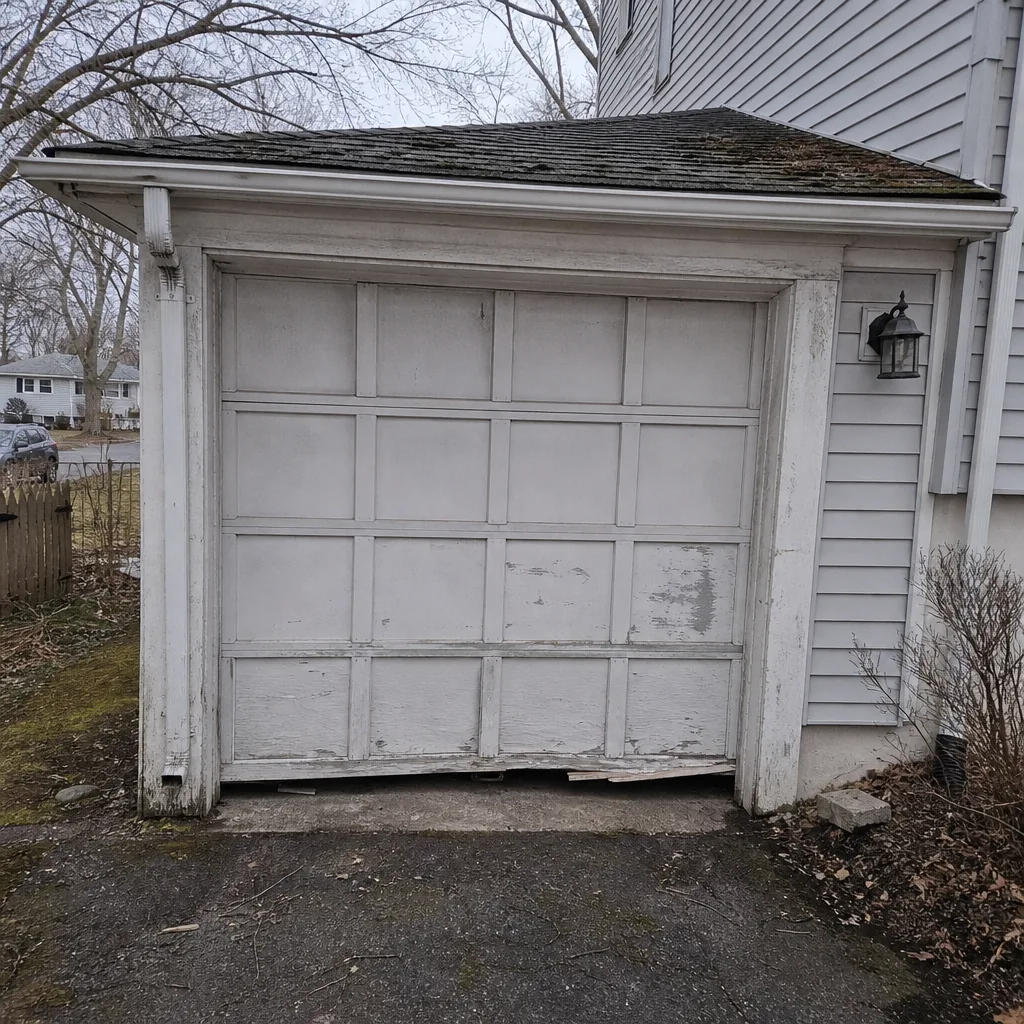 Before
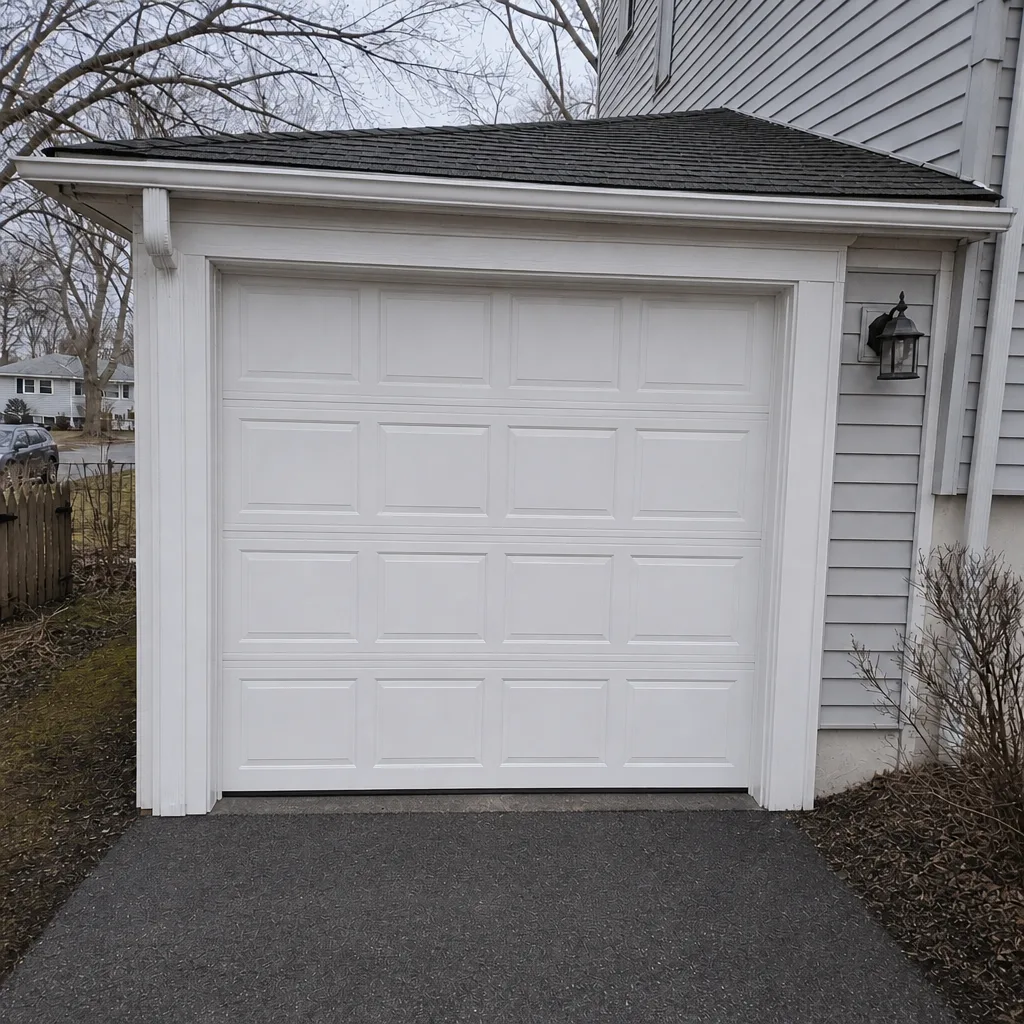 After
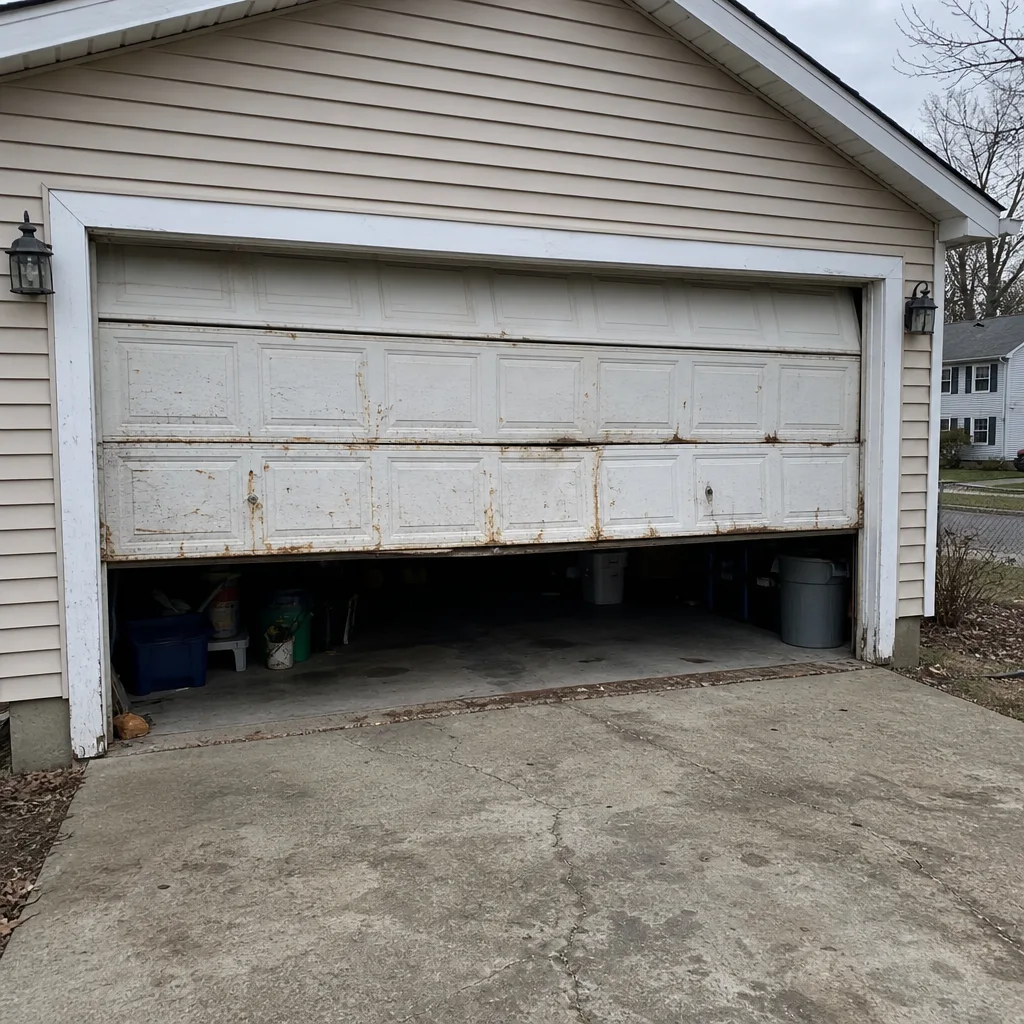 Before
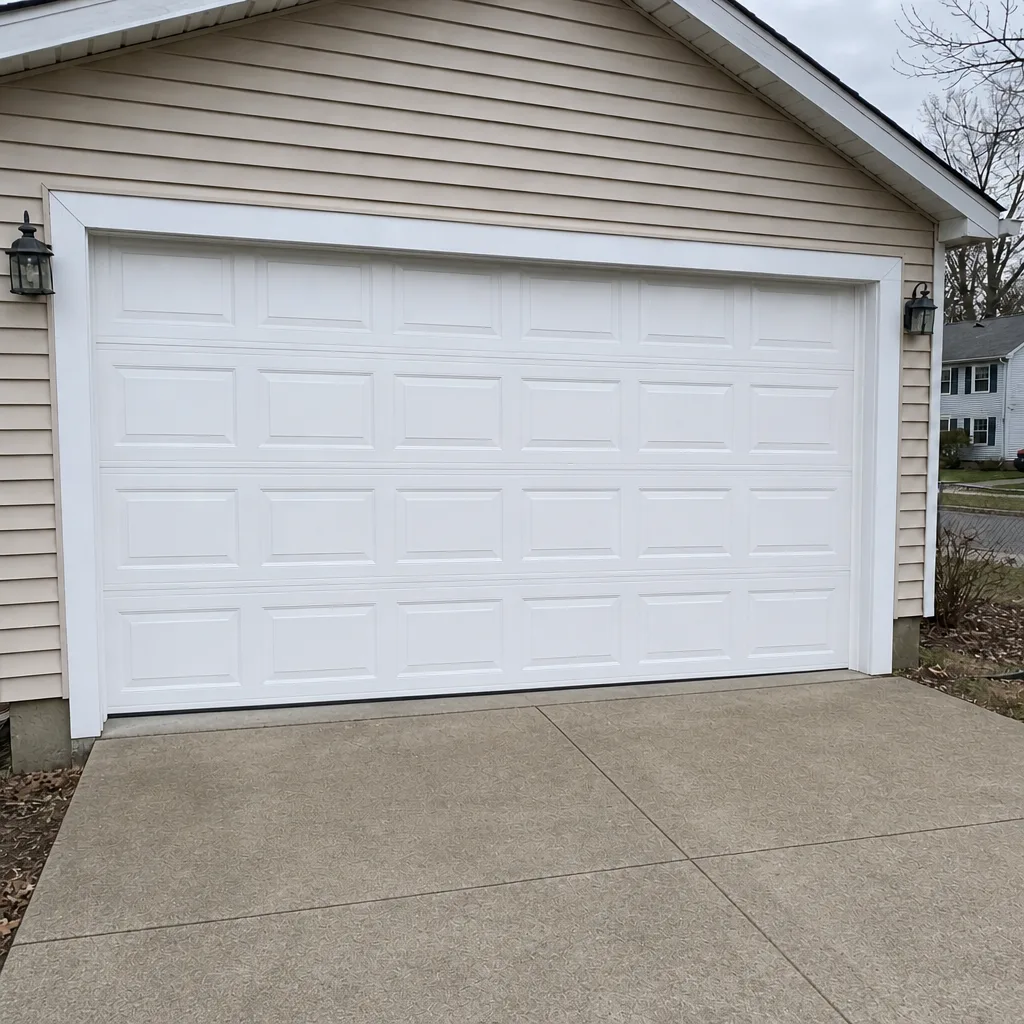 After
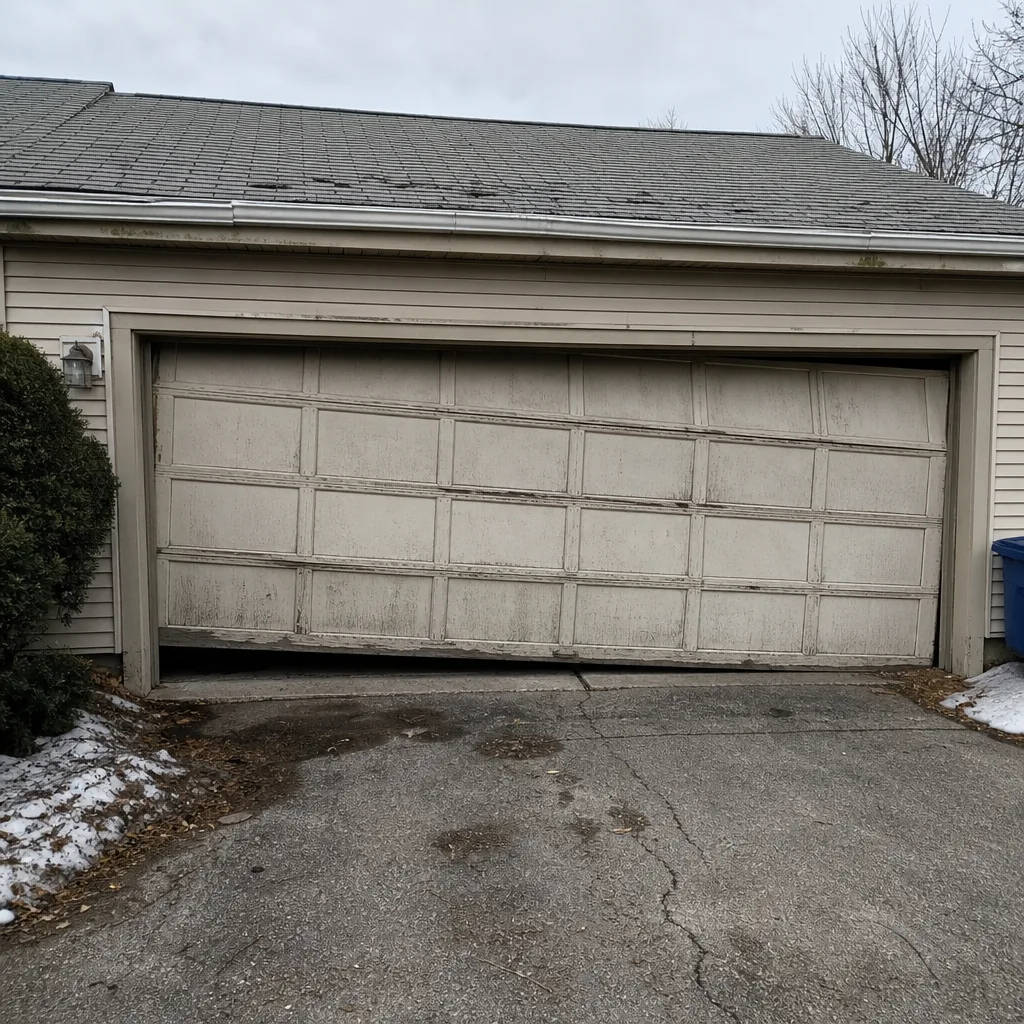 Before
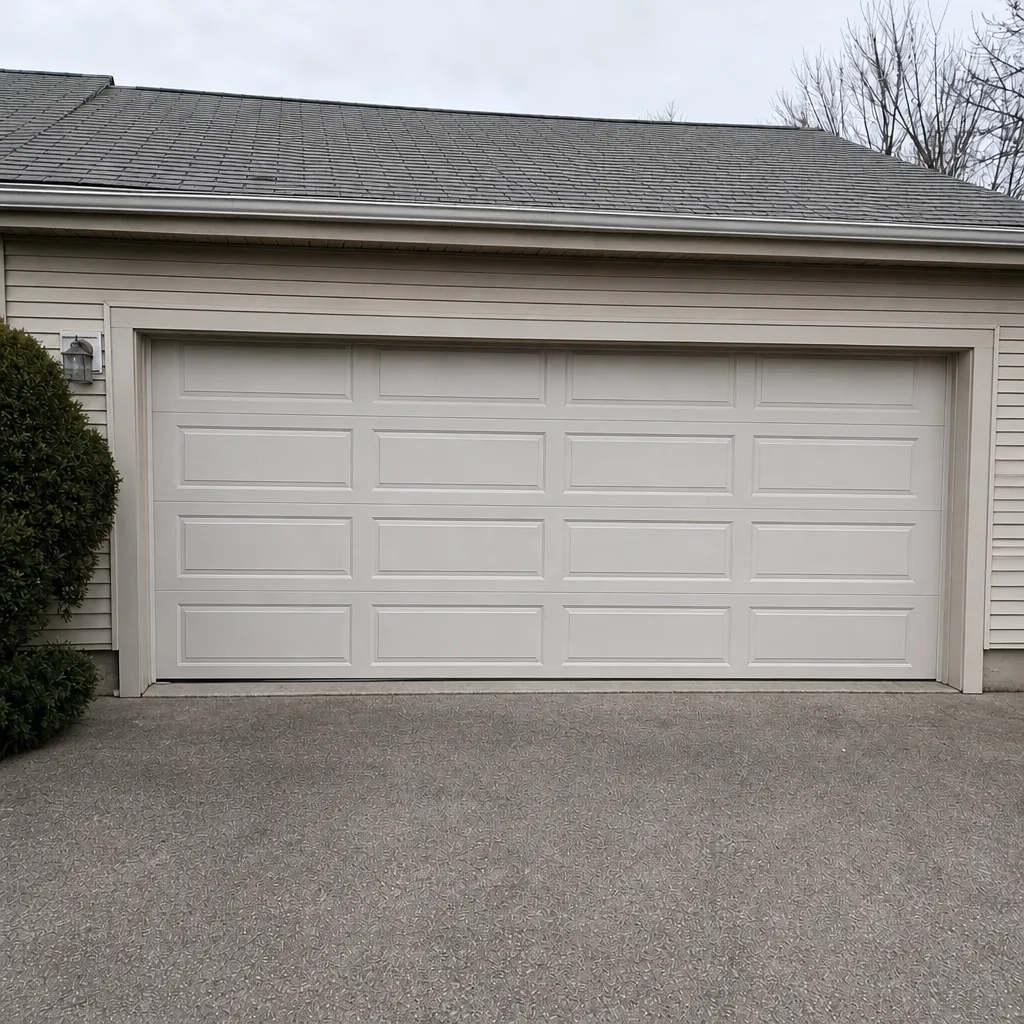 After
Common Mistakes to Avoid
- Hiring on price alone. The lowest bid often skips brand familiarity, insurance, or proper spring sizing. A door that fails again in a month costs more than the quote you didn’t take.
- Booking a handyman for spring work. Torsion springs store dangerous energy. A generalist who has “done a spring before” isn’t the same as a trained specialist. The safety gap is real, not theoretical.
- Not asking for itemized parts and labor. Without it, you can’t tell whether you’re paying for parts or padding. Ask for the breakdown in writing before you agree.
- Accepting a phone quote for a spring or cable job. Correct pricing depends on door weight and configuration. A quote without those details is a guess dressed up as a number.
- Ignoring the HIC registration. It takes 60 seconds to check on the state website, and skipping it removes the only legal filter the trade has. Framingham homeowners are busy; this is the one step not to skip.
- Letting a repair turn into a replacement without a written reason. Sometimes a new door is right. But get the reason and the itemized cost in writing before signing off.
- Paying before the work is done and tested. Confirm the door opens, closes, balances, and the safety sensors function before final payment. If something’s off, it’s easier to resolve before you’ve paid in full.
When to Call a Professional
Some garage door problems are maintenance. Some are genuinely dangerous to touch. When a spring snaps and the door won’t lift, when a cable lets go and the door comes down crooked, or when a door won’t secure your home and you need it fixed, that’s the time to call a trained professional rather than try it yourself. The same goes for an opener that won’t respond, a door that reverses randomly, or anything that leaves your vehicle trapped. If the door is stuck open and your house feels exposed, that’s a security problem, not a convenience one.
Framingham Garage Door Repair offers free estimates in Framingham – call (844) 443-3741. We answer 24/7. Fast dispatch from 7am to 7pm, Sunday through Friday. Same-day service is available, and the price is always quoted and agreed before any work starts.
Frequently Asked Questions
Ask for their Massachusetts HIC registration number and look it up on the state’s consumer affairs website, then ask for a certificate of insurance and confirm it covers spring and mechanical work. A legitimate Framingham garage door contractor provides both without hesitation. If a company can’t produce either, move on.
Massachusetts doesn’t require a garage-door-specific license, but it does require home improvement contractors to register with the state. The registration confirms the business operates legally; it doesn’t prove technical skill. That’s why asking the three technical screening questions (spring sizing, cable drums, torque) matters just as much – call (844) 443-3741 if you’d like us to walk you through what a specialist should be able to answer.
Ask how they size a torsion spring, how they handle cable drum specifications, and how they match an opener’s torque to your door. Ask for a written, itemized estimate that separates parts and labor. Ask which brands they service – a specialist should name several, including the brand already on your door.
It can look cheaper up front, but a generalist often quotes without knowing door weight or configuration, and that’s where repeat failures and safety problems start. A specialist trained on the brands and systems behind your door tends to get the diagnosis right the first time. Call (844) 443-3741 for a free estimate and compare on the written numbers.
Typical estimated ranges in the area run $180 – $340 for a single torsion spring, $150 – $300 for an extension spring pair, and $150 – $400 for opener repair, with full door installation from $1,200 – $3,500. A matched spring pair runs about twice the single-spring range. Your written estimate sets the final price, and it’s agreed before any work starts.
Yes. Same-day service is available for repair work and emergency calls. We answer 24/7, with fast dispatch from 7am to 7pm, Sunday through Friday. If a door won’t secure your home or your car is trapped, call (844) 443-3741 and we’ll get a technician routed to you.
The Bottom Line
Hiring a garage door contractor in Framingham comes down to three filters: verify the HIC registration and real liability coverage, ask the technical questions a generalist can’t answer, and read the pricing and reviews with a critical eye. Price matters, but it’s the last filter, not the first – the written, itemized estimate is what protects you, and it’s agreed before anyone touches the door. A specialist who knows the brand on your door and understands spring sizing, cable drums, and torque will save you money the first time a repair sticks. For a free estimate, call Framingham Garage Door Repair at (844) 443-3741. We answer 24/7, with fast dispatch from 7am to 7pm, Sunday through Friday.
Written by the team at Framingham Garage Door Repair.